|
1Likes
-
1
Post By jerseyben
«
Prev Thread
|
Next Thread
»
-
May 17, 2012, 06:01 PM
#1
large cent lot!
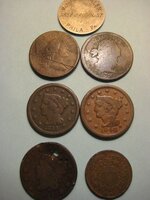
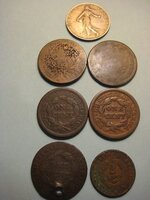
Picked up the following today after work for $80 total:
-1794 Head of 94 large cent - G (damaged reverse, scratched obverse)
-1797 unknown variety large cent - AG
-1821 large cent - G/VG (damaged, holed)
-1844 large cent - VG (scratched)
-1848 large cent - F
-1865 2 cent piece - VG/F (verdigris/corrosion)
-French Franc Love Token (souvenir from 1923 Philadelphia wedding)
-(16) No date/weak date buffalo nickels
-
May 17, 2012 06:01 PM
# ADS
-
May 17, 2012, 07:29 PM
#2
sweet deal wish i had that op to get all that
-
May 17, 2012, 09:31 PM
#3
The wedding token is .835 silver
1/100 of an American dollar is a cent. It is NOT a penny. The word penny is used by several other countries, such as Great Britain, to denote their smallest denomination. In order to be numismatically correct, you must use the term cent to describe the American coin.
“The only thing necessary for the triumph of evil is for good men to do nothing.”
― Edmund Burke
-
May 18, 2012, 09:30 AM
#4
 Originally Posted by sagittarius98
The wedding token is .835 silver
Do you happen to know the KM# for the Franc?
-
May 18, 2012, 08:47 PM
#5
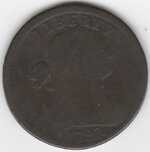
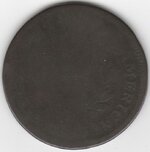
Better pics of the 1797. Unfortunately I cannot determine the variety due to the severe wear on the reverse.
-
May 20, 2012, 06:55 AM
#6
 Originally Posted by jerseyben
Do you happen to know the KM# for the Franc?
If it is 1 franc (23 mm)
- km# 844.1 (regular)
- km# 844.2 (1914-C, key date, can only be identified by mintmark which is on the token side)
If it is 2 francs (27 mm)
- km# 845.1 (regular)
- km# 845.2 (1914-C, non key, can only be identified by mintmark which is on the token side)
1/100 of an American dollar is a cent. It is NOT a penny. The word penny is used by several other countries, such as Great Britain, to denote their smallest denomination. In order to be numismatically correct, you must use the term cent to describe the American coin.
“The only thing necessary for the triumph of evil is for good men to do nothing.”
― Edmund Burke
-
May 20, 2012, 08:51 AM
#7
 Originally Posted by sagittarius98
If it is 1 franc (23 mm)
- km# 844.1 (regular)
- km# 844.2 (1914-C, key date, can only be identified by mintmark which is on the token side)
If it is 2 francs (27 mm)
- km# 845.1 (regular)
- km# 845.2 (1914-C, non key, can only be identified by mintmark which is on the token side)
Ok, I weighed it. It is definitely a 2 Francs coin. My wife did some research and she believes it to be a "calling card" for a Debutante "coming out" party.
-
May 20, 2012, 08:42 PM
#8
It looks like the address is now in North Philadelphia (the bad part of town).
2538 Brown Street, Philadelphia, PA - Google Maps
1/100 of an American dollar is a cent. It is NOT a penny. The word penny is used by several other countries, such as Great Britain, to denote their smallest denomination. In order to be numismatically correct, you must use the term cent to describe the American coin.
“The only thing necessary for the triumph of evil is for good men to do nothing.”
― Edmund Burke
-
May 21, 2012, 05:36 AM
#9
 Originally Posted by sagittarius98
That area is a college area near Eastern State Penitentiary and the Art Museum. It is an "ok" area.
-
May 21, 2012, 12:21 PM
#10
 Originally Posted by jerseyben
That area is a college area near Eastern State Penitentiary and the Art Museum. It is an "ok" area.
I went back and checked and I would say it is on the level of a few other neighborhoods that are not in North Philly.
1/100 of an American dollar is a cent. It is NOT a penny. The word penny is used by several other countries, such as Great Britain, to denote their smallest denomination. In order to be numismatically correct, you must use the term cent to describe the American coin.
“The only thing necessary for the triumph of evil is for good men to do nothing.”
― Edmund Burke
-
May 21, 2012, 12:46 PM
#11
Wow nice finds! I have been detection for 40 years and have yet to find a large cent. You did good!
-
May 21, 2012, 06:02 PM
#12
don't think he was using a detector, sounds like hes saying he bought them.
-
May 21, 2012, 06:22 PM
#13
 relic hunter
why the hole? does this not lower the value? Was it a coin shop? they lie like my carpets.
Last edited by boris; May 21, 2012 at 06:31 PM.
-
May 21, 2012, 07:13 PM
#14
 Originally Posted by boris
why the hole? does this not lower the value? Was it a coin shop? they lie like my carpets.
I don't understand any part of your post
-
May 22, 2012, 07:00 AM
#15
Nice group of coins,I'll give you 100 dollars for them. Just kidding.
-
May 27, 2012, 10:03 PM
#16
 Originally Posted by jerseyben
I don't understand any part of your post 
He is asking if the hole lowers value and whether the coins were bought in a coin shop. His coin shops are apparently dishonest.
1/100 of an American dollar is a cent. It is NOT a penny. The word penny is used by several other countries, such as Great Britain, to denote their smallest denomination. In order to be numismatically correct, you must use the term cent to describe the American coin.
“The only thing necessary for the triumph of evil is for good men to do nothing.”
― Edmund Burke
Posting Permissions
- You may not post new threads
- You may not post replies
- You may not post attachments
- You may not edit your posts
-
Forum Rules
Similar Threads
-
By history hunter in forum Today's Finds!
Replies: 6
Last Post: Nov 05, 2011, 03:55 PM
-
By angifogg in forum Coins
Replies: 4
Last Post: Sep 09, 2011, 01:08 PM
-
By steelheadwill in forum Today's Finds!
Replies: 6
Last Post: Dec 05, 2010, 06:44 AM
-
By ugotit22 in forum Today's Finds!
Replies: 10
Last Post: May 05, 2008, 09:38 PM
-
By Evolution in forum Today's Finds!
Replies: 44
Last Post: Mar 19, 2008, 03:41 PM
Search tags for this page
1794 large cent varieties, 1797 large cent, 1821 large cent, 1848 small date large cent, beale street souvenir token, how much is a 1848 large penny with some damage on it, how much is a beale street souvenir token work, large cent lots, lot of large cents, value of beale street souvenir token
Click on a term to search for related topics.
|