|
1Likes
-
1
Post By idahotokens
«
Prev Thread
|
Next Thread
»
-
Jun 03, 2012, 05:08 PM
#1
-
Jun 03, 2012 05:08 PM
# ADS
-
Jun 06, 2012, 09:05 PM
#2
Well, IMO you are asking the equivalent of solving one equation with two unknowns...
But, my friend Charlie Brown has what we call "Brown's Law of coinage" which states that one can find in circulation coins up to about 40 years old. Anything older than that is either worn out, lost, or saved for perceived collector value. For instance, it is easy enough to find Lincoln cents from 1972 onward, but wheaties and the early Memorial cents are not too easy. Of course the metal change from copper to plated zinc is one factor making that so. The copper cents are being pulled and saved by many. Back when I was a lad first starting to go through cents, it was not unusual to find 40-year-old cents, but the 50-year-old ones were tough.
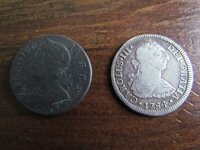
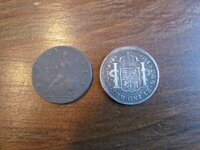
So, assuming your finds were in regular circulation up until the time they were lost, 1795 and 1824 would be about the latest dates they would have been lost (per Brown's Law). But, judging by their condition, I'd say they may have been in circulation about half that time or 20 years when lost.
John in the Great 208
-
Jun 10, 2012, 10:09 PM
#3
It really depends on many factors, a coin could be sitting in a jar for 70 years and then re-enter circulation.
Hypothetical situation: That 1942 quarter could be saved by grandpa since 1943 and deposited today when grandma deposits his collection after he dies. You may think that quarter could be in circulation for only until 1945 at most, but was in circulation today.
1/100 of an American dollar is a cent. It is NOT a penny. The word penny is used by several other countries, such as Great Britain, to denote their smallest denomination. In order to be numismatically correct, you must use the term cent to describe the American coin.
“The only thing necessary for the triumph of evil is for good men to do nothing.”
― Edmund Burke
-
Jun 12, 2012, 07:38 AM
#4
 I love to help people learn about the coins they find or collect.
There's no method that can determine how long a coin was in circulation before it was lost. Of course, the grade of the coin is a tell-tale sign of how much circulation a coin sustained. Your coins appear nice and without a large amount of wear. But I have seen some modern quarters that have enough wear that they looke older than their date. It all depends on how many hands the coin goes through, so there's no set amount of years for wear.
-
Jun 12, 2012, 08:02 AM
#5
It's not just a matter of how many hands or how many years, it's a matter of how it was kept. People didn't used to carry coins in a pocket, they carried them in a coin purse, or they holed them and carried them on a string. Clean coins in a clean environment won't wear very fast. Add dirt and grime, rubbing, etc and the wear rate is incredible.
I have a 1850's large cent my father gave me. It was in great shape when he got it as a child, but he carried it every day and rubbed it like a worry stone. He said that it only took a few years for it to be worn smooth. 100 years with minimal wear, 3 to make it smooth.
Posting Permissions
- You may not post new threads
- You may not post replies
- You may not post attachments
- You may not edit your posts
-
Forum Rules
Similar Threads
-
By ckrakowski in forum Coins
Replies: 6
Last Post: Oct 16, 2010, 04:40 PM
-
By SFBayArea in forum Coin Roll Hunting
Replies: 55
Last Post: Feb 28, 2010, 05:01 PM
-
By skylarking1970 in forum General Discussion
Replies: 11
Last Post: Jul 23, 2009, 02:51 PM
-
By Silver Stripe in forum Coin Roll Hunting
Replies: 6
Last Post: Aug 16, 2007, 11:57 PM
-
By Ocean7 in forum Today's Finds!
Replies: 1
Last Post: Dec 05, 2004, 11:56 PM
Search tags for this page
are dug coins worth anything, coins found in circulation, confederate states of america penny 1/100, dug coin, how can i tell how much my 1875 well kept silver 20 cent coin is worth, how many hands a penny passes through in one year, how many hands has a 40 year old coin passed threw, my collection of dug coins, us coins
Click on a term to search for related topics.
|