Welcome guest, is this your first visit?
Member
Discoveries
 
Page 1 of 2 1 2 LastLast
Results 1 to 20 of 24
  1. #1

    Aug 2006
    5

    magnetometers

    Can someone please explain how readings form magnetometers are displayed. As they can cover such a wide area how do you pin point a reading
    thanks Mark

  2. #2
    us
    ScubaGecko

    Jun 2004
    Beaufort, SC
    Garrett Sea Hunter Mk II
    1,888

    Re: magnetometers

    Mark,

    Welcome to the forum, sorry it took so long to get an answer on your question. I only visit the Geophysics post occaisionally.

    Depending on the size of your target and how you have your mag setup, it can be a fairly easy process or fairly tricky sometimes.

    A magnetometer displays hits based on a change in the magnetic field and can be displayed either on a analog meter (older ones), a digital readout(newer) or a graph on a computer (if it has data output). Of course a GPS is essential to be able to go back to where you got the hit and mark possible targets. By pulling a mag in a specific search pattern (parallel lines anywhere from 100'-150' apart, this varies depending on what size target you are looking for), you will be able to determine where your target lies by the strength of the hit in a given line and the reading on ajacent lines. The other factor is layback. Layback is the offset of the towfish from where the GPS reciever is located on the boat. This can be complicated as well if you dont have a layback calculator and are searching in deep water with alot of line out.

    Once you find a target, to help pinpoint it, you can also go back over the target and run a tighter search pattern (closer lines) to help pinpoint as well. Once you have a good idea of the target position, put a bouy on it and, get in the water! You may be able to see the target visually, but may need a metal detector if its burried or encrusted.

    Good luck,

    Robert in SC

  3. #3

    Apr 2006
    south texas to the east coast
    250

    Re: magnetometers

    good answer robert..............

  4. #4
    us
    Sir Dives-A-Lot

    Jul 2006
    Jupiter, FL
    JW Fishers Pulse 8X, Minelab Explorer, Geometrics 882
    1,898
    16 times
    Shipwrecks
    Banner Finds (1)

    Re: magnetometers

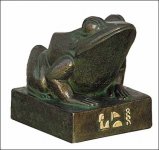
    Definitely a good answer! I took a Mag class this weekend with a Pulse 12, the first thing the instructor said when he rolled out the towfish was "Before you get all excited, this is nothing more than a cool looking metal detector with no discrimination, no sensitivity adjustment, and no cool display". That about summed up the mag training, we just went out and tried to pinpoint some stuff, we could get within 10-15 feet in 40 foot of water, and that was the students doing the operation. Then we'd go down with 8X's and recover the object...mine was a 1 ft. iron frog lawn statue Barely got it up without a lift bag...

    Jason

  5. #5
    us
    ScubaGecko

    Jun 2004
    Beaufort, SC
    Garrett Sea Hunter Mk II
    1,888

    Re: magnetometers

    Jason,

    The Pulse 12 is a PI metal detector with a Coil Loop on a towfish. Is this what you guys were using? There is a significant difference in the Proton 4 Magnetometer and and the Pulse 12. But the search and recovery techniques are almost the same. You just have to be much, closer with the Pulse 12. Since the detection range is much smaller, that makes it easier to determine where the object is versus determining where an object is with a magnetometer.

    The definite benefit of the Pulse 12 is the ability to detect non-ferrous metals. The down side is, you have to pass almost directly over it. In fact, I think they make a sled that it can be mounted on to ride across the bottom to help detect items that are buried. I think the max range for a large target is 16 feet. Imagine how close you have to get for a coin!

    Robert in SC


  6. #6
    us
    Sir Dives-A-Lot

    Jul 2006
    Jupiter, FL
    JW Fishers Pulse 8X, Minelab Explorer, Geometrics 882
    1,898
    16 times
    Shipwrecks
    Banner Finds (1)

    Re: magnetometers

    Thanks Robert, the mag was actually a Proton 4, not a Pulse...no loop. I had to go to Fishers web site and look at them. They rattled off so many numbers that I got them all confused. I think the real reason is that I'm still beaming over my Pulse 8X, so eveything should start with Pulse in my little world right now

    Jason

  7. #7

    Aug 2006
    5

    Re: magnetometers

    what type of speeds were you doing when you were towing the towfish

  8. #8
    us
    Sir Dives-A-Lot

    Jul 2006
    Jupiter, FL
    JW Fishers Pulse 8X, Minelab Explorer, Geometrics 882
    1,898
    16 times
    Shipwrecks
    Banner Finds (1)

    Re: magnetometers

    We averaged about 4 MPH, in a body of water that small, you couldn't go much faster. I think that is about the norm for towing a mag, but I only have the limited experience of the class. Someone else can surely give you a more complete answer.

    Jason

  9. #9
    us
    Feb 2004
    lake mary florida
    Wesmar SHD700SS Side Scan Sonar,U/W Mac 1 Turbo Aquasound by American Electronics,Fisher 1280x,Aquasound UW md,Aqua pulse AQ1B
    1,909
    5 times
    All Types Of Treasure Hunting

    Re: magnetometers

    Scubaseeker,

    have any pics of the 1 ft. iron frog lawn statue? whats it worth?how old is it?nice find,something to put in your yard next to the cannon and anchor that you find next
    Attached Thumbnails Attached Thumbnails magnetometers-e-52frog.jpg  
    Millions of dollars of Spanish treasure await those who would dare brave the eye of the hurricane.

  10. #10

    Oct 2003
    St. Louis
    Tesoro Tejon
    156

    Re: magnetometers

    I was wondering about the possibility of using a magnetometer on land to look for deep buried civil war ordinance.

    I have a spot that actually has hundreds of tons of ordinance fired during the civil war. I have found one large shell and numerous pieces, but I know the whole area was shelled by the Union for weeks. Last year the farmer of one of the fields plowed up a beautiful shell.

    I have built the gradiometer/magnetometer designed by Moreland. I did take it out but seems that I had to constantly retune and restart the unit because it was unstable. I am sure the stability was affected due to the fact that I built the unit using parts from Fat Quarters and I do not have a whole lot of experience in electronics.

    I know the way to go is the mag. or the pi. I would imagine that the shells are anywhere from one foot to severel feet in depth. I was wanting the mag because I felt like I could cover more ground with a mag and would not need to swing a mag.

    I was just wondering if anyone knew of any portable mags. that would work in this capacity. I visited Greg Hawley's museum in Kansas City which contains the artifact that were recovered from the steamboat he found with a portable magnetometer. The museum is fabulous and the artifacts in some cases are perfectly preserved. They even ate some of the pickles which were recovered, and analyzed and copied the perfume, and these were in Mississippi mud since the 1850's. Greg told me that he had rented the portable mag but I have looked and cannot find anywhere to rent a portable mag small enough to carry.

    Any ideas?

  11. #11
    us
    Feb 2004
    lake mary florida
    Wesmar SHD700SS Side Scan Sonar,U/W Mac 1 Turbo Aquasound by American Electronics,Fisher 1280x,Aquasound UW md,Aqua pulse AQ1B
    1,909
    5 times
    All Types Of Treasure Hunting

    Re: magnetometers

    jhettel,

    i see portable mags on ebay all the time,from the little hand held meters to the sticks with electronics in them ranging in prices from $20.00 to $1000.00+ do a search on ebay,save the search an have them mail you when theres new listings.you will find one.
    Millions of dollars of Spanish treasure await those who would dare brave the eye of the hurricane.

  12. #12
    Charter Member
    us
    Director-Search & Recovery Team of Oakland County.

    Aug 2005
    In Michigan now.
    Excal 1000, Sovereign GT, CZ-20, Tiger Shark, Tejon, GTI 1500, Surfmaster Pulse, CZ6a, DFX, AT PRO, many more.
    9,431
    57 times
    All Types Of Treasure Hunting

    Re: magnetometers

    I have never heard of Mags used on land as there is no ground balance to make it stable and not give false readings on voids. Ground Pen. Radar seems to be the best bet for you.

    Sandman
    (C) Sandman, 2005. All Rights Reserved.
    "TIME IS THE ONLY THING YOU NEVER GET BACK, WHY WASTE IT SWINGING A DETECTOR THAT ISN'T UP TO THE TASK."

  13. #13
    us
    ScubaGecko

    Jun 2004
    Beaufort, SC
    Garrett Sea Hunter Mk II
    1,888

    Re: magnetometers

    Sandman,

    Mags are absolutely used all the time on land. They are typically used in a gradiometer configuration. They are very sensitive and can detect not only ferrous metals but fire pits, ancient ditches, and other disturbances in the soil like caverns.

    The use of the mag for finding the civil war ordinace would be ideal. The ferrous objects would give off a higher reading than just a ground disturbance like a ditch. I have built both Carl Morelands gradiometer and the EPE version. The EPE would be ideal for your situation. It records the data for display on a computer. You can map out an entire site and take it back to the computer to pick out the best targets.

    jhettel, Where are you located?

    Robert in SC

  14. #14

    Oct 2004
    289

    Re: magnetometers

    jhettel

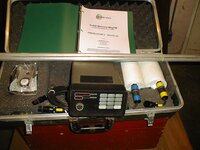
    I have a Geometrics G-856 Proton Precession Land
    Magnetometer/Gradiometer. It can be used as a
    magnetometer (one solenoid sensor) or as a gradiometer
    (two solenoid sensors spaced 4 feet apart) in a vertical
    configuration. It has memory but no GPS. The lack of
    GPS is no problem as you have to plot out your search
    area before taking readings. Using a mag on land requires
    software for output ploting. Search areas should be small
    as they are very time consuming if you are taking mag readings
    every 15 seconds or so.

    Might I suggest you consider earth resistivity ploting as an
    alternative. It will show you discontinuities of all types. If
    you need some understanding on how earth resistivity
    measurements are made look it up on Google.

    In a final note remember that magnetometers/gradiometers
    only locate iron bearing metals. No copper, lead, or silver. etc.

    Dinkydick

    Attached Thumbnails Attached Thumbnails magnetometers-geometrics-g-8561.jpg  

  15. #15

    May 2006
    1,522

    Re: magnetometers

    dinkydick,
    Sorry I missed you at the GET TOGETHER.
    When you went back to Jax you came within 1 mile of my house.

    I have a question:
    On my presnt project I will need a Side Scan Sonar (I think).
    I am thinking about using a Fishfinder since this is a one shot deal and since they can be had for as little as $139.95. The water depth is not over 12 feet at high tide and drops almost 6 feet at low tide.
    I have everything else I think I will need including a Mag and a MD and a few other items.
    Anyway do you think this little Fish sonar device will do?
    Thanks
    Peg Leg

  16. #16

    Oct 2004
    289

    Re: magnetometers

    Peg Leg

    Not knowing what you are looking for, all I say is that the
    fishfinder will give you a cross section view of what is below
    the transducer. Being that you will be in very shallow water the
    beamwidth of the transducer will be very narrow. So all you will
    be looking at is a small area of the bottom at any one time.
    Basically the fishfinder will only be showing you the depth of water
    under the transducer. Anything sticking up above the natural
    bottom will appear as the bottom only shallower. It will be very hard
    for you to identify the bottom from the object on the bottom. The
    fishfinder might identify rocks from mud but that is about all I would
    expect. A long probe would do the same thing. Side scan is the only
    way to go. Plus you can cover a much larger area in one pass.

    I have used fishfinders with the transducer placed horizontally. This
    will give you a similar presentation like side scan does. BUT, interpreting
    the fishfinders' display is very complicated.

    I don't know if I helped you at all but I wish you good luck

    Dinkydick

  17. #17
    Cptbil

    Mar 2003
    Az/NM/Ca/Nv/Tx
    1,402

    Re: magnetometers

    A magnetometer only detects Ferrous Metals ...

    Ferrous Metals are magnetic, and consist of, Iron, steel, etc...
    They WILL NOT! GIVE a signal on nonferrous metals, IE; gold, silver, brass, lead, etc .
    My Proton Mag...which I use exculsively, for land (buried) targets, gives a audio (loud sound) over it's speaker !
    It has no screen ...
    It looks like a 6' long 2" PVC Pipe! ... Because that's what it is made of !
    It has it's small control box/speaker in the center
    When I pass over a target, the ferrous metal target, unbalances the earth's magnetic signal, between each of the two ends, where the sensors of the "Mag" are located !
    This unbalanced signal, sets off the audio signal, that is heard on the "speaker" !
    Just like a METAL Detector gives off a signal, when it passes over a metal ( any kind of METAL!) target!
    CptBil & Bugs

  18. #18
    us
    ARRG

    Feb 2005
    Sarasota, FL
    Whites Surfmaster PI Pro and Whites Surfmaster PI, Minelab Excal NY blue sword.
    1,662
    1 times

    Re: magnetometers

    jhettel, have a large PI detector, it has a coil that is 3' x 5'. It will pick up a beer can through the air at about 8'. It will go further on one buried for a while or in water, even further in saltwater, unfortunately! It will pick up larger objects much further. I also have several other PI detectors that will pick up large object very deeply buried. PM me if you need help finding anything deeply buried. If you have a good idea that something is there. Where are you located? Steve in Sarasota, FL

  19. #19

    Jul 2003
    8

    Re: magnetometers

    Hi all

    I just came across this thread with great interest. Would one of these work for searching large areas for meteorites. if so which one and how much area could be covered in a day? Also it would be nice if I could pick up any metal since most searches would be in gold country and how deep can one go?

    Thanks
    Kim

  20. #20
    us
    Sir Dives-A-Lot

    Jul 2006
    Jupiter, FL
    JW Fishers Pulse 8X, Minelab Explorer, Geometrics 882
    1,898
    16 times
    Shipwrecks
    Banner Finds (1)

    Re: magnetometers

    Hi Kim,

    You ask a lot of questions, most of which would be answered with "it depends".

    A good PI mag or even handheld metal detector with a big coil would be perfect for searching for meteorites, however when searching for a large iron target, small gold ones get missed. The bigger the meteor, the deeper the detector will find it, the bigger the coil, the more ground one can cover...and the deeper the detector can find metal. Everything is variable with your questions, and I hope this helps you some. For the record, if you said "how big a coil would i need to find an iron baseball at 9 feet, I couldn't answer you. My recommendation would be to get the biggest coil you can afford for a good PI detector (Garret, Minelab, Whites, J.W. Fishers, etc) and go look for meteors. When done, put the small coil back on, and go back over the area looking for gold. You just can't do both at the same time with any certainty.

    Jason


Page 1 of 2 1 2 LastLast

Sponsors

Posting Permissions

  • You may not post new threads
  • You may not post replies
  • You may not post attachments
  • You may not edit your posts
  •  

Search tags for this page

bell magnetometer museum

,

quantrosensing pvc tube

,

towfish mag that will detect non-ferrous metal

Click on a term to search for related topics.
Powered by vBadvanced CMPS v4.1.3