gollum
Gold Member
- Jan 2, 2006
- 6,729
- 7,596
- Detector(s) used
- Minelab SD2200D (Modded)/ Whites GMT 24k / Fisher FX-3 / Fisher Gold Bug II / Fisher Gemini / Schiebel MIMID / Falcon MD-20
- Primary Interest:
- All Treasure Hunting
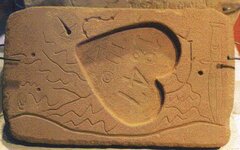
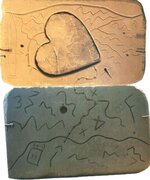
Some people have asked me to post some information on the Peralta Stones, so here goes:
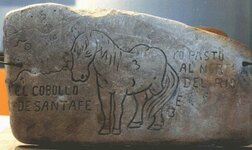
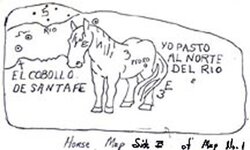
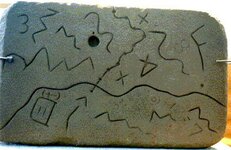
The story goes that in 1949 an Oregonian Police Officer who was on vacation with his family, pulled the car over to the side of a road. Never specific road given in any version of the story. He wanted to get a better look at Weaver's Needle, so he walked up to the top of a little hill. When he was walking around on the hill, he tripped over a rock. This rock didn't look natural, so he dug it out and picked it up. It was the Horse and Priest Stone. He left and took the rock home.
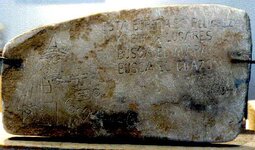
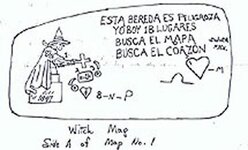
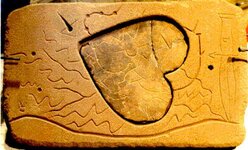
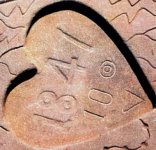
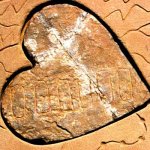
He came back a year later and found the two other stones and a smaller heart shaped stone. He died in 1956,and his widow gave the stones to a Travis Marlowe. Mr. Marlowe spent the next eight years decyphering the stones, but could never find the mine. On June 12th 1964, Life Magazine published an article about the stones. This was their first public showing (parts of the stones had black electrical tape covering up vital markings). They have had numerous "experts" look at them. Some say they are real, and some say they are fakes. Nobody knows for sure.
Eventually, they were donated to the Arizona Mining and Mineral Museum in Phoenix, where they sit today. They are not on display, but they will bring them out if you ask (they may charge you for it).
Here is an update to the story I originally posted:
Some have said that the finder was never positively identified.
That is not true. His name was Travis Tumlinson, and his wife confirmed (after his death) that the stones were found along the highway between Apache Junction and Florence Junction, Az, on their way back to Oregon from vacationing in Texas. Nobody has ever questioned the veracity Travis Tumlinson. He was a Cop from Hood River, Oregon. He found the Don Stone initially. He ran back to the car and got a shovel. He spent a few hours digging around where he found the first stone. He found stones 2, 3, and 4. They took the stones into Apache Junction, and washed them off. When somebody asked him what they were, he said he just found them. The guy said that they must be treasure maps. Travis got a little paranoid and put them in his car
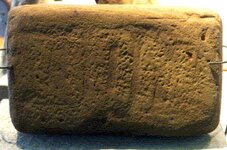
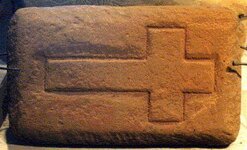
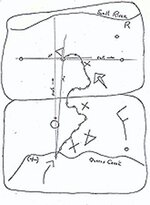
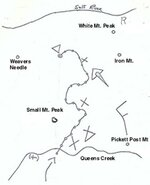
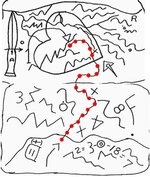
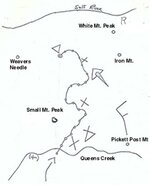
So, here are the Peralta Stones:
The story goes that in 1949 an Oregonian Police Officer who was on vacation with his family, pulled the car over to the side of a road. Never specific road given in any version of the story. He wanted to get a better look at Weaver's Needle, so he walked up to the top of a little hill. When he was walking around on the hill, he tripped over a rock. This rock didn't look natural, so he dug it out and picked it up. It was the Horse and Priest Stone. He left and took the rock home.
He came back a year later and found the two other stones and a smaller heart shaped stone. He died in 1956,and his widow gave the stones to a Travis Marlowe. Mr. Marlowe spent the next eight years decyphering the stones, but could never find the mine. On June 12th 1964, Life Magazine published an article about the stones. This was their first public showing (parts of the stones had black electrical tape covering up vital markings). They have had numerous "experts" look at them. Some say they are real, and some say they are fakes. Nobody knows for sure.
Eventually, they were donated to the Arizona Mining and Mineral Museum in Phoenix, where they sit today. They are not on display, but they will bring them out if you ask (they may charge you for it).
Here is an update to the story I originally posted:
Some have said that the finder was never positively identified.
That is not true. His name was Travis Tumlinson, and his wife confirmed (after his death) that the stones were found along the highway between Apache Junction and Florence Junction, Az, on their way back to Oregon from vacationing in Texas. Nobody has ever questioned the veracity Travis Tumlinson. He was a Cop from Hood River, Oregon. He found the Don Stone initially. He ran back to the car and got a shovel. He spent a few hours digging around where he found the first stone. He found stones 2, 3, and 4. They took the stones into Apache Junction, and washed them off. When somebody asked him what they were, he said he just found them. The guy said that they must be treasure maps. Travis got a little paranoid and put them in his car
So, here are the Peralta Stones: