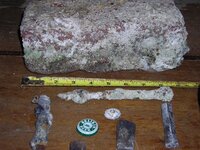
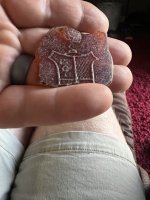
Im diving a wreck (ballast pile) That I have found, that I had researched from the writings off Robert Marx in Central America. Im finding red bricks scattered amongst the debris, Also much sheet lead rolled. Also doese any one have a good idea about the best way to add some wieght to my Fischer without messing with signals? Damn thing floats. All right Thanks. Bill
Maybe adding some stick-on lead strips to the housing. Obviously there are other metal objects like batteries in the enclosure, so it shouldn't affect the performance much if at all. Most units are designed to be slightly bouyant.
Finally.... someone else who has written about red bricks
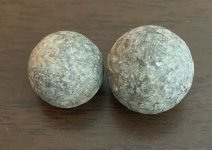
Been involved in treasure finding in Tampa bay area for many years......... I found this spot several years ago but have told no one of its exact location...found dozens of 3-4 lb cannonballs on the beach.... apprx 400 yards further out in the water there is a spot with a "bunch of red bricks" all around them and under them the metal detector was going crazy hitting on lots of interesting encrusted artifacts, copper nails and sheathing also finding glass pieces in my scoop too... most all of these items showed signs of being burnt...anyone else care to comment the presence of "red bricks" and what these bricks may indicate....the cannonballs are said to be either of Spanish or possibly civil war era wrecks
Garrett Infinium LS, Garret Seahunter MK II, Geometrics 882, Marine Sonic SS
1,326
All Types Of Treasure Hunting
Re: Advise/Diving a Wreck
Bricks are not an uncommon find around old shipwrecks. Assuming they are associated with your shipwreck they were likely used as thermal insulation for stoves or boilers, or they could have simply been cargo. (I'm sure someone will chime in that they were used as ballast along with everything else on board that offers no simple explanation). Some of the old fire brick I've seen had makers marks on them.
I'd be kinda leery of the cannon ball identity. Spanish to Civil War is quite a broad label.
Back to Bill's original question, I'd try using some lead sheet to accomplish weighting the housing.
If you are having trouble with the coil wanting to float, add a peice of 3/4 inch tubing to the top of your coil by attaching it to the inside or outside ring with wire ties. Fill it with sand and close it with a double male connector. Good Luck
Thanks for the inputs, I think ill try the hip mount first. Im using a Fisher CZ-20 Quick Silver. I brought back one brick so ill try to clean it to look for makers mark. Here is a picture.
most ships have some sort of fireplace to cook meals and sterilize water. also alot of ships carried bricks as ballast and sold them then replaced them with rocks on the return trip to europe. it added another cargo to sell and took up no space since ballast is normaly unuseable.
Early settlers needed brick for building of chimneys in early America and before the establishment of Foundry's, large quantities of brick had to be shipped over from Europe. I have some of these bricks in my own home here in Virginia built by my Great Grandparents in 1900 (the bricks were salvaged from an earlier home that was built in the late 1600's and destroyed during the Civil War).
Sean
You never know when you might need to know how to jump out of a perfectly good airplane!
These bricks are very common . First of all they did their job as ballast . After unloading they were use to build the catholic churches and or hacienda's. Cornelius