I'm reading Marx "Treasure Lost at Sea", and on P. 71 he says that Mel Fisher was fined for selling counterfeit coins. Does anyone know did this ever get resolved? I've always wanted to buy one of the coins from his museum, but not if its not ggenuine (or thats fine if they're up front that they are replicas and cost less).
You are using an out of date browser. It may not display this or other websites correctly.
You should upgrade or use an alternative browser.
You should upgrade or use an alternative browser.
Marx reference
- Thread starter GulfDiver
- Start date



- Oct 26, 2004
- 24,112
- 22,888
- 🏆 Honorable Mentions:
- 2
- Detector(s) used
- Minelab Explorer
- Primary Interest:
- Shipwrecks
Gulfdiver,
Welcome to Treasure Net !!
In 1999, Element Analysis Corp was called upon by the Florida state attorney’s office in Key West, where Mel Fisher’s Treasure Sales Shop was located. Mel Fisher was accused of selling fake gold coins – coins that he claimed were from the wreck of the Atocha.
The coins, seized from his Key West shop by investigators, were flown to Lexington, Kentucky-based EAC where trace element analysis was used to determine the coins’ authenticity.
The Solution Return to TopEAC analyzed the gold and silver content of the suspect coins. Once done, the results were compared with authentic, 18th century Spanish gold coins. EAC used Proton-Induced X-ray Emission (PIXE) analysis because it’s fast and does not destroy the original sample.
EAC found that the suspect coins contained 93% gold and 4% silver. While the authentic gold coins from the shipwreck contained 90-93 percent gold with a relatively high silver content of 6-9 percent. The gold was real but the coins were not from the Atocha, or any other shipwreck. The coins, which were sold for around $6000, were worth only a fraction of the selling price – around $270 at current gold prices.
“EAC is what made our case,” stated Paul Meyers, an investigator for the Florida state attorney’s office. Because of the quick and accurate analysis by EAC, nearly $200,000 was recovered and repaid to those purchasing the fake coins.
--------------------------------------------------------------------------------
Copyright © 2011 Elemental Analysis, Inc.
Source: http://www.elementalanalysis.com/case-studies/the-wreck-of-the-nuestra-senora-de-atocha/
Welcome to Treasure Net !!
In 1999, Element Analysis Corp was called upon by the Florida state attorney’s office in Key West, where Mel Fisher’s Treasure Sales Shop was located. Mel Fisher was accused of selling fake gold coins – coins that he claimed were from the wreck of the Atocha.
The coins, seized from his Key West shop by investigators, were flown to Lexington, Kentucky-based EAC where trace element analysis was used to determine the coins’ authenticity.
The Solution Return to TopEAC analyzed the gold and silver content of the suspect coins. Once done, the results were compared with authentic, 18th century Spanish gold coins. EAC used Proton-Induced X-ray Emission (PIXE) analysis because it’s fast and does not destroy the original sample.
EAC found that the suspect coins contained 93% gold and 4% silver. While the authentic gold coins from the shipwreck contained 90-93 percent gold with a relatively high silver content of 6-9 percent. The gold was real but the coins were not from the Atocha, or any other shipwreck. The coins, which were sold for around $6000, were worth only a fraction of the selling price – around $270 at current gold prices.
“EAC is what made our case,” stated Paul Meyers, an investigator for the Florida state attorney’s office. Because of the quick and accurate analysis by EAC, nearly $200,000 was recovered and repaid to those purchasing the fake coins.
--------------------------------------------------------------------------------
Copyright © 2011 Elemental Analysis, Inc.
Source: http://www.elementalanalysis.com/case-studies/the-wreck-of-the-nuestra-senora-de-atocha/
mad4wrecks
Bronze Member
- Dec 20, 2004
- 2,263
- 107
- Detector(s) used
- Aquapulse, DetectorPro Headhunter, Fisher F75
- Primary Interest:
- Shipwrecks
Mel had more treasure than he knew what to do with. So he donated millions of dollars of it to the Mel Fisher Maritime Heritage Society and other organizations. He gave a lot of it away. I don't think he ever intended to rip anyone off.
Here are two other more views of the situation:
http://news.google.com/newspapers?i...=mel fisher counterfeit coins&pg=6717,1645047
http://select.nytimes.com/gst/abstract.html?res=FA0712F73E5D0C748EDDA80994D0494D81
Tom
Here are two other more views of the situation:
http://news.google.com/newspapers?i...=mel fisher counterfeit coins&pg=6717,1645047
http://select.nytimes.com/gst/abstract.html?res=FA0712F73E5D0C748EDDA80994D0494D81
Tom
Au_Dreamers
Hero Member
From what I recall there was a story that... in a nut shell it was concluded that some coins were counterfeit but the analysis showed that they had been underwater for a very long time, so it was concluded that they were counterfeited back BEFORE the shipwreck.
I'm not sure which coins these were, I just remember the story...
I'm not sure which coins these were, I just remember the story...

Salvor6
Silver Member
- Feb 5, 2005
- 3,755
- 2,169
- Detector(s) used
- Aquapulse, J.W. Fisher Proton 3, Pulse Star II, Detector Pro Headhunter, AK-47
- Primary Interest:
- Shipwrecks
Thats the story I remember Au Dreamer. Ther coins had microscopic coraline embedded in them. They were called "contempory counterfeit" which means they were counterfitted back in 1733 so the owners did not pay tax on the gold. Mel Fisher was completely exonerated.
Au_Dreamers
Hero Member
Salvor6 said:Thats the story I remember Au Dreamer. Ther coins had microscopic coraline embedded in them. They were called "contempory counterfeit" which means they were counterfitted back in 1733 so the owners did not pay tax on the gold. Mel Fisher was completely exonerated.
Yeah, exonerating a "treasure hunter" isn't front page news, while one committing "fraud" is.
It's much like the "Woman wins $1,000,000 in Lawsuit against McDonalds for getting scalded with hot coffee."
Most follow up stories about the appeal where she was awarded her much much less was page 16 tucked in obscure news.

LM
Hero Member
Salvor6 said:Thats the story I remember Au Dreamer. Ther coins had microscopic coraline embedded in them. They were called "contempory counterfeit" which means they were counterfitted back in 1733 so the owners did not pay tax on the gold. Mel Fisher was completely exonerated.
That's really interesting.
I have a casual interest in Pre Columbian art/artifacts- they've been "faking" those objects for *hundreds* of years. There are examples of 17th Century forgeries of Mayan art purported to be 8th Century. Only since the advent of TL has the breadth of this phenomenon come to light. A lot of museums have quietly removed certain stuff from exhibit.
I completely disagree with the idea that a contemporary counterfeit coin like that- made so merchants didn't have to pay taxes on their gold cargo- is worth "melt value" alone. They undoubtedly have a significant historical value in their own right.
Sometimes, collector markets can be fickle with weird idiosyncrasies but from time to time, they're just stupidly off base. I own the original gouche watercolor that was the basis for a World War 2 propaganda poster. They 'poster experts' told me that the original painting is worth LESS than a printed copy of the posters copied from it. When I then made an immediate, standing offer to buy more original poster art for less than the cost of the printed poster based on it, they started babbling and couldn't furnish me any for sale (nor have they been able to since).
Show me a shipwreck coin that was forged in the period to avoid paying taxes, that's something I'm interested in buying, more so than a run of the mill "legit" cob from that same wreck.

KEYSHUNTER
Hero Member
could be slabs that were cut off silver bars found ,but then sold to somebody who sold them as coins without the copy mark
- Thread starter
- #9
I must be missing something here. The Elemental Analysis website that was quoted above says that "The gold was real but the coins were not from the Atocha, or any other shipwreck. The coins, which were sold for around $6000, were worth only a fraction of the selling price – around $270 at current gold prices." It also said the Fishers had to pay $200,000 back. Sounds like they were casts using modern gold.
Au_Dreamers
Hero Member
GulfDiver said:I must be missing something here. The Elemental Analysis website that was quoted above says that "The gold was real but the coins were not from the Atocha, or any other shipwreck. The coins, which were sold for around $6000, were worth only a fraction of the selling price – around $270 at current gold prices." It also said the Fishers had to pay $200,000 back. Sounds like they were casts using modern gold.
I would guess that they only tested the gold content and nothing else as that is that lab's specialty. If I remember correctly the other test was by a different lab. You can't find something that you aren't testing for...
Salvor6
Silver Member
- Feb 5, 2005
- 3,755
- 2,169
- Detector(s) used
- Aquapulse, J.W. Fisher Proton 3, Pulse Star II, Detector Pro Headhunter, AK-47
- Primary Interest:
- Shipwrecks
Fisher NEVER claimed the coins came from the Atocha. They were dated 1733 and came from the 1733 fleet wrecked in the FL Keys.
- Oct 26, 2004
- 24,112
- 22,888
- 🏆 Honorable Mentions:
- 2
- Detector(s) used
- Minelab Explorer
- Primary Interest:
- Shipwrecks
GulfDiver said:I'm reading Marx "Treasure Lost at Sea", and on P. 71 he says that Mel Fisher was fined for selling counterfeit coins. Does anyone know did this ever get resolved? I've always wanted to buy one of the coins from his museum, but not if its not ggenuine (or thats fine if they're up front that they are replicas and cost less).
Here is what I can tell you.
The Fisher musuem in Sebastian is "up front" about what is genuine and what is fake. You will be able to tell from the price. They have replica coins that you can purchase and real coins also. I think if something happened in the past, currently, nothing funny is happening. They wouldn't risk another lawsuit.
So if you are looking to purchase, I would look at one Fisher muesums and avoid ebay sites or sites you are unsure of.

inletsurf
Full Member
Attila said:GulfDiver said:I'm reading Marx "Treasure Lost at Sea", and on P. 71 he says that Mel Fisher was fined for selling counterfeit coins. Does anyone know did this ever get resolved? I've always wanted to buy one of the coins from his museum, but not if its not ggenuine (or thats fine if they're up front that they are replicas and cost less).
The Fisher musuem in Sebastian is "up front" about what is genuine and what is fake. You will be able to tell from the price.
I would hope we'd be able to tell from the word "replica" written across the packaging rather than the price!!!!
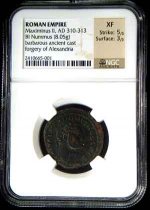
LSMorgan said:Show me a shipwreck coin that was forged in the period to avoid paying taxes, that's something I'm interested in buying, more so than a run of the mill "legit" cob from that same wreck.
In the 'ancient' world there is known "forgery's" (of the period) that DID circulate as valid coinage
called Barbarous (read more on that below) ..
-------------------------------------------------------------------------------------------
Barbarous Coinage of the Fourth Century
The term barbarous coinage refers to crude imitative coins.
There are numerous theories about the origins of these coins.
This page is only about VLPP imitative coinage in the Siscian style.
Different imitative coins from different times cannot all be explained
in the same way, because of different circumstances. The circumstances
in the early fourth century were unique. Some people believe that these
coins were made just to alleviate a coin shortage, but the diocese of
Hispaniae did not have a mint, and these coins rarely turn up there.
Others believe that these coins were issued as pay for the military on the
frontiers, but how long would Constantine have been able to issue inferior
coinage before the troops, who put him in office, decided to remove him
from power? Each of these theories may be right to some extent, but they
do not look at the whole picture. Firmicus Maternus, who lived in the
fourth century, even said that an alignment of the stars and planets
influenced forgery. Maternus was probably wrong, though!
http://www.constantinethegreatcoins.com/barb2/
http://www.constantinethegreatcoins.com/CONSTANTINE_THE_GREAT_THE_COINS_SPEAK.Pdf
see page 69
Attachments
mad4wrecks
Bronze Member
- Dec 20, 2004
- 2,263
- 107
- Detector(s) used
- Aquapulse, DetectorPro Headhunter, Fisher F75
- Primary Interest:
- Shipwrecks
Dagfoto that was a great example. Thank you.
Here is a rebuttal by the late Bob Weller regarding the supposedly counterfeit coins:
http://www.apex-ephemera.com/treasure/rebuttal/
Tom
Here is a rebuttal by the late Bob Weller regarding the supposedly counterfeit coins:
http://www.apex-ephemera.com/treasure/rebuttal/
Tom
Au_Dreamers
Hero Member
mad4wrecks said:Dagfoto that was a great example. Thank you.
Here is a rebuttal by the late Bob Weller regarding the supposedly counterfeit coins:
http://www.apex-ephemera.com/treasure/rebuttal/
Tom
Paul Meyers, the
state attorney's investigator who is leading the probe.
"The coin is real gold but is worth only $272, Meyers said. And he said the
state has no record of gold coins being salvaged from the site listed in the
accompanying certificate of authenticity."
I guess since they gave them away as presents or kept some for themselves they wouldn't keep any records...
http://www.elementalanalysis.com/case-studies/the-wreck-of-the-nuestra-senora-de-atocha
Is it just me or are their "gold coins" a little silver looking?
- Thread starter
- #18
Hey thanks to all for the input,
I've enjoyed looking at reccommended readings for treasure hunting posted on this site, which is why I was reading Marx's book. I was just surprised that he was saying Fisher got busted selling counterfeit coins, and it seems Marx is a pretty reputable source from what i've read. I doubt I'll be buying any shipwreck coins any time soon, but I'll be sure to fire off any more questions I have on this site. Thx for the expertise.
I've enjoyed looking at reccommended readings for treasure hunting posted on this site, which is why I was reading Marx's book. I was just surprised that he was saying Fisher got busted selling counterfeit coins, and it seems Marx is a pretty reputable source from what i've read. I doubt I'll be buying any shipwreck coins any time soon, but I'll be sure to fire off any more questions I have on this site. Thx for the expertise.
mad4wrecks
Bronze Member
- Dec 20, 2004
- 2,263
- 107
- Detector(s) used
- Aquapulse, DetectorPro Headhunter, Fisher F75
- Primary Interest:
- Shipwrecks
You have to know a little bit about the history between Marx and Fisher. They first worked together way back in the late 1950's, exploring ruins & cenotes in Mexico. They were friends I believe but fiercely competitive. Marx was looking for the Atocha himself at one point. Bob's assertions about Mel in his book were true based on what was reported in the papers, but I believe there was an absence of malice.
Tom
Tom

shipluvr
Greenie
- Feb 19, 2011
- 10
- 0
Salvor6 said:Thats the story I remember Au Dreamer. Ther coins had microscopic coraline embedded in them. They were called "contempory counterfeit" which means they were counterfitted back in 1733 so the owners did not pay tax on the gold. Mel Fisher was completely exonerated.
IIRC, they were actually made in the 20th Century but claimed to be from 1733. But I do think Fisher believed them to be genuine at the time he sold them. Sad deal all the way around.
Top Member Reactions
-
 2351
2351 -
 1126
1126 -
 1055
1055 -
 896
896 -
 824
824 -
 784
784 -
 753
753 -
 750
750 -
 607
607 -
 500
500 -
 489
489 -
 473
473 -
 462
462 -
 423
423 -
 393
393 -
 389
389 -
 387
387 -
 381
381 -
O
381
-
 375
375
Users who are viewing this thread
Total: 2 (members: 0, guests: 2)