|
-
Apr 04, 2011, 01:41 PM
#1
-
Apr 04, 2011 01:41 PM
# ADS
-
Apr 04, 2011, 02:23 PM
#2
 da book worm--researcher
Re: Continental Currency Coin (Real of fake?)
chain cent reproduction coin *
-
Apr 04, 2011, 07:05 PM
#3
Re: Continental Currency Coin (Real of fake?)
I think it's a Continental dollar pattern rather than a chain cent. Her's a litle information and pics.
Unfortunately little is known about the important and captivating coin called the Continental Dollar. The denomination of the coin is unknown, but Newman has surmised the value to be a dollar. The first four emissions of Continental paper currency from May 10, 1775, through May 6, 1776, included a dollar bill, but the one dollar denomination was missing from the next six emissions and does not reappear until the last regular emission of Continental paper currency from January 14, 1779. It is thought that this Continental coin was meant to replace the paper dollar in these emissions. Also, the coin was made to be about the same size as the Spanish milled dollar and, like the Spanish coin, had an edge design. However who authorized or minted the coins is unknown.
Interestingly, there are no records of this coin in the actions of the Continental Congress, although other coinage concerns were recorded. On April 19, 1776 the Congress appointed a committee to determine the value of several foreign coins in relation to the Spanish dollar and on February 20, 1777 a congressional treasury committee recommended a mint be established, but nothing further was done on this matter. To date there is no evidence the Continental Currency coins were authorized or issued by the Continental Congress. Indeed, Robert Morris, the Superintendant of Finance during the Confederation period, appears not to have known of the Continental Dollars as he called his 1783 Nova Constellation patterns the first that were, "struck as an American Coin." (Morris, Diary for April 2, 1783).
The images on the Continental Currency coin are based on the designs found on Continental Congress fractional currency from the emission of February 17, 1776, which were designed by Benjamin Franklin. In fact, Newman has published Franklin's original drawing for the joined ring design on the reverse of the coin. One variety of the coin (shown below) includes the legend "EG FECIT", which is Latin for "EG made this". Newman has identified 'EG' as Elisha Gallaudet, who had previously engraved the design on the plates of the February 17, 1776, Continental fractional currency. His coins were struck in three metals the most common being pewter, with an estimated minting of about six thousand (of which a few hundred survive); the others, struck in brass and silver, are much rarer, with fifteen or so known examples in brass and four in silver. There are seven known die combinations made from four obverse and two reverse dies, with one obverse die (Newman 1) containing a misspelling of currency as CURENCY and another (Newman 4) having the misspelling CURRENCEY. From a close examination of the dies, Michael Hodder has demonstrated that the three metals were not used sequentially but rather were randomly minted during production. This suggests that the rare metal strikes were special presentation pieces rather than trial or pattern pieces.
The location of the mint is unknown but is thought to have been New York City. Articles referring to a Continental copper coin are found in the New York Journal of June 27, 1776, and the New York Gazette of July 1, 1776. In addition, the New York State paper currency emission of August 13, 1776, included four fractional notes as well as $2, $3, $5 and $10 bills, but like the Continental Congress emissions, did not include the $1 note. Hodder proposes two groups of dies made by different die sinkers and suggests that these two groups of coins may not have been minted in the same location. Group one includes Newman obverse dies 1 and 2 with a single reverse found in three different states listed by Newman as reverses A, B and C. Group two consists of two obverse dies, Newman 3 and 4 (with Newman obverse 5 being a recut of die 4) combined with one reverse die known as Newman D.
FAQ: The Continental "Dollar"
Concerning the large pewter (or silver) coin often called a Continental dollar. An introduction to that coin is available on our web site at:
http://www.coins.nd.edu/ColCoin/ColC...lar.intro.html
These coins are quite rare. Originals are valued at between $1,000 (in poorer condition) to about $15,000 is excellent condition. However, many reproductions and replicas have been made over the years for collectors; these reproductions have little or no market value. Some are sold for $1.00 as souvenirs at colonial sites as in Williamsburg, VA. The replicas have exactly the same markings as the originals but they are of a different metal (usually tin or lead) and have a different weight. Several, but not all replicas, are slightly smaller in diameter than the originals.
If you would like to determine if your coin is a rare original you should contact the American Numismatic Association. They provide an authentication service. Their site is located on the web at:
http://www.money.org/anacsauthent.html
At that site they state: "Items submitted for authentication are carefully examined and photographed; those determined to be genuine receive a black-and-white photo certificate of authenticity. AuthenticationPlus Service also can provide additional data, including, but not limited to: rarity, value, weight, diameter, specific gravity, variety, surface characteristics, reflectivity, originality, type of counterfeit, reed count, and recommended references for further research." Unfortunately the cost of this service is not listed, one must contact them at the following address for further information.
ANA Collector Services
818 North Cascade Avenue
Colorado Springs, CO 80903-3279
Telephone: 800/467-5725Fax: 719/634-4085
A company providing a grading service is the Professional Coin Grading Service (PCGS). They will attribute and grade colonial coins. Their services and prices are listed on the web at:
http://pcgs.com/
I should caution you I have 2-3 requests per week from individuals who think they have original "Continental Dollars." Statistically, based on the rarity of original examples and the large quantity of replicas, it is probable your coin may be a copy. Varieties with both the correct spelling (Currency) and the misspellings (Curency and Currencey) have been extensively copied. In either event if you wish to preserve your item, place it in an inert plastic coin holder and keep it out of direct sunlight or excessive heat. Most coin stores will have some coin holders available. One of the better brands is Saflip which is made of Polyethylene Terepthalate available from E and T Kointainer, Box 103, Sidney, OH 45365. A pack of 50 is under $5.00.
To dig or not to dig, that is the question!
-
Apr 04, 2011, 10:23 PM
#4
Re: Continental Currency Coin (Real of fake?)
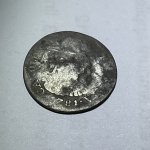
if that pic is of an original coin, then what I got could very well be a fake.
I never had much of hope of it being real for the fact this is Mississippi LOL, no one has anything of value around here.
Thats my 2 cent rant.
But I notice the coin in your pic the back side looks like its engraved into the coin whereas mine is raised design. This could be clear indication of a fake.
Its Ive never seen replicas look worn down and off set on the striking like that unless they were old spanish dabloon replicas and such. Plus mine is Shiny like clad (although is light metal it seems) and pewter and silver dont shine like that.
-
Apr 05, 2011, 02:32 AM
#5
Re: Continental Currency Coin (Real of fake?)
 Originally Posted by Patriot474
if that pic is of an original coin, then what I got could very well be a fake.
I never had much of hope of it being real for the fact this is Mississippi LOL, no one has anything of value around here.
Thats my 2 cent rant.
But I notice the coin in your pic the back side looks like its engraved into the coin whereas mine is raised design. This could be clear indication of a fake.
Its Ive never seen replicas look worn down and off set on the striking like that unless they were old spanish dabloon replicas and such. Plus mine is Shiny like clad (although is light metal it seems) and pewter and silver dont shine like that.
What you have is definitely a modern cast plated fake.
-
Apr 05, 2011, 04:34 AM
#6
Re: Continental Currency Coin (Real of fake?)

Been There !
I started a typeset collection of replicas of this issue after digging my first.
(photos 1 & 2)
I have a plated repro that looks similar to yours.
Photos 3 & 4 are a 1962 Bashlow restrike in .999, the Finest of the Fakes 
I'm still hoping to dig the real deal
2013 Finds:
Iron, Lead, Aluminum, Pewter, Copper, Silver, Gold.
Rare Coins Recovered since 2-2012:
1640-54 Portugal Johannes IV 400 Reis, Undated and non revaluation example.
1652 Pine Shilling, Noe-1.
1652 Oak Shilling, Noe-3.
1652 Pine Three Pence, Noe-35.
1652 Oak Three Pence, Noe-28.
1722 'Vtile Dvlci' Rosa Half Penny, Breen 132. He called it "Woods first prototype HP".
1796 US Half Cent, No Pole.
More to Come....
www.pinetreeshillings.com
Posting Permissions
- You may not post new threads
- You may not post replies
- You may not post attachments
- You may not edit your posts
-
Forum Rules
Search tags for this page
1776 continental currency, 1776 continental currency coin, 1776 continental currency coin real or fake, 1776 continental currency fake, 1776 continental currency value, continental curency 1776, continental currency, continental currency 1776, continental currency 1776 coin value, continental currency coin
Click on a term to search for related topics.
|