|
-
Jan 30, 2012, 07:47 PM
#1
 Strip Mining Northern California, One Silver Coin at a time...
Electrolysis Cleaning 101
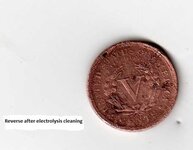
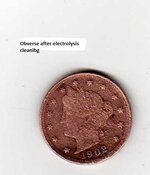
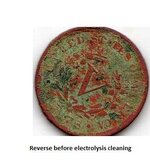
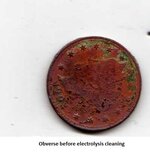
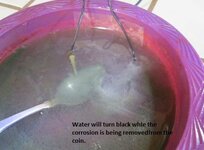
I dug up this 1902 V nickel yesterday. it took only about 25 minutes of electrolysis to get it looking better!
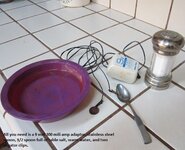
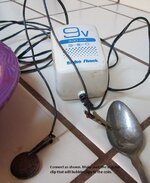
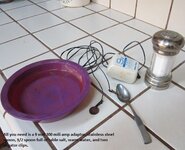
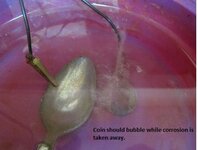
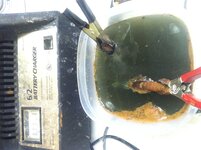
Electrolysis is one of the best ways to clean a dug old nickel. All is need is a 9 volt 300mA adaptor, plastic or glass
bowl, table salt, warm water, stainless steel spoon, and two alligator clips attached to wires after you cut off the plug.
Hunting San Francisco Bay Area since 1985
-
Jan 31, 2012, 12:22 AM
#2
 Director-Search & Recovery Team of Oakland County.
Re: Electrolysis Cleaning 101
Nice post as most guys don't know how to clean coins. One member asked me about using steel wool to scrub the coins to make them shinny.
(C) Sandman, 2005. All Rights Reserved.
"TIME IS THE ONLY THING YOU NEVER GET BACK, WHY WASTE IT SWINGING A DETECTOR THAT ISN'T UP TO THE TASK."
-
Jan 31, 2012, 12:27 AM
#3
 "John Holmes Jr."
Re: Electrolysis Cleaning 101
Great #1. Info! Got to try it.
GOLD Is Where You Find It! ... "John Holmes Jr."
-
Jan 31, 2012, 07:15 AM
#4
Re: Electrolysis Cleaning 101
Dont use stainless steel spoon.....the sludge it creates is toxic. I was corrected on this a a few weeks ago and upon further research I found this to be true
-
Jan 31, 2012, 08:14 AM
#5
 ARRG
Re: Electrolysis Cleaning 101
You should use stainless steel as an anode. All electrolysis systems use stainless steel as an anode and to wrap or attach the coin or object to be cleaned. I am sure there is some bad stuff created. Also do not use table salt, use sodium carbonate-washing soda, which can be found in the clothes washing section of the super market, or if you cannot find it, bake a cup of sodium bicarbonate-baking soda, in your oven at 350 for a hour, spread out on an aluminum sheet. The reason why is salt, table salt is corrosive, and sodium carbonate is not, usually you are trying to remove salts with reverse electroysis, so why use table salt? You are actually corroding the coin with table salt. It will work as about any salt will to become an electrolyte, but it is a known corrosive, and there are better electrolytes.
-
Jan 31, 2012, 09:18 AM
#6
Re: Electrolysis Cleaning 101
I prefer the vibrating type units used to clean cartridge cases. I use various cleaners, but powered walnut shells is among the best. Slow, but gives a smooth finish, not that acid etched look. I do use the electrolysis method on iron though as a starting point in conserving it. Frank
-
Feb 02, 2012, 07:47 AM
#7
Re: Electrolysis Cleaning 101
Radoishack here i come
-
Feb 02, 2012, 10:06 AM
#8
Re: Electrolysis Cleaning 101
Is electrolosis preferable to just throwing the coin in the tumbler? On a dug coin, which basically has no numismatic value anyway? When I dig an old wheat, I just tumble them with the rest of the cents.
-
Feb 02, 2012, 04:00 PM
#9
Re: Electrolysis Cleaning 101
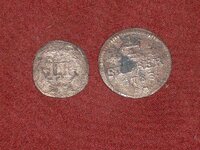
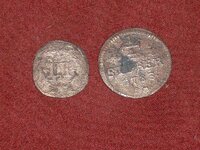
I use a charger from an old cell phone for electrolysis on coins. I do that sometimes on not valuable ones to get some detail. I use a shot of lemon juice in the water too. Here is a pic of two coins which i could identify after cleaning with electrolysis.
-
Feb 02, 2012, 07:28 PM
#10
Re: Electrolysis Cleaning 101
My guess is that electrolysis "gives back" the metal to the coin that's lost by oxidationl then you can tumble them if you'd like.
I put mine in my pocket with the rest of my change to rattle around - just don't spend them!
"A casual stroll through the lunatic asylum shows that faith does not prove anything." — Friedrich Nietzsche
-
Feb 02, 2012, 07:44 PM
#11
Re: Electrolysis Cleaning 101
Bum Luck, Electrolysis Remover the tarnished metal. That is why they look so pitted when you are finished. I only use it on old iron relics. They look good pitted. I prefer a vibrator with a media softer than the coin like walnt shell. It takes longer but the results are superior. Frank
-
Feb 03, 2012, 04:33 PM
#12
Re: Electrolysis Cleaning 101
Radoishack here i come Good Lord!.... Don't go give Radio Shack their 10,000% profit. Just grab about any old wall transformer you have and cut the ends off of the plug off the DC output end . You probably have dozens of junk ones already from Cell phones, Computers, everything now days. They are usually always in the 6-18 volt DC output range which is what you want. Go to a thrift store if you have to and they will have boxes of them for 50 cents each.
-
Feb 04, 2012, 09:23 AM
#13
Re: Electrolysis Cleaning 101
OR, use your battery charger. If it has a 6V position, use that. But 12 volts will work . Frank
-
Feb 11, 2012, 05:00 PM
#14
Re: Electrolysis Cleaning 101
 Originally Posted by Frankn
Bum Luck, Electrolysis Remover the tarnished metal. That is why they look so pitted when you are finished. I only use it on old iron relics. They look good pitted. I prefer a vibrator with a media softer than the coin like walnt shell. It takes longer but the results are superior. Frank
I gotta disagree with you. Electrolysis redeposits the metal in oxidation. The result isn't perfect, but look at how it works for Spanish cobs.
"A casual stroll through the lunatic asylum shows that faith does not prove anything." — Friedrich Nietzsche
-
Feb 12, 2012, 08:05 PM
#15
 ARRG
Re: Electrolysis Cleaning 101
Usually when cobs are cleaned, they use muratic acid. IF they are cleaned with Reverse Electrolysis, they use sodium carbonate as an electrolyte, not table salt. And this is controlled using a certain Specific gravity method of mixing the sodium carbonate in the water amount. Also they use a voltage and amperage/wattage controller. Each piece uses and needs a different amount of current to clean. It is not so much the voltage, it is the amps-current-pressure, etc that is the problem. Any more and it will erode the metal, same with table salt, it is very corrosive. Any metal salt will create an electrolyte, but table salt should not be used. This way with salt and noncontrolled current is bad, and should not be used. And could be a fire hazard, the little cell phone chargers and other small transformers are not meant to be under a full load shortout. They could get very hot and start a fire. Remember they still have 120 volts and 20+ amps available to them, and if shorted out could cause a real problem. And Bum Luck, reverse Electrolysis removes metal. It will remove corrosion and dirt and any buildup, but if used with too strong an electrolyte or strong current or too long a bath, it can and will erode the good metal. The calmer and slower the RE is, the easier it is to make sure there is no erosion of good metal. You just want to turn it up until you have a light fizzing of the object. Like I said it is a good method if done right, but can ruin a good coin or other object. Acid, if diluted right can work a lot better. And not erode good metal. Gold, silver and copper are not effected by muratic acid.
-
Feb 13, 2012, 06:13 AM
#16
Re: Electrolysis Cleaning 101
Drop a crusty red nickle in worcheshire sauce and leave it overnight. It will be dull, but nickle colored in the morning.
Posting Permissions
- You may not post new threads
- You may not post replies
- You may not post attachments
- You may not edit your posts
-
Forum Rules
Search tags for this page
cleaning cobs with electrolysis, cleaning metal with electrolysis, electrolisis cleaning, electrolysis clean, electrolysis cleaning, electrolytic gold etching, how to clean dug finds with electrolysis
Click on a term to search for related topics.
|