bosco
Jr. Member
I have been told over the years that's its best to hunt with good moist soil...but the other day I was talking to an older gentleman that said he had been detecting for over thirty years. He was telling me that this dry soil is the best to hunt in. I'm in Illinois and its dry...very..very..very dry here. I heard the other night on the weather we ar now nine inches behind on rainfall for this year.
Anyways....your opinions please. Also if you would state why you believe its better one way more than the other.
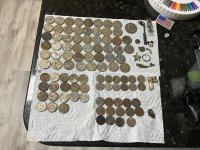
And the reason I'm asking this is because I've been doing some hunting lately at the local fair grounds which happen to date back to 1851 and even had a regiment from the civil war train on the grounds. Well....about five years ago I went through with a Garrett GTI 2500 I was using at the time and found nothing but a ton of clad. This time I'm using my Etrac and the results are much better than before.
Any thoughts on this matter would be greatly appreciated.
Anyways....your opinions please. Also if you would state why you believe its better one way more than the other.
And the reason I'm asking this is because I've been doing some hunting lately at the local fair grounds which happen to date back to 1851 and even had a regiment from the civil war train on the grounds. Well....about five years ago I went through with a Garrett GTI 2500 I was using at the time and found nothing but a ton of clad. This time I'm using my Etrac and the results are much better than before.
Any thoughts on this matter would be greatly appreciated.
Amazon Forum Fav 👍


Upvote
0