Welcome guest, is this your first visit?
Member
Discoveries
 
Results 1 to 11 of 11
  1. #1

    Mar 2004
    New Mexico
    616

    Spanish Cannon in the Black Range near the Continental Divide

    Several men recently brought a Spanish cannon out of the designated National Wilderness area of the Black Range near the Continental Divide. [They have a problem but they mightn't be aware of it yet]. It was on the surface, but well-concealed by vegitation and deadfall. Probably the group who removed it located it from the air by use of IR or another, more sophisticated method.

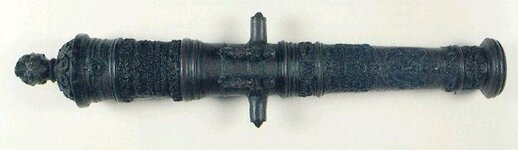
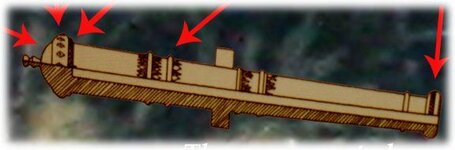
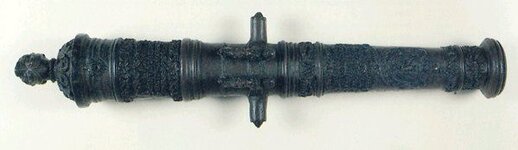
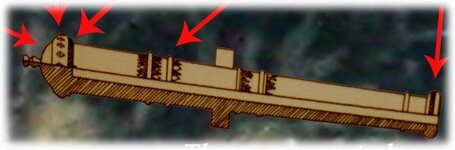
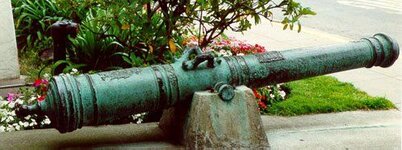
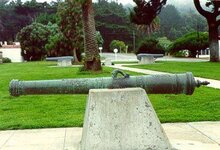
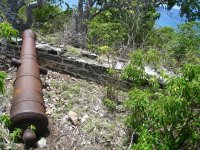
    Below are pics of Spanish artillery pieces similar to the one removed, first and second pics being most similar. The piece appears to date from the 1500s-1600s.

    The question I'd pose to anyone with a knowledge of the history of the area: What was a Spanish cannon doing there to be found? It was located in high, rough country within a short distance of the Continental Divide. The effort of getting it there must have been unimaginable.

    I'd appreciate anyone with a knowledge of Spanish expeditions to that area who has a splinter of information or documentation indicating the Spaniards carried one, or more field pieces into the upper-Gila or Black Range at any time, posting it here, or contacting me.

    Thanks,
    Jack
    Attached Thumbnails Attached Thumbnails Spanish Cannon in the Black Range near the Continental Divide-similar.jpg   Spanish Cannon in the Black Range near the Continental Divide-similar2.jpg   Spanish Cannon in the Black Range near the Continental Divide-similar.jpg   Spanish Cannon in the Black Range near the Continental Divide-similar2.jpg   Spanish Cannon in the Black Range near the Continental Divide-similar-3-tho-smaller-san-pedro.jpg  

    Spanish Cannon in the Black Range near the Continental Divide-similar-4-tho-smaller-field-piece-san-francisco-pic.jpg  

  2. #2

    Feb 2008
    1,481
    14 times

    Re: Spanish Cannon in the Black Range near the Continental Divide

    "[They have a problem but they mightn't be aware of it yet]. "

    That is an under statement! I suspect you posting this will get folks asking you!

    What would the Spanish be doing up their. A trail ? A lost expedition? A rebel group getting away from da King? Unless the area is properly examined for what else is there who knows. Relics of the past: and how and why; some times just have the questions.
    New toys take time to learn to use: New forums takes time to learn to use! Its why people prefer their old ones.

  3. #3

    Mar 2004
    New Mexico
    616

    Re: Spanish Cannon in the Black Range near the Continental Divide

    Quote Originally Posted by lostcauses
    "[They have a problem but they mightn't be aware of it yet]. "

    That is an under statement! I suspect you posting this will get folks asking you!

    What would the Spanish be doing up their. A trail ? A lost expedition? A rebel group getting away from da King? Unless the area is properly examined for what else is there who knows. Relics of the past: and how and why; some times just have the questions.
    lostcauses: The cannon's gone but it might still be possible to find out why it was up there.

    The folks who took it are going to get snagged in all likelihood, and I doubt anyone will be asking me any questions. The guys who found where it was [and didn't take it] located it last year, late fall, and had been planning on going in and photographing it, recording everything around it, learning everything they could. The intention was to bury it in place and try backtracking with a lot of data searches to determine how it got there. It was a big part of a book he was writing about some things that happened up around there. My friend had been searching for that cannon for 25 years as part of a larger story. He first learned about it in the 1970s or 80s from an old cowboy who came across it in the 1950s but couldn't recall exactly where it was.

    They went back in last week and the ground was still moist where the folks that hauled it off had raked the soil where it had been.

    That cannon is hot as a $2 pistol, but it's going to get hotter.

    Jack


  4. #4
    pw
    Apr 2003
    New Mexico
    BS
    1,668
    2 times

    Re: Spanish Cannon in the Black Range near the Continental Divide

    Quote Originally Posted by Highmountain

    The folks who took it are going to get snagged in all likelihood, and I doubt anyone will be asking me any questions. The guys who found where it was [and didn't take it] located it last year, late fall, and had been planning on going in and photographing it, recording everything around it, learning everything they could. The intention was to bury it in place and try backtracking with a lot of data searches to determine how it got there. It was a big part of a book he was writing about some things that happened up around there. My friend had been searching for that cannon for 25 years as part of a larger story. He first learned about it in the 1970s or 80s from an old cowboy who came across it in the 1950s but couldn't recall exactly where it was.

    They went back in last week and the ground was still moist where the folks that hauled it off had raked the soil where it had been.

    That cannon is hot as a $2 pistol, but it's going to get hotter.

    Jack
    He who hesitates is lost. What a gutshot. I feel your friend's pain, but ...

    Discovery of artifacts and other valuables is a controversial topic, with strong arguements on several sides of the ownership/control issue. The treasure trove laws of New Mexico favor the discoveror unless the original owner can be located. As the 'historic value' of the artifact increases, the issue is whether the individual has a legal right to recovery or the object belongs to 'society'. If located on Gummint Land, the State will trump the Little Guy no matter what. Of course, these arguements all assume the finder has not kept his mouth shut. I guess we all have our own moral compasses to guide us - I usually come down on the 'finders keepers' side myself, I guess because I tend towards the libertarian point of view. In the case at hand, it seems as though someone talked and someone else acted. I wouldn't be surprised if the rascals may not deserve the spoils, but it sounds like they have possession. I hope your friend continues with his book - I'll be in line to get a copy.

    Assuming this is indeed a 16th century Spanish cannon, one wonders why it's located in this area since no documented expeditions reported exploring there during that time frame. The possibilities include 1) An undocumented 16th century stealth operation, probably with a known destination since white folks in those days travelled almost exclusively in the drainages, not the high country. If so, they may have been protecting something valuable nearby. There are unsubstantiated allegations that such a stealth operation (40 Europeans including German miners, professional soldiers and an engineer) was accomplished in SW New Mexico 1540-1545. Repeat - an allegation. 2) A later Mexican expedition dragging the older cannon with them. There was a lot of activity in SW New Mexico in the period ca 1740-1840 chasing Apaches and reconnoitering the country. These folks may well have found themselves at higher elevations and decided to abandon the load.

    The cannon may also be an eagerly misidentified piece from, let's say the Civil War era or possibly earlier. There were a few US military-style treks through the Black Range prior to general settlement, although I don't recall mention of abandonment of artillery. Following is an interesting account of abandoned Confederate cannons in New Mexico. http://www.dchieftain.com/news/43273-08-07-04.html

    Those are my principles, and if you don't like them... well, I have others.
    Marx

  5. #5

    Mar 2004
    New Mexico
    616

    Re: Spanish Cannon in the Black Range near the Continental Divide

    Quote Originally Posted by Springfield
    Quote Originally Posted by Highmountain

    The folks who took it are going to get snagged in all likelihood, and I doubt anyone will be asking me any questions. The guys who found where it was [and didn't take it] located it last year, late fall, and had been planning on going in and photographing it, recording everything around it, learning everything they could. The intention was to bury it in place and try backtracking with a lot of data searches to determine how it got there. It was a big part of a book he was writing about some things that happened up around there. My friend had been searching for that cannon for 25 years as part of a larger story. He first learned about it in the 1970s or 80s from an old cowboy who came across it in the 1950s but couldn't recall exactly where it was.

    They went back in last week and the ground was still moist where the folks that hauled it off had raked the soil where it had been.

    That cannon is hot as a $2 pistol, but it's going to get hotter.

    Jack
    He who hesitates is lost. What a gutshot. I feel your friend's pain, but ...

    Discovery of artifacts and other valuables is a controversial topic, with strong arguements on several sides of the ownership/control issue. The treasure trove laws of New Mexico favor the discoveror unless the original owner can be located. As the 'historic value' of the artifact increases, the issue is whether the individual has a legal right to recovery or the object belongs to 'society'. If located on Gummint Land, the State will trump the Little Guy no matter what. Of course, these arguements all assume the finder has not kept his mouth shut. I guess we all have our own moral compasses to guide us - I usually come down on the 'finders keepers' side myself, I guess because I tend towards the libertarian point of view. In the case at hand, it seems as though someone talked and someone else acted. I wouldn't be surprised if the rascals may not deserve the spoils, but it sounds like they have possession. I hope your friend continues with his book - I'll be in line to get a copy.

    Assuming this is indeed a 16th century Spanish cannon, one wonders why it's located in this area since no documented expeditions reported exploring there during that time frame. The possibilities include 1) An undocumented 16th century stealth operation, probably with a known destination since white folks in those days travelled almost exclusively in the drainages, not the high country. If so, they may have been protecting something valuable nearby. There are unsubstantiated allegations that such a stealth operation (40 Europeans including German miners, professional soldiers and an engineer) was accomplished in SW New Mexico 1540-1545. Repeat - an allegation. 2) A later Mexican expedition dragging the older cannon with them. There was a lot of activity in SW New Mexico in the period ca 1740-1840 chasing Apaches and reconnoitering the country. These folks may well have found themselves at higher elevations and decided to abandon the load.

    The cannon may also be an eagerly misidentified piece from, let's say the Civil War era or possibly earlier. There were a few US military-style treks through the Black Range prior to general settlement, although I don't recall mention of abandonment of artillery. Following is an interesting account of abandoned Confederate cannons in New Mexico. http://www.dchieftain.com/news/43273-08-07-04.html
    Springfield: Thanks for the reply.

    Interestingly enough, my amigo thought it was a Civil War cannon he was looking for until he found it. The old cowboy who found it in the '50s hadn't been to school, couldn't read or write, and when asked how old he thought it was replied, "I think it was Spanish American War". He's long dead so the question of what he meant by Spanish American War's up for pondering. My friend assumed he just didn't have an understanding of history and started trying to find possibilities for a cannon being up there at all. Civil War seemed to him to be the best probability and he became an expert on what happened to every piece of artillery in the region during the Civil War years, and how many of which couldn't be accounted for.

    I lean to the 'finders keepers' view, also. But he's an angry man this week. I don't know what direction he'll be going.

    One of my hopes in posting this is that the absconders will make contact for the purposes of finding a way so's everyone gets what he wants. Otherwise there's no predicting what's going to come of it.

    There are unsubstantiated allegations that such a stealth operation (40 Europeans including German miners, professional soldiers and an engineer) was accomplished in SW New Mexico 1540-1545. Repeat - an allegation.

    Can you point me to any source material or references to this? Allegation or not, if the members of the operation didn't return it might explain the presence of the cannon up there. There's cause to think the nuance of 'abandoned' doesn't quite describe what happened to cause it to be there.

    Jack

  6. #6
    pw
    Apr 2003
    New Mexico
    BS
    1,668
    2 times

    Re: Spanish Cannon in the Black Range near the Continental Divide

    Quote Originally Posted by Highmountain
    .... There are unsubstantiated allegations that such a stealth operation (40 Europeans including German miners, professional soldiers and an engineer) was accomplished in SW New Mexico 1540-1545. Repeat - an allegation.

    Can you point me to any source material or references to this? Allegation or not, if the members of the operation didn't return it might explain the presence of the cannon up there. There's cause to think the nuance of 'abandoned' doesn't quite describe what happened to cause it to be there.

    Jack
    The only source material is an alleged leather map prepared ca 1545 by the engineer mentioned above, said map not seen at least since the death of Steve Harvey in 1995. Some of this was briefly touched on at http://forum.treasurenet.com/index.p...,154852.0.html , replies 2 and 7. There's a boatload of supporting circumstantial evidence all over the Santa Rita/Pinos Altos area of Grant County, centering at Map Cave, the subject of the map. The party was finally forced out of the area and was wiped out by the natives during their retreat - they only got as far as North Hurley. To my knowledge, there has been no mention of this group east of the Mimbres River.
    Those are my principles, and if you don't like them... well, I have others.
    Marx

  7. #7

    Mar 2004
    New Mexico
    616

    Re: Spanish Cannon in the Black Range near the Continental Divide

    Springfield: Thanks for the info about the Spanish expeditions.

    I suppose it would be difficult to differentiate between anything found as to precise time period unless it involved specific datable artifacts. Too bad the info from Steve H. is lost. I've seen good documentation of post-1680 Spaniard excursions in most directions in the northern part of NM, but not much in the southern part until Santa Rita began operations enough to get on the radar.

    I do agree there's a lot of evidence of a Spanish presence all over that area that's old, older than it should be, but not the kind of evidence that would go down in the annals of history chewing it's way into official acceptance. Sometimes the Gila area seems to me to be a sort of pivot-point, a key area in the directions history in the southwest US took without anybody much noticing it. Lots of things teetered and were decided there over the centuries.

    Strange when you think of it, what all's gone on in a 50-75 mile radius of Pinos Altos or Santa Rita.

    Jack

  8. #8
    pw
    Apr 2003
    New Mexico
    BS
    1,668
    2 times

    Re: Spanish Cannon in the Black Range near the Continental Divide

    Quote Originally Posted by Highmountain
    Springfield: Thanks for the info about the Spanish expeditions.

    I suppose it would be difficult to differentiate between anything found as to precise time period unless it involved specific datable artifacts. Too bad the info from Steve H. is lost. I've seen good documentation of post-1680 Spaniard excursions in most directions in the northern part of NM, but not much in the southern part until Santa Rita began operations enough to get on the radar.

    I do agree there's a lot of evidence of a Spanish presence all over that area that's old, older than it should be, but not the kind of evidence that would go down in the annals of history chewing it's way into official acceptance. Sometimes the Gila area seems to me to be a sort of pivot-point, a key area in the directions history in the southwest US took without anybody much noticing it. Lots of things teetered and were decided there over the centuries.

    Strange when you think of it, what all's gone on in a 50-75 mile radius of Pinos Altos or Santa Rita.

    Jack
    Like those Russian boxes-within-boxes. The more you seek, the more you find. Somehow, it all seems to be connected.
    Those are my principles, and if you don't like them... well, I have others.
    Marx

  9. #9

    Mar 2004
    New Mexico
    616

    Re: Spanish Cannon in the Black Range near the Continental Divide

    Quote Originally Posted by Springfield
    Quote Originally Posted by Highmountain
    Springfield: Thanks for the info about the Spanish expeditions.

    I suppose it would be difficult to differentiate between anything found as to precise time period unless it involved specific datable artifacts. Too bad the info from Steve H. is lost. I've seen good documentation of post-1680 Spaniard excursions in most directions in the northern part of NM, but not much in the southern part until Santa Rita began operations enough to get on the radar.

    I do agree there's a lot of evidence of a Spanish presence all over that area that's old, older than it should be, but not the kind of evidence that would go down in the annals of history chewing it's way into official acceptance. Sometimes the Gila area seems to me to be a sort of pivot-point, a key area in the directions history in the southwest US took without anybody much noticing it. Lots of things teetered and were decided there over the centuries.

    Strange when you think of it, what all's gone on in a 50-75 mile radius of Pinos Altos or Santa Rita.

    Jack
    Like those Russian boxes-within-boxes. The more you seek, the more you find. Somehow, it all seems to be connected.
    Yeah, it does. And weirdly, Pinos has always seemed to me to be the epicenter in a lot of ways. When Jack Swilling lured Mangus into captivity there for the murdering it could be thought a starting place, but it wasn't. Or when Jacob Snively and his two cohorts found gold there and started the gold rush, but it wasn't. Or all those guys enlisting as Arizona Scouts to go with Hunter out to Tucson, Swilling getting captured by the California Volunteers, but somehow ending up back at Pinos in time to lure Mangus in for the killing by the West command of CA Volunteers to kill, then head back west with the Joseph Beddeford Walker party and [sort of] found Phoenix.

    I figure all those missing people from the Hunter command that left Tucson May 1 and vanished [all but 12] probably all ended up at Pinos. Even old Jake S. landing there and spending the remainder of his life roaming from there, his descendants somehow being a centerpiece so's fate could keep a toe in the door in case it was needed some future time for something else.

    Just about everything that ever happened in there could be a starting place in one way of looking at things, but it all seems to bundle up and put out feelers to connect it to everything else going back far enough so's we lose track.

    Strange stuff any way you cut it.

    Edit: Incidently, and off topic, I came across a piece of correspondence in the US Archives of Civil War correspondence recently from Carlton when he was organizing the CA Volunteers to the US Army commander at Yuma Crossing. He instructs the commander to keep a close eye open for "Colonel Snively", whom he 'knows to be a spy', trying to cross there, presumably heading east [though maybe he didn't want him entering California and trying to stir up trouble - the general tone of the letter leaned toward stopping rebel sympathizers getting out of CA to join up with the Texans on the Rio Grande]. But there's cause to believe Snively was in Pinos Altos when the letter was written.


  10. #10
    pw
    Apr 2003
    New Mexico
    BS
    1,668
    2 times

    Re: Spanish Cannon in the Black Range near the Continental Divide

    Quote Originally Posted by Highmountain

    Yeah, it does. And weirdly, Pinos has always seemed to me to be the epicenter in a lot of ways. When Jack Swilling lured Mangus into captivity there for the murdering it could be thought a starting place, but it wasn't. Or when Jacob Snively and his two cohorts found gold there and started the gold rush, but it wasn't. Or all those guys enlisting as Arizona Scouts to go with Hunter out to Tucson, Swilling getting captured by the California Volunteers, but somehow ending up back at Pinos in time to lure Mangus in for the killing by the West command of CA Volunteers to kill, then head back west with the Joseph Beddeford Walker party and [sort of] found Phoenix.

    I figure all those missing people from the Hunter command that left Tucson May 1 and vanished [all but 12] probably all ended up at Pinos. Even old Jake S. landing there and spending the remainder of his life roaming from there, his descendants somehow being a centerpiece so's fate could keep a toe in the door in case it was needed some future time for something else.

    Just about everything that ever happened in there could be a starting place in one way of looking at things, but it all seems to bundle up and put out feelers to connect it to everything else going back far enough so's we lose track.

    Strange stuff any way you cut it.

    Edit: Incidently, and off topic, I came across a piece of correspondence in the US Archives of Civil War correspondence recently from Carlton when he was organizing the CA Volunteers to the US Army commander at Yuma Crossing. He instructs the commander to keep a close eye open for "Colonel Snively", whom he 'knows to be a spy', trying to cross there, presumably heading east [though maybe he didn't want him entering California and trying to stir up trouble - the general tone of the letter leaned toward stopping rebel sympathizers getting out of CA to join up with the Texans on the Rio Grande]. But there's cause to believe Snively was in Pinos Altos when the letter was written.
    Here's a couple more: I found the following old carving up on Twin Sisters Peaks about 30 years ago: "ADAMS 1880". Ring a bell? Steve Harvey found the following inscription on a timber inside a concealed adit, also on Twin Sisters, "Money and many good things for you. George Hearst 1847" This would have been before Pinos Altos was founded and decades before Hearst made a mining fortune across the canyon on Pinos Altos Mountain. Doesn't make sense, does it?
    Those are my principles, and if you don't like them... well, I have others.
    Marx

  11. #11

    Mar 2004
    New Mexico
    616

    Re: Spanish Cannon in the Black Range near the Continental Divide

    Quote Originally Posted by Springfield
    Quote Originally Posted by Highmountain

    Yeah, it does. And weirdly, Pinos has always seemed to me to be the epicenter in a lot of ways. When Jack Swilling lured Mangus into captivity there for the murdering it could be thought a starting place, but it wasn't. Or when Jacob Snively and his two cohorts found gold there and started the gold rush, but it wasn't. Or all those guys enlisting as Arizona Scouts to go with Hunter out to Tucson, Swilling getting captured by the California Volunteers, but somehow ending up back at Pinos in time to lure Mangus in for the killing by the West command of CA Volunteers to kill, then head back west with the Joseph Beddeford Walker party and [sort of] found Phoenix.

    I figure all those missing people from the Hunter command that left Tucson May 1 and vanished [all but 12] probably all ended up at Pinos. Even old Jake S. landing there and spending the remainder of his life roaming from there, his descendants somehow being a centerpiece so's fate could keep a toe in the door in case it was needed some future time for something else.

    Just about everything that ever happened in there could be a starting place in one way of looking at things, but it all seems to bundle up and put out feelers to connect it to everything else going back far enough so's we lose track.

    Strange stuff any way you cut it.

    Edit: Incidently, and off topic, I came across a piece of correspondence in the US Archives of Civil War correspondence recently from Carlton when he was organizing the CA Volunteers to the US Army commander at Yuma Crossing. He instructs the commander to keep a close eye open for "Colonel Snively", whom he 'knows to be a spy', trying to cross there, presumably heading east [though maybe he didn't want him entering California and trying to stir up trouble - the general tone of the letter leaned toward stopping rebel sympathizers getting out of CA to join up with the Texans on the Rio Grande]. But there's cause to believe Snively was in Pinos Altos when the letter was written.
    Here's a couple more: I found the following old carving up on Twin Sisters Peaks about 30 years ago: "ADAMS 1880". Ring a bell? Steve Harvey found the following inscription on a timber inside a concealed adit, also on Twin Sisters, "Money and many good things for you. George Hearst 1847" This would have been before Pinos Altos was founded and decades before Hearst made a mining fortune across the canyon on Pinos Altos Mountain. Doesn't make sense, does it?
    Now THAT is definitely a head-scratcher. I can see I'm going to have to back-track Hearst a bit.

    The 'Adams 1880' does make more sense. I don't recall the name at the moment, but the account by the Lake Valley investor who published his account 1899, Denver, and in the Socorro Chieftain about the same time as 'The Lost Cabin Mine' described how he, Adams, Shaw and several others had spent a lot of time searching 'the headwaters of the Gila to the Continental Divide. If I recall correctly they were up there several months, and 1880 might well have been the time-frame. [The account from the newspapers are both in TLAD - MM&M]

    Hearst 1847. Around US Boundary Commission time and Ewing. Hmmm.

    Thanks for that.

    Jack

    Edit: Williams Account I think that was, though I'd have to try to find some old notes or a copy of my book to confirm it.


Home | Forum | Active Topics | What's New

Sponsors

Posting Permissions

  • You may not post new threads
  • You may not post replies
  • You may not post attachments
  • You may not edit your posts
  •  

Search tags for this page

cannons spanish new mexico

,

pictures of spanish cannons

,

spanish cannon 1540

,

spanish cannons 16th century

,

spanish canon found

Click on a term to search for related topics.
Powered by vBadvanced CMPS v4.1.3