What's new

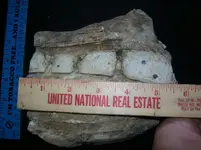
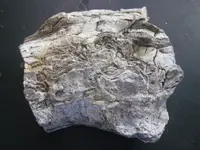
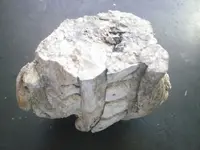
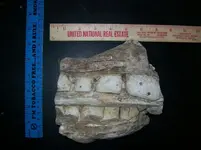
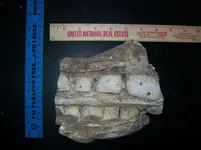
Student found this fossil....can you help us identify it?

jr.nation88

Jr. Member
Joined
Jan 14, 2012
Messages
27
Reaction score
4
Golden Thread
0
Primary Interest:
Other
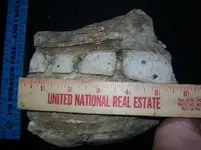
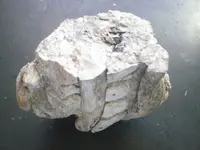
One of my students brought this in to try and ID and after much work I have not got very far. A friend pointed me to your sight because of the vast knowledge here. It was found in southeast Missouri, partially buried in a creek bed.
 

Attachments

  • Fossil1.webp
    Fossil1.webp
    40.3 KB · Views: 717
  • Fossil2.webp
    Fossil2.webp
    44.5 KB · Views: 743
  • IMG_0191.webp
    IMG_0191.webp
    66.7 KB · Views: 807
  • IMG_0193.webp
    IMG_0193.webp
    38 KB · Views: 744
  • Fossil1.webp
    Fossil1.webp
    40.3 KB · Views: 596
  • Fossil2.webp
    Fossil2.webp
    44.5 KB · Views: 726
  • IMG_0191.webp
    IMG_0191.webp
    66.7 KB · Views: 727
  • IMG_0193.webp
    IMG_0193.webp
    38 KB · Views: 738
Wow! If someone doesn't ID it here, email pictures to your closest university and have them look at it. Very interesting!
 
It is interesting! Will be curious to see what it is.....
 
That last image, if that is the original orientation in the earth, certainly appears to be some sort of burrows. In other words, this reminds me of an ichnofossil. Perhaps it is a highly-eroded example of something like Diplocraterion with the spreiten reduced to tooth-like nubs.
ichnofossilburrowsfeeding.gif​
 
Not insisting on it but still trying to get a clear answer. With my major I have studied alot of rocks and yet to have come across a sedimentary rock that has spilt with such perferct/proportionate shapes. I've concluded it is chert not limestone which hurts the fossil idea but my brain is not letting me believe it is just an 'accident'. I submitted the pictures to the Eastern Missouri Palentological Society who was intrigued but also had issues so they asked me to mail it to them and they would study it. It is in route now, so we wait.................
 
That's excellent, 'Jr.' Please be certain to let us know what you find out.

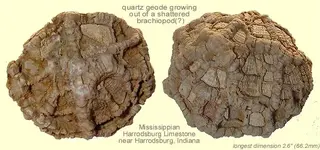
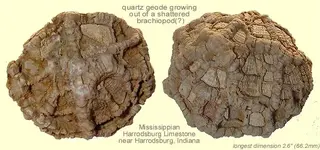
It is common for chert to preserve fossils. Moreover, it is common for cryptocrystaline quartz (SiO2 - "chert") to be differentially deposited around irregularities in sediment which eventually becomes limestone. The best examples of this phenomenon are the silicified remains of marine animals in the Mississippian Harrodsburg Limestone.

geodebrachiopod.webp​
 

Attachments

  • geodebrachiopod.webp
    geodebrachiopod.webp
    54.4 KB · Views: 310

Users who are viewing this thread

Back
Top Bottom