cryptic
Full Member
- #1
Thread Owner
I sent an email to one of the pro bottle guys and hope to get a responce. I don't know much about it. Here is my expert evaluation..
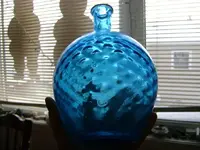
-It's Blue
-8 3/4 inches high (approximate)
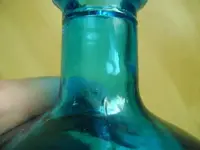
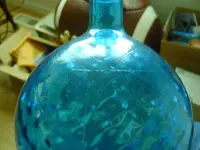
-I think it is BIM. The side seams run up the bottle and stop or fade away at the neck.
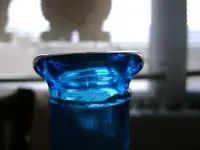
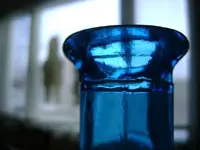
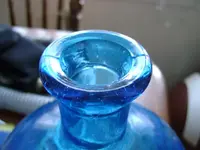
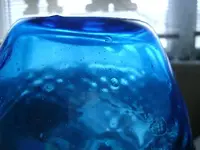
-The top or lip of the bottle seems to have been applied afterwards as a different piece.
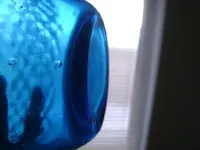
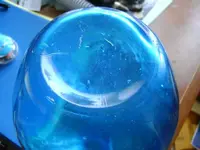
- It has an almost very smooth base with a circular upward indentation. No manufacturer marks.
-It appears to have another seam running horizontally 1/3rd down from the top of the bottle.
Maybe it is not even a bottle, but it is #1 in my book.
-It's Blue
-8 3/4 inches high (approximate)
-I think it is BIM. The side seams run up the bottle and stop or fade away at the neck.
-The top or lip of the bottle seems to have been applied afterwards as a different piece.
- It has an almost very smooth base with a circular upward indentation. No manufacturer marks.
-It appears to have another seam running horizontally 1/3rd down from the top of the bottle.
Maybe it is not even a bottle, but it is #1 in my book.
Attachments
-
 DSC01053.webp11.8 KB · Views: 431
 -
 DSC01058.webp14.3 KB · Views: 403
 -
 DSC01057.webp11.4 KB · Views: 409
 -
 DSC01060.webp20.1 KB · Views: 416
 -
 DSC01061.webp14.4 KB · Views: 410
 -
 DSC01062.webp29.4 KB · Views: 415
 -
 DSC01063.webp18.9 KB · Views: 410
 -
 DSC01064.webp20.7 KB · Views: 410
 -
 DSC01065.webp23.4 KB · Views: 409