Home
Forums
New posts
Top Treasure Finds
Search forums
Members
Current visitors
New profile posts
Search profile posts
What's new
New posts
New threads
New Banner Finds
New media
New media comments
New profile posts
Latest activity
Gallery
New media
New comments
Search media
Top Finds
Charter Member
Upgrade!
Charter Member Stats
Log in
Register
What's new
Search
Search
Everywhere
Threads
This forum
Search titles only
By:
New posts
Top Treasure Finds
Search forums
Members
Current visitors
New profile posts
Search profile posts
Menu
Log in
Register
Navigation
Install the app
Install
More options
Contact us
Close Menu
Home
Forums
Our Discoveries
JavaScript is disabled. For a better experience, please enable JavaScript in your browser before proceeding.
You are using an out of date browser. It may not display this or other websites correctly.
You should upgrade or use an
alternative browser
.
What Is It? 🕵️
Have you found something and need help ID'ing it? Ask here.
Top threads
1
2
3
…
Go to page
Go
3175
Next
1 of 3175
Go to page
Go
Next
Last
Latest updates
Popular
Newest
Unanswered
Unsolved
Filters
Show only:
Loading…
Locked
Sticky
Solved
✅ SOLVED
How to mark your "What Is It" SOLVED -- PHOTO TUTORIAL.
River Rat
Aug 12, 2013
Answers
1
Views
50K
May 8, 2022
Treasure_Hunter
Locked
Sticky
PLEASE READ BEFORE POSTING ITEMS IN "WHAT IS IT?"
PBK
Jul 20, 2009
Answers
1
Views
63K
Jun 28, 2013
River Rat
🔎 UNIDENTIFIED
Another unknown found today. Help needed, TIA
Merf
Tuesday at 4:23 PM
Answers
5
Views
349
Yesterday at 5:06 PM
Merf
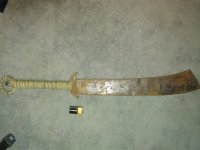
An Interesting Sword
EnvoyToTheMolePeople
Dec 29, 2020
Answers
12
Views
1K
Yesterday at 12:14 PM
Joecoins
🔎 UNIDENTIFIED
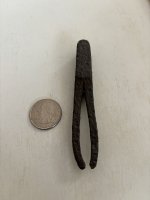
Little help figuring out what these are.....?
Martyo
Tuesday at 3:15 PM
Answers
11
Views
512
Yesterday at 12:11 PM
Martyo
🔎 UNIDENTIFIED
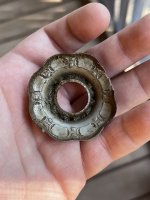
What is this? It’s ornate and flower shaped, maybe pewter or silver plated? Also looks old to me?
DarthYoda333
Yesterday at 8:07 AM
Answers
6
Views
219
Yesterday at 11:01 AM
cudamark
🔎 UNIDENTIFIED
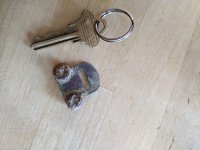
Another whatsit from an early 1900s cavalry camp.
VTSwinger
Monday at 8:16 AM
Answers
4
Views
300
Yesterday at 7:26 AM
VTSwinger
V
✅ SOLVED
Found this while detecting; Not metal
bartholomewroberts
Apr 19, 2024
Answers
10
Views
537
Wednesday at 9:21 PM
bartholomewroberts
🔎 UNIDENTIFIED
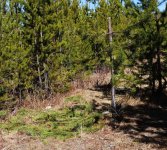
Broke Tree Mystery - What Did This ?
Cariboo5
Saturday at 9:20 PM
2
Answers
24
Views
813
Wednesday at 5:47 PM
Almy
🔎 UNIDENTIFIED
Stone artifact?
Maybmeteor
Monday at 9:28 AM
Answers
7
Views
414
Wednesday at 5:41 PM
Almy
🔎 UNIDENTIFIED
Cap gun handle?
Nathan W
Monday at 5:19 PM
Answers
5
Views
249
Wednesday at 5:11 PM
Nathan W
🔎 UNIDENTIFIED
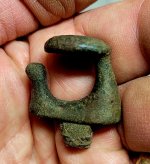
Type of a rein guide?
pepperj
Tuesday at 7:54 PM
Answers
2
Views
235
Wednesday at 5:04 PM
Gare
🔎 UNIDENTIFIED
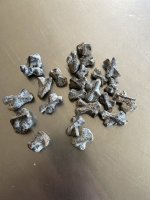
I keep finding these all over my parent's yard. Ring up as steelish...
PluGGLife
Sunday at 12:14 PM
Answers
6
Views
375
Wednesday at 4:48 PM
Gare
🔎 UNIDENTIFIED
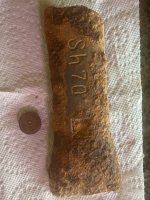
Cast iron piece stamped "Sh 70"
robertk
Wednesday at 4:09 AM
Answers
2
Views
158
Wednesday at 5:26 AM
pepperj
T
What is this??
Travi
Monday at 10:18 PM
Answers
1
Views
207
Tuesday at 3:57 AM
vpnavy
✅ SOLVED
1860 hawksley powder flask , thanks to Deftone
Merf
Monday at 5:05 PM
Answers
3
Views
319
Monday at 9:58 PM
Deftone
🔎 UNIDENTIFIED
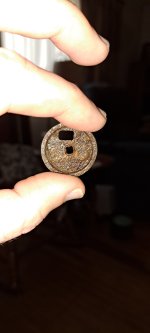
Old Button? I dont know.
Itzzjustwill
Monday at 6:22 PM
Answers
3
Views
160
Monday at 7:39 PM
fyrffytr1
🔎 UNIDENTIFIED
Need some help with a couple of finds please.
smr1000
Sunday at 8:06 PM
Answers
4
Views
309
Monday at 1:30 PM
Layt
L
🔎 UNIDENTIFIED
What is this?
sajtikus
Sunday at 1:46 PM
Answers
2
Views
283
Monday at 6:43 AM
Tony in SC
🔎 UNIDENTIFIED
Tooth found on the beach
TrenDavis
Sunday at 8:55 PM
Answers
1
Views
235
Sunday at 9:17 PM
releventchair
🔎 UNIDENTIFIED
Help me please
sajtikus
Sunday at 5:46 AM
Answers
5
Views
313
Sunday at 12:28 PM
cudamark
🔎 UNIDENTIFIED
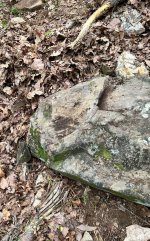
Rock Formation Inquiry
Twhitten88
Apr 18, 2024
Answers
2
Views
267
Sunday at 5:57 AM
Tony in SC
1
2
3
…
Go to page
Go
3175
Next
1 of 3175
Go to page
Go
Next
Last
You must log in or register to post here.
Users who are viewing this forum
Latest Discussions
THE Random Chat Thread - AKA "The RCT" - No shirt or shoes required - Open 24 / 7
Latest: ToddsPoint
1 minute ago
General Discussion
ID help
Latest: CreekSide
11 minutes ago
North American Indian Artifacts
Strange Circular Anomalies in the field at Treasure Sites? What do you see?
Latest: newnan man
13 minutes ago
Treasure Legends
Show off your best materials.
Latest: CreekSide
15 minutes ago
North American Indian Artifacts
Staurolites
Latest: Chilli
15 minutes ago
Today's Finds! 📅
cobbs or a scaper?
Latest: newnan man
28 minutes ago
North American Indian Artifacts
Home
Forums
Our Discoveries
Top