What's new

Colonial house relic( UPDATE-Great news on this relic)

Colonial Copper Zeus

Bronze Member
Joined
Jan 6, 2007
Messages
2,276
Reaction score
22
Golden Thread
0
Location
Milky Way Galaxy
Detector(s) used
Whites Vision Spectra
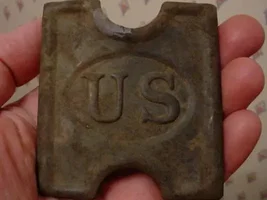
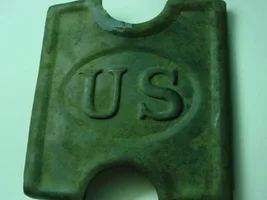
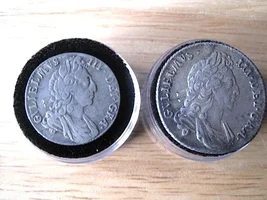
The 3 detectateers had high hopes going into this weeks new spot. It was not to be. Late 1700's early 1800's house. No old coins to speak of but I did find this spoon. It is made of pure silver. I never found a solid silver spoon before. It's very thin and teaspoon size. It has calligraphy letters on the top face. It also has I-M on the back. Anyone out there know their spoons? I would appreciate input.
Thanks
Chris
PIC00001-2.jpg

PIC00007-3.jpg

PIC00006-2.jpg

PIC00005.jpg
 
Upvote 0
Nice find...The silver whistle I just found is stamped "IT" and is attributed to Joseph Taylor. Your "IM" spoon is attributed to John McMullen...Did "I" mean "J" during this era...weird...
 
hey chris,

awesome find, like that you can tie it back to the silversmith who made it, VERY cool

take care,

kevin
 
That's a great spoon find, congrats :thumbsup:
 
romeo-1 said:
Nice find...The silver whistle I just found is stamped "IT" and is attributed to Joseph Taylor. Your "IM" spoon is attributed to John McMullen...Did "I" mean "J" during this era...weird...

I think there was no J in the alphabet (or something like that). I get many 17th century tokens with I meaning J.
 
Colonial wilver coin spoon...we're not worthy, you looney biscuit of an oysterboy. OOOOF :D
 
CRUSADER said:
romeo-1 said:
Nice find...The silver whistle I just found is stamped "IT" and is attributed to Joseph Taylor. Your "IM" spoon is attributed to John McMullen...Did "I" mean "J" during this era...weird...

I think there was no J in the alphabet (or something like that). I get many 17th century tokens with I meaning J.

I wouldn't go that far with it. :D As Jerry Seinfeld once said to George, "I sometimes spell my name with a G and an I." :D

Does that mean Thomas Jefferson would spell his name like Thomas Iefferson. OOOF :D
 
Colonial Zoyboy said:
CRUSADER said:
romeo-1 said:
Nice find...The silver whistle I just found is stamped "IT" and is attributed to Joseph Taylor. Your "IM" spoon is attributed to John McMullen...Did "I" mean "J" during this era...weird...

I think there was no J in the alphabet (or something like that). I get many 17th century tokens with I meaning J.

I wouldn't go that far with it. :D As Jerry Seinfeld once said to George, "I sometimes spell my name with a G and an I." :D

Does that mean Thomas Jefferson would spell his name like Thomas Iefferson. OOOF :D

Copied from:
http://www.bbc.co.uk/dna/h2g2/A2451890


The last letter to be added to the English alphabet was the letter J. Similarly to the evolution of U and V, I and J started out as variations of a single letter. Scribes might put a long tail on a final I if there were a few in a row. For example, Henry the Eighth could be written 'Henry viij'. It was up to the scribe to decide which version of the letter he wanted to use.
 
CRUSADER said:
romeo-1 said:
Nice find...The silver whistle I just found is stamped "IT" and is attributed to Joseph Taylor. Your "IM" spoon is attributed to John McMullen...Did "I" mean "J" during this era...weird...

I think there was no J in the alphabet (or something like that). I get many 17th century tokens with I meaning J.

Yep...I thought it might be something like that...similar to interchanging "U" and "V"...
 
CRUSADER said:
Colonial Zoyboy said:
CRUSADER said:
romeo-1 said:
Nice find...The silver whistle I just found is stamped "IT" and is attributed to Joseph Taylor. Your "IM" spoon is attributed to John McMullen...Did "I" mean "J" during this era...weird...

I think there was no J in the alphabet (or something like that). I get many 17th century tokens with I meaning J.

I wouldn't go that far with it. :D As Jerry Seinfeld once said to George, "I sometimes spell my name with a G and an I." :D

Does that mean Thomas Jefferson would spell his name like Thomas Iefferson. OOOF :D

Copied from:
http://www.bbc.co.uk/dna/h2g2/A2451890


The last letter to be added to the English alphabet was the letter J. Similarly to the evolution of U and V, I and J started out as variations of a single letter. Scribes might put a long tail on a final I if there were a few in a row. For example, Henry the Eighth could be written 'Henry viij'. It was up to the scribe to decide which version of the letter he wanted to use.

This is the mid-1500s. I was talking about late 1790s-1840s.
 
Colonial Zoyboy said:
CRUSADER said:
Colonial Zoyboy said:
CRUSADER said:
romeo-1 said:
Nice find...The silver whistle I just found is stamped "IT" and is attributed to Joseph Taylor. Your "IM" spoon is attributed to John McMullen...Did "I" mean "J" during this era...weird...

I think there was no J in the alphabet (or something like that). I get many 17th century tokens with I meaning J.

I wouldn't go that far with it. :D As Jerry Seinfeld once said to George, "I sometimes spell my name with a G and an I." :D

Does that mean Thomas Jefferson would spell his name like Thomas Iefferson. OOOF :D

Copied from:
http://www.bbc.co.uk/dna/h2g2/A2451890


The last letter to be added to the English alphabet was the letter J. Similarly to the evolution of U and V, I and J started out as variations of a single letter. Scribes might put a long tail on a final I if there were a few in a row. For example, Henry the Eighth could be written 'Henry viij'. It was up to the scribe to decide which version of the letter he wanted to use.

This is the mid-1500s. I was talking about late 1790s-1840s.

I can only guess that the silver smiths followed old traditions. Otherwise how do you exaplain it?
 
CRUSADER said:
Colonial Zoyboy said:
CRUSADER said:
Colonial Zoyboy said:
CRUSADER said:
romeo-1 said:
Nice find...The silver whistle I just found is stamped "IT" and is attributed to Joseph Taylor. Your "IM" spoon is attributed to John McMullen...Did "I" mean "J" during this era...weird...

I think there was no J in the alphabet (or something like that). I get many 17th century tokens with I meaning J.

I wouldn't go that far with it. :D As Jerry Seinfeld once said to George, "I sometimes spell my name with a G and an I." :D

Does that mean Thomas Jefferson would spell his name like Thomas Iefferson. OOOF :D

Copied from:
http://www.bbc.co.uk/dna/h2g2/A2451890


The last letter to be added to the English alphabet was the letter J. Similarly to the evolution of U and V, I and J started out as variations of a single letter. Scribes might put a long tail on a final I if there were a few in a row. For example, Henry the Eighth could be written 'Henry viij'. It was up to the scribe to decide which version of the letter he wanted to use.

This is the mid-1500s. I was talking about late 1790s-1840s.

I can only guess that the silver smiths followed old traditions. Otherwise how do you exaplain it?

God bless their traditional ways. OOOOF :D
 
Colonial Zoyboy said:
CRUSADER said:
Colonial Zoyboy said:
CRUSADER said:
Colonial Zoyboy said:
CRUSADER said:
romeo-1 said:
Nice find...The silver whistle I just found is stamped "IT" and is attributed to Joseph Taylor. Your "IM" spoon is attributed to John McMullen...Did "I" mean "J" during this era...weird...

I think there was no J in the alphabet (or something like that). I get many 17th century tokens with I meaning J.

I wouldn't go that far with it. :D As Jerry Seinfeld once said to George, "I sometimes spell my name with a G and an I." :D

Does that mean Thomas Jefferson would spell his name like Thomas Iefferson. OOOF :D

Copied from:
http://www.bbc.co.uk/dna/h2g2/A2451890


The last letter to be added to the English alphabet was the letter J. Similarly to the evolution of U and V, I and J started out as variations of a single letter. Scribes might put a long tail on a final I if there were a few in a row. For example, Henry the Eighth could be written 'Henry viij'. It was up to the scribe to decide which version of the letter he wanted to use.

This is the mid-1500s. I was talking about late 1790s-1840s.

I can only guess that the silver smiths followed old traditions. Otherwise how do you exaplain it?

God bless their traditional ways. OOOOF :D

I'm only guessing but just read this for printed material:
These dual-purpose letters were found in 18th century printed material through the mid-18th century, at which time they began to be replaced by "J" and "U". (It is useful to look at the alphabets on samplers to see if "J" and "U" are present. If not, it may be an indicator that the sampler was created prior to the mid 1700's.)

So for most printers it had died out in 1750s, however them smithys seem to hang on to it the longest :icon_scratch:

more guesses, it was not uncommon to name your Son or Grandson the same name. Therefore maybe the keeped there 'mark' in the family ???, Or there was already a J.M recorded as a markers mark so he reverted back to the next closest??
 
CRUSADER said:
Colonial Zoyboy said:
CRUSADER said:
Colonial Zoyboy said:
CRUSADER said:
Colonial Zoyboy said:
CRUSADER said:
romeo-1 said:
Nice find...The silver whistle I just found is stamped "IT" and is attributed to Joseph Taylor. Your "IM" spoon is attributed to John McMullen...Did "I" mean "J" during this era...weird...

I think there was no J in the alphabet (or something like that). I get many 17th century tokens with I meaning J.

I wouldn't go that far with it. :D As Jerry Seinfeld once said to George, "I sometimes spell my name with a G and an I." :D

Does that mean Thomas Jefferson would spell his name like Thomas Iefferson. OOOF :D

Copied from:
http://www.bbc.co.uk/dna/h2g2/A2451890


The last letter to be added to the English alphabet was the letter J. Similarly to the evolution of U and V, I and J started out as variations of a single letter. Scribes might put a long tail on a final I if there were a few in a row. For example, Henry the Eighth could be written 'Henry viij'. It was up to the scribe to decide which version of the letter he wanted to use.

This is the mid-1500s. I was talking about late 1790s-1840s.

I can only guess that the silver smiths followed old traditions. Otherwise how do you exaplain it?

God bless their traditional ways. OOOOF :D

I'm only guessing but just read this for printed material:
These dual-purpose letters were found in 18th century printed material through the mid-18th century, at which time they began to be replaced by "J" and "U". (It is useful to look at the alphabets on samplers to see if "J" and "U" are present. If not, it may be an indicator that the sampler was created prior to the mid 1700's.)

So for most printers it had died out in 1750s, however them smithys seem to hang on to it the longest :icon_scratch:

more guesses, it was not uncommon to name your Son or Grandson the same name. Therefore maybe the keeped there 'mark' in the family ???, Or there was already a J.M recorded as a markers mark so he reverted back to the next closest??

You never cease to amaze me with your datecting finds and extreme knowledge. :icon_sunny: I love you, buddy! :-* :D
 
Zeus,

Since I am John Walter's senior campaign manager, I would like to get the word out. Vote John "Johnny" Walter for President! OOOOF :D

Change is coming, folks, and John Walter is the one bringing it! :icon_sunny: :icon_sunny: :icon_sunny: :icon_jokercolor:

Lemony Snicket
 
Colonial Zoyboy said:
Zeus,

Since I am John Walter's senior campaign manager, I would like to get the word out. Vote John "Johnny" Walter for President! OOOOF :D

Change is coming, folks, and John Walter is the one bringing it! :icon_sunny: :icon_sunny: :icon_sunny: :icon_jokercolor:

Lemony Snicket

He should be the old styley - Iohn Walter
 
romeo-1 said:
Nice find...The silver whistle I just found is stamped "IT" and is attributed to Joseph Taylor. Your "IM" spoon is attributed to John McMullen...Did "I" mean "J" during this era...weird...
That's what I thought. It must be so . That silver whistle is top notch.
Chris
 

Users who are viewing this thread

Back
Top Bottom