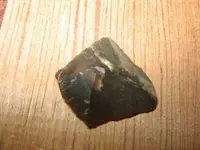
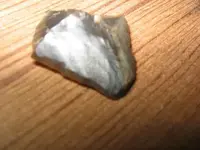
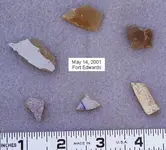
"Now. I got to figure out why so many gun flints are being found here."
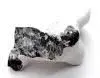
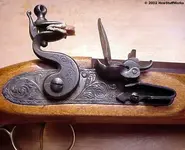
Gun flints were a "consumed" in the process of fireing a flintlock gun. The flint not only strikes the iron frizen of the flintlock's lock, but the flint also wears. A flint in some cases is chipped to an edge on two sides and is reversable, but some flints have only one useable edge and this will wear with use. It can be knapped to restore its edge.
(i have done this many times to insure a good spark, while the flint was still clamped in the hammer jaws) But troops, hunting parties, etc, would make sure that they had sufficient lead ball, black powder, and flints to insure that they could use their flintlocks for their intended purpose. A flintlock gun, with lead ball bullets and dry black powder is still little more than a club without a reliable flint to get the whole process started. Are you finding the flints in 'groups' ? then they might be the remains of packets or even boxes of flints that were taken along. Are the edges of the flints sharp? or worn round? They may be used flints disposed of when it was necessary to replace them due to unreliable sparking.


 You go that extra mile to help anyone with questions in TN.