What's new

Themed thread: Rare/unique artifact materials from your area.

LandSeig

Hero Member
Joined
May 16, 2020
Messages
547
Reaction score
1,508
Golden Thread
0
Location
Southeast Tx
Detector(s) used
Garrett AT Pro, NEL Storm coil
Primary Interest:
All Treasure Hunting
Post your points/artifacts that are materials unique to your area. All pictures welcome and please add a description explaining material as well. For instance one of my favorite local is petrified wood or petrified palm, it comes in a lot of different colors locally. I have found chalky white with jet black interior, black/red, and light blue palm wood. Some knaps better than others.

One I found:
45E8FF20-84E1-45F7-B8B9-AF7AE65AB91E.webp

One I knapped:
A9DA7EB9-EE1D-4C1E-ADD9-51091163F7BD.webp
 
Upvote 8

These were found by my head hunting partner. This is Payson flint. Old time collectors called it Brown Co flint because many artifacts made of it were found there. The source wasn’t found until the 70s in Adams Co, the county next to Brown. It’s only found in one small creek. Present landowners keep everyone out. The flint works great raw and was never heated. The source was evidently covered up after early archaic times and no woodland points were made from it. Paleo and early archaic only.View attachment 2152925

This is Paoli flint, also known as Carter Cave. It’s totally exotic for our area. Beautiful material.View attachment 2152926

This one is unknown material. A one off we’ve never seen before.View attachment 2152927

Indy Green, also called Attica flint. This material turns up occasionally but is generally fairly rare. The source is over 100 miles.View attachment 2152928
I grew up in Brown County. We used to find points of that furst material in Salt Creek that ran through our property.
 
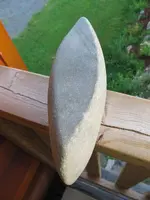
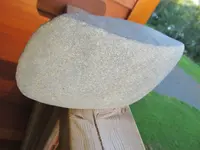
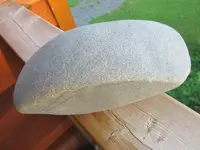
Unusual celt found washed out of alluvial soil on New Brunswick, Canada, riverbank without other artifacts nearby. The unusual shape stood out as i boated by. Provincial archaeologist had not seen one like it in the province but upon searching found another example had been found in Maine. They apparently are the only two that have been found. Its 7 1/4" long, 3 7/8" wide, 2 1/4" thick at its thickest and weighs 4 1/2 pounds. Its too big and heavy to hold in the hand comfortably and therefore must have been hafted. However, there is no groove for lashings. I have visions of its being used to scrape and pound out the charcoal and softened wood while hollowing out a log to make a dugout canoe. But, of course, that is just a guess. Other suggestions welcome!
 

Attachments

  • Celt island (2).webp
    Celt island (2).webp
    542.4 KB · Views: 117
  • Celt island (1).webp
    Celt island (1).webp
    565.8 KB · Views: 120
  • Celt island.webp
    Celt island.webp
    798 KB · Views: 119
Last edited:
Unusual celt found washed out of alluvial soil on New Brunswick, Canada, riverbank without other artifacts nearby. The unusual shape stood out as i boated by. Provincial archaeologist had not seen one like it in the province but upon searching found another example had been found in Maine. They apparently are the only two that have been found. Its 7 1/4" long, 3 7/8" wide, 2 1/4" thick at its thickest and weighs 4 1/2 pounds. Its too big and heavy to hold in the hand comfortably and therefore must have been hafted. However, there is no groove for lashings. I have visions of its being used to scrape and pound out the charcoal and softened wood while hollowing out a log to make a dugout canoe. But, of course, that is just a guess. Other suggestions welcome!
It’s definitely different. Maybe someone will know
 
Unusual celt found washed out of alluvial soil on New Brunswick, Canada, riverbank without other artifacts nearby. The unusual shape stood out as i boated by. Provincial archaeologist had not seen one like it in the province but upon searching found another example had been found in Maine. They apparently are the only two that have been found. Its 7 1/4" long, 3 7/8" wide, 2 1/4" thick at its thickest and weighs 4 1/2 pounds. Its too big and heavy to hold in the hand comfortably and therefore must have been hafted. However, there is no groove for lashings. I have visions of its being used to scrape and pound out the charcoal and softened wood while hollowing out a log to make a dugout canoe. But, of course, that is just a guess. Other suggestions welcome!
Not to be a wet newspaper, but has glacier action been considered? Isn’t your area covered in glacial deposits?

Is it one smooth flat face? Can’t tell from the photos.
 
Unusual celt found washed out of alluvial soil on New Brunswick, Canada, riverbank without other artifacts nearby. The unusual shape stood out as i boated by. Provincial archaeologist had not seen one like it in the province but upon searching found another example had been found in Maine. They apparently are the only two that have been found. Its 7 1/4" long, 3 7/8" wide, 2 1/4" thick at its thickest and weighs 4 1/2 pounds. Its too big and heavy to hold in the hand comfortably and therefore must have been hafted. However, there is no groove for lashings. I have visions of its being used to scrape and pound out the charcoal and softened wood while hollowing out a log to make a dugout canoe. But, of course, that is just a guess. Other suggestions welcome!
Wow. That's a big ol sucker.
 
Hell of a glacier to make that thing.
I don’t want to completely side track this thread. Just thought I’d ask. It just doesn’t have a utilitarian chopping type feel to it. Kind of odd and definitely unique. Given the right contex, I’d be all over it myself.
 
Last edited:
I’ve not got any special artifact to post that I’ve found myself.

However this was a special gift to me.
I believe it to be termed a “Celt”, but unsure of the age. Northern California.


IMG_3022.jpeg


IMG_3023.jpeg


Not sure of the stone, but I’m holding out hope it’s a local Nephrite jade. Might be a common hard greenstone.

Almost looks like it could have been held in the hand to skin and cut tendons or a quarter an elk rather than hafted and used in a chopping fashion.

Any education would be appreciated.
 
Last edited:
I’ve not got any special artifact to post that I’ve found myself.

However this was a special gift to me.
I believe it to be termed a “Celt”, but unsure of the age. Northern California.


View attachment 2153583

View attachment 2153584


Not sure of the stone, but I’m holding out hope it’s a local Nephrite jade. Might be a common hard greenstone.

Almost looks like it could have been held in the hand to skin and cut tendons or a quarter an elk rather than hafted and used in a chopping fashion.

Any education would be appreciated.
If I had to guess I’d say Jade
 
I have to agree with CreekSide on Jade ! when I was in Alaska I found a conglomerate about 3 foot in diameter and it was full of Jade piece's and I spent about 3-4 hours chipping some of it out and it looked just the same color and texture of your find ! Congrats to you !
 
I have to agree with CreekSide on Jade ! when I was in Alaska I found a conglomerate about 3 foot in diameter and it was full of Jade piece's and I spent about 3-4 hours chipping some of it out and it looked just the same color and texture of your find ! Congrats to you !
I believe South America has the green jade celts also if I remember correctly.
 
About a year ago I previously posted Smoky Hill jasper as one of my several favorite artifact materials. Another favorite is Knife River Flint (KRF)

The generally accepted source of Knife River Flint is in Dunn County in western North Dakota. KRF is an exceptionally high-quality and durable toolstone. It has a wide distribution range throughout the states and provinces adjacent to and even farther removed from its source in North Dakota. It is distinctive in appearance, and identification based on general appearance is usually considered unequivocal (Prehistoric Hunters of the High Plains, Frison 1982).

Because KRF is such a high quality lithic it is not unusual to find artifacts made from it at great distances from its source. This is especially true of artifacts made by Paleoindian cultures. These early cultures were very mobile and long distance transport of high quality lithics was not an uncommon practice. Artifacts made of KRF are found throughout Nebraska. The Paleoindian artifacts made of KRF that we have found in southern Nebraska were at an approximate distance of 500 miles from the lithic source.

The Nebraska pieces in these images are personal river finds of mine and my dad’s. My dad and I were fortunate to be able to hunt together for a little over 50 years before he could no longer get around.

View attachment 2217106View attachment 2217107View attachment 2217108
Beautiful finds
 
Not actually super local but kinda the general area, Kay county chert or Florence, I always wanted to say Florence C but there’s a few different types. It gets really pink when heat treated, it has swirl fossils and often times has sort of banding that looks like partial finger prints.
IMG_0220.webp
IMG_0221.webp
 
About a year ago I previously posted Smoky Hill jasper as one of my several favorite artifact materials. Another favorite is Knife River Flint (KRF)

The generally accepted source of Knife River Flint is in Dunn County in western North Dakota. KRF is an exceptionally high-quality and durable toolstone. It has a wide distribution range throughout the states and provinces adjacent to and even farther removed from its source in North Dakota. It is distinctive in appearance, and identification based on general appearance is usually considered unequivocal (Prehistoric Hunters of the High Plains, Frison 1982).

Because KRF is such a high quality lithic it is not unusual to find artifacts made from it at great distances from its source. This is especially true of artifacts made by Paleoindian cultures. These early cultures were very mobile and long distance transport of high quality lithics was not an uncommon practice. Artifacts made of KRF are found throughout Nebraska. The Paleoindian artifacts made of KRF that we have found in southern Nebraska were at an approximate distance of 500 miles from the lithic source.

The Nebraska pieces in these images are personal river finds of mine and my dad’s. My dad and I were fortunate to be able to hunt together for a little over 50 years before he could no longer get around.

View attachment 2217106View attachment 2217107View attachment 2217108
KRF was found in the Hopewell mounds in Ohio many times. High quality Ross Blades were often made from KRF & Obsidian from the Yellowstone region of Wyoming. So the various cultures had a far & wide trading network. Those blades you found are amazing.
 
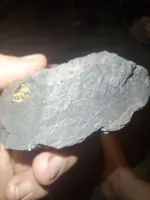
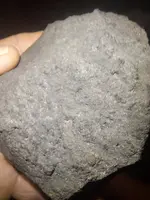
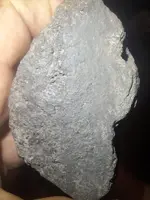
Thats a very nice point. I have seen black points from my area, But never any black material "flakes, etc." About a month are so back I found this and nobody has a answer for it yet. Whats your thoughts? Pics not very good, Buts its black as the ace of spades. I even broke a section off to see if it was black inside thats pic #1
 

Attachments

  • BR-1.webp
    BR-1.webp
    39.3 KB · Views: 58
  • BR-2.webp
    BR-2.webp
    95.9 KB · Views: 59
  • BR-3.webp
    BR-3.webp
    112.7 KB · Views: 54

Users who are viewing this thread

Latest Discussions

Back
Top Bottom