What's new

VDI?

monkeys uncle

Full Member
Joined
Mar 26, 2014
Messages
175
Reaction score
149
Golden Thread
0
Location
Waxahachie, Tx
Detector(s) used
Vanquish 440, E-Trac, Fisher F-Pulse pin-pointer
Primary Interest:
Other
Say guys/gals...on a hunch, what VDI value do you expect to recover a ring? Your choice...gold or silver.
 
What is the range of VDI on that machine as that is the answer. Rings can hit anywhere.
Anywhere?? Negative values?? With all due respect...I disagree.

Probabilities have a range as well...zero to one. Zero means "it ain't gonna happen". I'm asking for VDI values for rings that lean towards "more likely than not".
 
Last edited:
Anywhere?? Negative values?? With all due respect...I disagree.

Probabilities have a range as well...zero to one. Zero means "it ain't gonna happen". I'm asking for VDI values for rings that lean towards "more likely than not".
VDI numbers can still come in various id numbers depending on the purity of the gold and metal composition.
 
Depends upon the display/machine. Anywhere higher than a Nickel - usually right in with the foil and pull-tabs.

You won't get rings if ou don't dig a lot of junk as well.
 
Depends upon the display/machine. Anywhere higher than a Nickel - usually right in with the foil and pull-tabs.

You won't get rings if ou don't dig a lot of junk as well.
Then why have VDI values at all? Just beep when a (any) metallic object is under the coil...as in the earliest MD's. I very well know gold can be tricky as can the size/shape of the object...BUT I'm pretty sure rings are not present given negative values and or a number of the low to intermediate values as well. I am also pretty sure most silver and or gold, "adult" rings as an example will fall within two, fairly narrow spectrums...not the entire (negative to infinity) spectrum. That is all I am angling for.
 
Then why have VDI values at all? Just beep when a (any) metallic object is under the coil...as in the earliest MD's. I very well know gold can be tricky as can the size/shape of the object...BUT I'm pretty sure rings are not present given negative values and or a number of the low to intermediate values as well. I am also pretty sure most silver and or gold, "adult" rings as an example will fall within two, fairly narrow spectrums...not the entire (negative to infinity) spectrum. That is all I am angling for.
Negative numbers are ferrous targets, you would only dig negative numbers if you are hunting iron relics.

On nox most gold necklaces are 1-9, gold rings can fall between 11 and 30 depending on purity and the base metal used to make the different levels of gold. (10, 12, 14, 18, 22k). You don't want to just dig by vdi, you also have tone, and target response, how the target hits.

If you dig strictly by VDI only you will miss a lot of targets. I have dug gold that didn't sound good when I first hit it.
 
Say guys/gals...on a hunch, what VDI value do you expect to recover a ring? Your choice...gold or silver.
Here are some ring vdi numbers, all found with my 540:
Moving clockwise:
Small Silver 26
Silver Claddagh 27
US Quarter Ring 29
10K Gold 19
925 Silver 24
925 Silver Chunky 30 20220520_141819.webp
 
It really does depend on the machine. On my old Equinox "good" targets started at about a 7. They were brass 18th century items. Gold would ring lower than silver. Silver is more conducive to metal detecting than gold is. On my Deus I or II, silver is generally over 85, closer to 90. Gold, it starts at 45 and the highest gold item I found rang out at a 92. The "45" was a small earring. The "92" a larger gold coin.

If you really want to know how your machine reads, you'll have to get some silver and gold items and them outside in the dirt.
 
I have a Vanquish 440, most of the time I dig VDI 24 and higher. That covers most silver coins, .10 .25, .50, and $1 coins.

Most nickels I’ve found at VDI 13
Zinc Pennies are like 18-22
Copper Pennies 24-25
Dimes are around 22

Some post 1965 quarters range from 25-low 30’s depending on ground condition/coin position & corrosion.
 
That covers most silver coins, .10 .25, .50, and $1 coins.
Hi Dylan, It looks like you got your Vanquish figured out for silver. I'm in Southwest PA and run similar settings on my 540 in custom mode but I start lower at 19 and higher. Most of the Indians I find are 19 or 20 on the VDI and I know if I'm finding Indians there could be some seated silver nearby.

I was lucky enough to find a half-dime this way that rang up a 19 on the VDI so you might want to consider letting some lower numbers in for coin shooting.

Good luck,
DD
 
A lot of people recommend digging nickel VIDs for gold rings. That is 13. I've read posts that say they have found them below nickel numbers too. If I were looking for gold rings, I would start at 13 or below. At 19 you will miss smaller gold rings.
 
In NC highly mineralized soil which ground balances from 87-90. Gold rings only 2 but one rang at 6-7. The other was 11-13. All Silver has been 22 and higher.
 
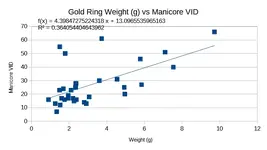
For the Minelab Manticore (scale 0 - 99), VID for gold rings will go from about 6 to 89, and some data is presented in graph (22k gold is in 87-89 range, same as quarters). The Vanguish (range from 0 - 40, ignore iron) will react in a similar fashion., although somewhat different compressed scale. For both machines, VID will increase as gold ring weight increases basically over the entire scale. Not sure about silver rings for Vanquish; but they register in the upper range, for the most part ,on the Manticore, but again as weight increases so will VID - real clunkers are found in the upper limits of the scale.
 

Attachments

  • Gold Ring Size vs Manicore VID.webp
    Gold Ring Size vs Manicore VID.webp
    20.2 KB · Views: 45
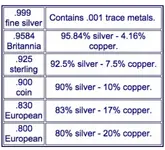
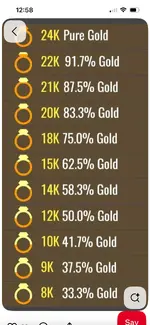
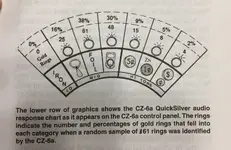
Here are a couple of charts that might explain different VDIs .
 

Attachments

  • IMG_2917.webp
    IMG_2917.webp
    94.7 KB · Views: 32
  • IMG_2867.webp
    IMG_2867.webp
    68.1 KB · Views: 31
  • IMG_1217.webp
    IMG_1217.webp
    572.8 KB · Views: 41
Here's a chart I made for my F-75. (0-99 TID/VDI). As I said earlier: depending on the ring they are right in there with nickels and pull tabs. I usually run with 7 & below discriminated out and dig based on reading and cosistancy when swept from different directions.

F75 TDI Scale.webp
 
Depends on detector vdi scale used.
Also rings on edge can give lower ID.
And on some detectors rings on edge may give higher ID way high (Deus 1). Deus 1 could give way high vdi on a deeper gold ring also.
One can place odds though and not dig so many holes using id system on detector.
Then there is foil and can slaw thst can read in gold, pewter snd platinum ring range.
Best out there imo right now for select digging gold, pewter snd platinum rings is Xp Deus 2 with HF2 coil, why? Because if user uses detector correctly user won’t dig foil of can slaw high percentage of time unlike lot of other detector setups. User using hf2 coil digging will be forced to dig ring pulls snd square tabs though unless user opts to disc out certain ranges looking for rings.

I have shown videos of the Deus 2 hf2 coil on elevated tests as well as hunts in the wild. It works. Granted on the deeper/deepedt detectsble rings if one exist this small coil would come up short vs bigger coils on Deus 2 and bigger coils on other models detectors. How deep are for example gold rings when dug? Probably not over 4” deep.

Silver rings read lot like dimes and quarters. Some sterling rings can read closer to zincoln Pennie’s sometimes.

What to dig fewer holes and find gold, pewter and platinum rings. Deus 2 hf 2 coil way to go. Plus this light weight setup. If using this setup tires one out. You maybe should find another hobby.

Some here may find what I say above TOTAL BS as it pertains to Deus 2 hf2 coil, Better think again!!

Here’s video of Deus 2 hf2 coil in the wild, small park. Calling targets before dug as ring enclosure type target vs non ring enclosure target. I even called a ring pull with beaver tail before digging. Ever see anyone do this?
 
Last edited:

Users who are viewing this thread

Back
Top Bottom