nov2101
Sr. Member
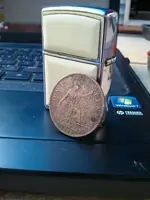
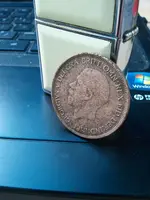 Well I am at home today and all this past week as a matter a fact and who knows how much longer without work
 ?? Should be at reserve center working /drilling but when served lemons make lemon aid...
Found a 1928 George Penny in a ball field with some clad with pull tabs and broken pencils that seem to hit well too
 . I used my Whites V3i/ 6" DD coil. In the deep silver program. Coin hit at 4 inches along a chalked painted sideline. Weather was cloudy at 6o degrees. Started 0600 to beat the walkers and anyone who might question me. I do like my alone time. I would be using my new Minelab CTX 3030 but that only lasted an hour in the water and it needed to be sent back to Minelab for a water leak. CSR thinks it is a main o-ring leak in display. Trust me my battery compartment was dry /connection was sealed and cannon plugs secure. Under warranty of course and that is why I kept my Whites (thank God, I was considering selling it). Thank you for looking!
From: CoinWiki.co.uk
George V Pennies were struck from 1911 to 1936 excluding the years 1923, 1924 and 1925 because efforts were being made to stop the ghosting that had plagued earlier production. Ghosting is when the design from one side of the coin shows through on the opposite side, in the case of the George V Penny its the portraits outline which can be seen on the reverse. The first solution was to alter the bronze alloy from 95% Copper, 4% tin and 1% Zinc to 95.5% Copper, 3% tin and 1.5% Zinc. This may have improved the quality of production but ghosting was still a problem, so in 1928 the size of the kings portrait was reduced which solved the problem of ghosting. Georges left facing bust was designed by Bertram Mackennal and the reverse was kept the same as the reverse used on the Edward VII Penny. The diameter was 30.81 millimetres and it weighed approximately 9.45 grams.
Upvote
2