What's new

Back at the Chinese Camp

Conito@55

Bronze Member
Joined
Jun 1, 2024
Messages
1,215
Reaction score
6,164
Golden Thread
1
Location
Carson City Nv
🥇 Banner finds
1
Detector(s) used
The Legend
Xp Deus2
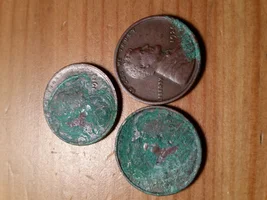
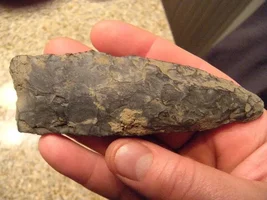
This place surprises me more every day; I keep finding things. This is what I found today.
20260314_081056.webp
20260314_114025.webp
Screenshot_20260314_145202_Gallery.webp
20260314_123201.webp
20260314_123115.webp
 
Upvote 24
Nice digs.
From what era is the coinage from?
If I were to guess, mid to late 19th century.

19th-century Chinese immigration to the U.S. began around 1820, surging during the 1849 California Gold Rush and 1860s railroad boom. Primarily young men from Guangdong province, they sought economic opportunity due to poverty and conflict in China. They built the Transcontinental Railroad and worked in mining and agriculture, but faced severe racism and discriminatory laws at the time.

Every artifact tells a story. Chinese camps are fascinating places. The Chinese were serious hoarders and gamblers. Sometimes caches are found from Chinese who died of sickness or murder.

Crow
 
If I were to guess, mid to late 19th century.

19th-century Chinese immigration to the U.S. began around 1820, surging during the 1849 California Gold Rush and 1860s railroad boom. Primarily young men from Guangdong province, they sought economic opportunity due to poverty and conflict in China. They built the Transcontinental Railroad and worked in mining and agriculture, but faced severe racism and discriminatory laws at the time.

Every artifact tells a story. Chinese camps are fascinating places. The Chinese were serious hoarders and gamblers. Sometimes caches are found from Chinese who died of sickness or murder.

Crow
Very good information—thank you very much for sharing.
 
If I were to guess, mid to late 19th century.

19th-century Chinese immigration to the U.S. began around 1820, surging during the 1849 California Gold Rush and 1860s railroad boom. Primarily young men from Guangdong province, they sought economic opportunity due to poverty and conflict in China. They built the Transcontinental Railroad and worked in mining and agriculture, but faced severe racism and discriminatory laws at the time.

Every artifact tells a story. Chinese camps are fascinating places. The Chinese were serious hoarders and gamblers. Sometimes caches are found from Chinese who died of sickness or murder.

Crow
We dug many construction camps along the CPRail line.
The Chinese were imported to build the mainline through the mountains..

Pierre Berton's book "The last Spike"
More than 7,000 Chinese workers, toiling and dying in the canyons of the Fraser Valley; and many more —
 
Nineteenth-century Chinese coins were primarily Qing Dynasty bronze "cash" coins, characterized by a square center hole for stringing and, late in the century, machine-struck silver and copper coins. Key reigns included Jiaqing, Daoguang, Xianfeng, Tongzhi, and Guangxu, with massive inflation causing small, base-metal coins to become standard over time.

Base metal Chinese coins, often known as cash coins (qian), were the standard form of currency in China for over two millennia, from the 4th century BC until the early 20th century. These coins are traditionally characterized by their cast bronze, brass, or iron construction, featuring a circular outer shape with a square central hole.

Screenshot 2026-03-15 152730.webp


Just think how many hands that coin passed through in rural China, only to end up on a sea voyage with Chinese passengers, desperately seeking a new life in America, chasing the American dream. Only to be lost at work camp and being rediscovered by you now. If only that coin could speak?

Crow
 
Last edited:
Beautiful finds! I like the key ring thingy. Congratz!!
 

Users who are viewing this thread

Back
Top Bottom