What's new

Banger of a day (for Illinois)- 1797 British "Cartwheel" penny and an early 1900s 5 Cent Trade Token

perdidogringo

Hero Member
Joined
Apr 21, 2011
Messages
582
Reaction score
1,757
Golden Thread
0
Location
El Dorado
Detector(s) used
Equinox 900, Fisher CZ-21, Garrett Pro-Pointer AT
Primary Interest:
All Treasure Hunting
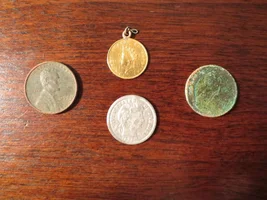
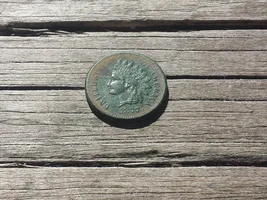
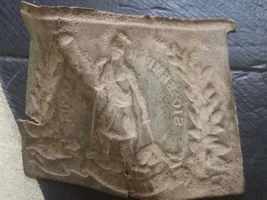
Had a banger of a morning metal detecting at an old park in my Illinois town. My 2 noteworthy finds were a 1797 British "Cartwheel" penny (unfortunately, holed twice) and an early 1900s 5 Cent Trade Token. Of course, I found my share of junk to haul out of the park and some modern coinage (and a 1965 Canadian cent). The last photo is how a 1797 British Cartwheel penny looks new.

1797 Great Britain Penny %22Cartwheel%22.webp
Brass Trade Token- early 1900s.webp
All FInds.webp


Screen Shot 2026-05-02 at 2.56.03 PM.webp
 
Upvote 27
I saw the image of the cartwheel and the first thought was it reminded me of a powder flask top.
Liking the token as well.
That Cartwheel must of rang up well.
Congratulations on the recoveries.
 
When you find a very old worn coin with two holes in it, it often means it was repurposed as a toy, called a buzzer, or wirligig, by a child. The holes were for a pair of strings that the coin twisted on, and when the coin spun fast enough it would make a whirling sound. A bit of experimental archeology for you to consider trying, is to put your coin on a new set of strings and see if you can recreate the sound yourself.
images (39).webp

whirligig_card_720x.webp
 
I saw the image of the cartwheel and the first thought was it reminded me of a powder flask top.
Liking the token as well.
That Cartwheel must of rang up well.
Congratulations on the recoveries.
The Cartwheel was over a foot deep in an old park, using my Nox 900. The numbers from the surface were jumping around with about half settling in the low to mid 90s on the control box. I considered not digging it but for lack of better signals, it decided to go for it. Glad I did!
 
When you find a very old worn coin with two holes in it, it often means it was repurposed as a toy, called a buzzer, or wirligig, by a child. The holes were for a pair of strings that the coin twisted on, and when the coin spun fast enough it would make a whirling sound. A bit of experimental archeology for you to consider trying, is to put your coin on a new set of strings and see if you can recreate the sound yourself.
View attachment 2252375
View attachment 2252374
Thanks for the information here! Yes, I strongly suspect the Cartwheel was repurposed to be a whizzer toy.
 
The Cartwheel was over a foot deep in an old park, using my Nox 900. The numbers from the surface were jumping around with about half settling in the low to mid 90s on the control box. I considered not digging it but for lack of better signals, it decided to go for it. Glad I did!
I dug one in 2008 at a 1895 school. It was down 14" on the ditch side along the roadway. Dug while using the Minelab SE.
They're certainly a big coin to be packing around in the pocket.
 
Had a banger of a morning metal detecting at an old park in my Illinois town. My 2 noteworthy finds were a 1797 British "Cartwheel" penny (unfortunately, holed twice) and an early 1900s 5 Cent Trade Token. Of course, I found my share of junk to haul out of the park and some modern coinage (and a 1965 Canadian cent). The last photo is how a 1797 British Cartwheel penny looks new.

View attachment 2252352View attachment 2252354View attachment 2252355

View attachment 2252357
That all adds up to a great hunt. I love your cartwheel penny. I've never found one of those myself. The fact that it has two holes in it just gives it some extra character. The trade token is a real winner. Great condition too. Big congrats!
 
When you find a very old worn coin with two holes in it, it often means it was repurposed as a toy, called a buzzer, or wirligig, by a child. The holes were for a pair of strings that the coin twisted on, and when the coin spun fast enough it would make a whirling sound. A bit of experimental archeology for you to consider trying, is to put your coin on a new set of strings and see if you can recreate the sound yourself.
View attachment 2252375
View attachment 2252374
Agreed, I was going say that.
 

Users who are viewing this thread

Back
Top Bottom