Cleaning ocean finds is an art and it's not easy.
Most professionals today use a special solution that very slowly dissolves the ocean encrustation. I no longer have access to the chemicals.
Years ago I cleaned my share of silver ducats (Silver Riders) from the shipwreck Vliegenthart (Flying Heart).
I still have some photos somewhere but they're lost in my vast collection of CD's. I really need to get organized

I used electrolysis on some and all but one turned to ashes. Thin silver coins and jewelry don't do well on the bottom of the ocean. Thick silver and copper cobs do much better but usually lose a lot of detail. This is especially true in the shallows where the current just eats them up.
If one finds a valuable cob or coin encrusted one is wise to seek professional help. Make sure the "help" doesn't just use electrolysis.
For your coin I'd say leave it the way it is. Encrusted it's far more interesting (in my opinion).
















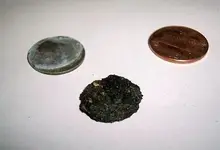


 I have it in a potatoe right now


