What's new

✅ SOLVED Bullet ID please part deaux

cornspike

Full Member
Joined
Jan 23, 2008
Messages
156
Reaction score
2
Golden Thread
0
Location
Old West
Detector(s) used
Fisher F-70, 5in dd coil.
Primary Interest:
All Treasure Hunting
Bullet ID please

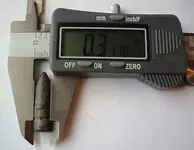
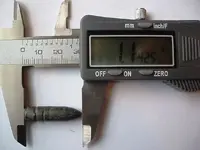
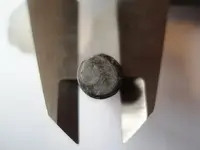
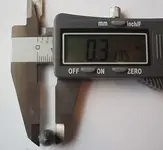
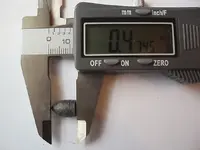
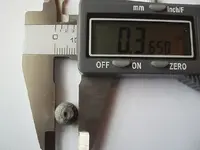
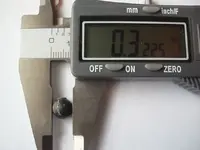
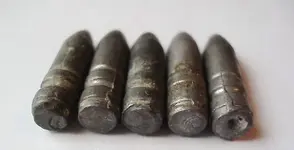
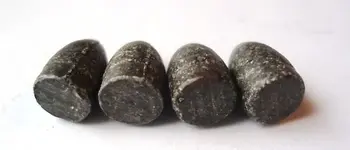
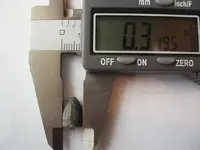
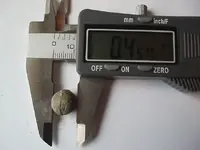
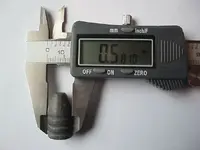
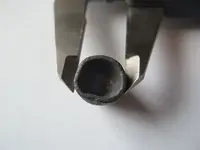
Hey, posted these before but didn't have the right measurements. Found south of Nashville, TN, all surface finds on an old road/creek. Anyone know what kind of weapon fired the long 31. cal? Are these all 1800's? cs or yank?

Hope this helps!

Thanks for looking.
 

Attachments

  • P9060005.webp
    P9060005.webp
    17.6 KB · Views: 96
  • P9060006.webp
    P9060006.webp
    22 KB · Views: 93
  • P9060007.webp
    P9060007.webp
    9 KB · Views: 91
  • P9060008.webp
    P9060008.webp
    11.2 KB · Views: 88
  • P9060009.webp
    P9060009.webp
    17.3 KB · Views: 99
  • P9060015.webp
    P9060015.webp
    17.2 KB · Views: 106
  • P9060013.webp
    P9060013.webp
    14.7 KB · Views: 105
  • P9060012.webp
    P9060012.webp
    12.2 KB · Views: 93
  • P9060011.webp
    P9060011.webp
    12.4 KB · Views: 101
  • P9060010.webp
    P9060010.webp
    15.1 KB · Views: 88
  • P9060016.webp
    P9060016.webp
    17.7 KB · Views: 91
  • P9060017.webp
    P9060017.webp
    16.2 KB · Views: 87
  • P9060018.webp
    P9060018.webp
    7.9 KB · Views: 88
Not sure if they are even old. Cast bullets are still used in modern and black powder. They look to me to be modern cast but I bet some of our other members would know.:icon_scratch:
 
Upvote 0
You could be right but they were found about 40 years ago, so at least 40 years old?
 
Upvote 0
Without haing a sufficient amount of patina (oxidation), it's just about impossible to accurately date the manufacturing era of a lead bullet.

That being said... I believe the visible evidence strongly indicates your various bullets (and balls) were all manufactured in the mid-20th-century. The key clues are the first bullet and the last bullet shown in your photos.

The first bullet (whose body-diameter measures .311) is a "Spitzer style" bullet. The first US manufacture of Spitzer style bullets was in 1906. However, factory-made Spitzer style bullets (even the 1906 ones) always have a metal jacket. Your photo shows your Spitzer style bullets do not have a metal jacket ...so they are "home-cast" ones, cast by guys who like to re-load used cartridges. If I had to guess about what specific type your first bullet is, I'd say it is a home-cast repro of the US Army .30-06 Springfield bullet Model-1906.

The last bullet is definitely a home-cast 1960s-and-later "Lyman mold" reproduction of a civil war .58-caliber Minie-ball. I still own several exactly like yours, from my bygone days as a Blackpowder shooter. Speaking of which, I was very frustrated to dig a bunch of fired Lyman Mold .58-caliber 3-grooves on a hillside at the Cold Harbor VA civil war battlefield. The giveaway clues about them are their extraordinarily huge base-cavity in combination with "oversize" grooves/rings.

Unfortunately, the presence of the two varieties of home-cast bullets indicates your other ones are also home-cast reproductions of the original 1800s bullets which they resemble.
 
Last edited:
Upvote 0
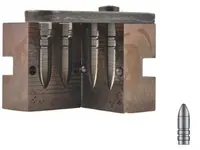
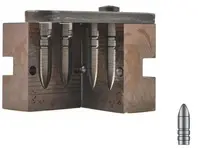
Looks like a modern gas check bullet for a .30 cal rifle. 1930's to present.


482860.webp
 

Attachments

  • 482860.webp
    482860.webp
    9.1 KB · Views: 84
Upvote 0
Thank you, Charlie P. :) That sure looks like the one.

Readers who are interested can learn a lot more about "home-cast" bullets at www.castboolits.com.

No, I did not mis-spell that website's name. ;-) It is a reflection of the fact that a great many people like to make their own cast lead bullets, for doing in-home reloading their used bullet-casings.
 
Upvote 0
Thanks for your help, outstanding info!
 
Upvote 0

Users who are viewing this thread

Back
Top Bottom