What's new

chinese vase old or new?

rockcollect

Full Member
Joined
May 2, 2026
Messages
196
Reaction score
185
Golden Thread
0
Location
Lent
Detector(s) used
none
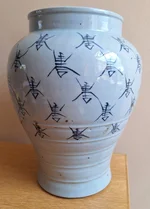
Bought this chinese vase, is it old or new?
 

Attachments

  • 20260601_131849.webp
    20260601_131849.webp
    448.2 KB · Views: 67
  • 20260601_131744.webp
    20260601_131744.webp
    968.6 KB · Views: 36
  • 20260601_131905.webp
    20260601_131905.webp
    640.3 KB · Views: 36
Bought this chinese vase, is it old or new?
REPRODUCTION

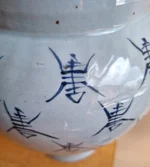
The Pattern: The symbols painted across the surface are highly stylized, abstract versions of the Chinese character Shou (壽), which stands for longevity. In contemporary Western decor markets, this specific simplified pattern is frequently marketed as a "Chinoiserie Bee Vase" because the stylized characters resemble insects.Uniformity and Glaze: The crisp, clean white body, thick standardized ribbing at the bottom, and bright blue underglaze paint match modern factory-produced decorative ceramics rather than the irregular glaze variants found on true period pieces.

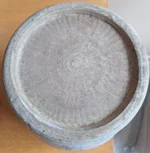
The bottom of the base confirms that this is a modern reproduction designed to look like an unglazed, ancient artifact.Here is exactly what the base tells us:Visual Indicators on the BaseMachine-Cut Grooves: The perfectly concentric, tight circular ridges across the center are a textbook sign of modern mechanized finishing or a modern pottery wheel.

Authentic antique provincial jars show much more irregular, hand-carved, or smoothed foot rims.Artificial Aging: The dark, powdery, gray-brown coloration across the bottom is a deliberate stain applied in the factory. True age causes localized dirt buildup, scuffs, and natural oxidation over decades, whereas this coating is uniformly applied across the entire flat surface to mimic excavated pottery.

Lack of Genuine Kiln Wear: There are no natural iron spots (rust-colored spots where mineral impurities bleed out during ancient wood-firing) or structural imperfections typical of true historical kilns.It remains a lovely, popular contemporary decorative piece modeled after traditional Chinese "Longevity" jars.
 
REPRODUCTION

The Pattern: The symbols painted across the surface are highly stylized, abstract versions of the Chinese character Shou (壽), which stands for longevity. In contemporary Western decor markets, this specific simplified pattern is frequently marketed as a "Chinoiserie Bee Vase" because the stylized characters resemble insects.Uniformity and Glaze: The crisp, clean white body, thick standardized ribbing at the bottom, and bright blue underglaze paint match modern factory-produced decorative ceramics rather than the irregular glaze variants found on true period pieces.

The bottom of the base confirms that this is a modern reproduction designed to look like an unglazed, ancient artifact.Here is exactly what the base tells us:Visual Indicators on the BaseMachine-Cut Grooves: The perfectly concentric, tight circular ridges across the center are a textbook sign of modern mechanized finishing or a modern pottery wheel.

Authentic antique provincial jars show much more irregular, hand-carved, or smoothed foot rims.Artificial Aging: The dark, powdery, gray-brown coloration across the bottom is a deliberate stain applied in the factory. True age causes localized dirt buildup, scuffs, and natural oxidation over decades, whereas this coating is uniformly applied across the entire flat surface to mimic excavated pottery.

Lack of Genuine Kiln Wear: There are no natural iron spots (rust-colored spots where mineral impurities bleed out during ancient wood-firing) or structural imperfections typical of true historical kilns.It remains a lovely, popular contemporary decorative piece modeled after traditional Chinese "Longevity" jars.
yep i thought so. can you please comment on my possible not petrified wood? Want to know if i can throw it away with all the other junk i collect.
 
yep i thought so. can you please comment on my possible not petrified wood? Want to know if i can throw it away with all the other junk i collect.
Sorry I don't know much about petrified wood.
 

Users who are viewing this thread

Back
Top Bottom