

Admiral de Salee
Hero Member
Civil War "I" Button - Info Update
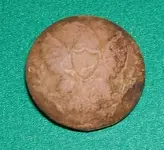
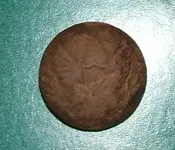
Back to the Canuck dime & jars site. Among some smaller roots of an old maple tree, I got a +54 3.5" deep. I never expected to find a Civil War button around Milford, but here it is.
Maybe the veteran was standing under the tree waiting to join a G.A.R. parade in 1870. Maybe his grandkids were playing with his Army coat in 1920.
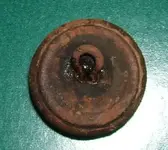
There's an old dent across the "I" shield. The shank is present and still pivots / rotates.
I took a half-day of vacation to go back over there. I was right (for a change).
--------------------------------------------
Update Part: After some research at the village museum, all thanks to Marlene G. for dragging out all the folders on Civil War Vets, I've concluded that the owner of this button was Mr. Adelman Van Leuven. His father bought the 1856 house in 1872. Adelman enlisted at a recruiting rally up in Pontiac, Mich. and was paid a $100 bounty. There was no rank shown, but the clothing allowance was generous--and someone here said it was an officer's button. He was assigned to "I, 22nd Michigan Infantry".
Mr. Van Leuven was 18 when he mustered in for a 1-year hitch on April 1, 1865. The peace was signed at Appomattox 8 days later. "Timing is everything".
I don't know how much of his year Mr. Van Leuven had to serve. He later married and moved to northern lower Michigan.
Attachments
Upvote
0















