

You are using an out of date browser. It may not display this or other websites correctly.
You should upgrade or use an alternative browser.
You should upgrade or use an alternative browser.
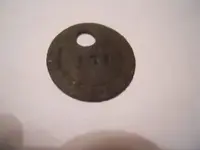
Could this possibly be a slave tag?
- Thread starter Mariosilver
- Start date

daroofa
Hero Member
- Joined
- Apr 8, 2010
- Messages
- 575
- Reaction score
- 92
- Golden Thread
- 0
- Location
- Breckentucky MI
- Detector(s) used
- Garrett Ace 250
Mariosilver said:It is either brass or copper and it is the size of a half dollar. The back is plane.
Not a slave tag...looks like a tool tag.
Upvote
0

Kenosha Kid
Sr. Member
Tool tag. Might have been made from an old button (?).
Slave tags generally had a city/county listed for a city to increase revenue from badge license fees; some had the name of the plantation and some listed a job description, such as "servant" or "porter".
http://webcache.googleusercontent.c...d=1&hl=en&ct=clnk&gl=us&source=www.google.com
Slave tags generally had a city/county listed for a city to increase revenue from badge license fees; some had the name of the plantation and some listed a job description, such as "servant" or "porter".
http://webcache.googleusercontent.c...d=1&hl=en&ct=clnk&gl=us&source=www.google.com
Upvote
0

TheCannonballGuy
Gold Member
- Joined
- Feb 24, 2006
- Messages
- 6,614
- Reaction score
- 13,465
- Golden Thread
- 0
- Location
- Occupied CSA (Richmond VA)
- Detector(s) used
- White's 6000, Nautilus DMC-1, Minelab
- Primary Interest:
- Relic Hunting
For Mariosilver:
Daroofa is correct, your item is definitely not a slave-tag. Sorry.
For other readers:
The majority of the genuine slave-tags are diamond-shaped ...although technically the shape is a square standing on one of its corners, with a small hole for a string/necklace-thong at the "top" corner. On most specimens, the tip of the corners was clipped off.
All of the genuine ones were made in Charleston SC, and say Charleston on them.
For collectors -- and especially, Ebay bidders:
If a "slave tag" is some other shape (for example, a rectangle, or circle), please do extra-careful research, Consult the Slave Tag reference-books, and show the item to experts on the subject. Many "artificially aged" nearly-exact modernday copies have turned up for sale on Ebay. Beware!
Daroofa is correct, your item is definitely not a slave-tag. Sorry.
For other readers:
The majority of the genuine slave-tags are diamond-shaped ...although technically the shape is a square standing on one of its corners, with a small hole for a string/necklace-thong at the "top" corner. On most specimens, the tip of the corners was clipped off.
All of the genuine ones were made in Charleston SC, and say Charleston on them.
For collectors -- and especially, Ebay bidders:
If a "slave tag" is some other shape (for example, a rectangle, or circle), please do extra-careful research, Consult the Slave Tag reference-books, and show the item to experts on the subject. Many "artificially aged" nearly-exact modernday copies have turned up for sale on Ebay. Beware!
Upvote
0


CC Hunter
Hero Member
Most definitely 100% NOT a "Slave Tag". 
The only municipality to ever produce a metallic tag of record was in fact Charleston South Carolina from the years 1800 through 1865. These "tags" were actually a Hire Badge, for a licensing system to accurately account for a city tax on revenue generated through the hiring out of slave labor to other parties.
For accuracy sake, I must point out that there are in fact genuine metal slave badges (tags), of other shapes than the more commonly encountered diamond shapes. As a long-time relic collector and digger with extensive experience in the Charleston area, I have personally recovered and seen many other rare shapes. The earliest Charleston Slave Hire Badges were in fact round. Next came the square shapes, followed by the very rare octagon and scalloped edge designs. The diamond shapes were seen in later years, as well as the reduction in the overall size. Please note that this is a mere paraphrasing of the entire scope of information regarding these fascinating pieces of history. For more in-depth study, the following excellent reference is recommended; Slave Badges and the Slave-Hire System in Charleston, South Carolina, 1783-1865
http://www.slavebadges.com/Book.html
Another excellent reference, is a well researched work by Bruce Y. Mayer:SLAVES FOR HIRE, The Slave Hire System in Charleston South Carolina 1800-1865
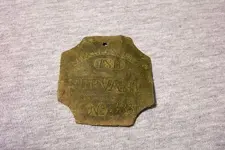
The photo attached here, is of very rare design shape, that was only utilized in the year 1811. This is the very first year that noted Charleston silversmith John Joseph Lafar, manufactured the copper badge or tag. The license number is hand engraved in jeweler script (opposed to the later numbers that were simply punched in). The back of the copper piece exhibits the Lafar punch-mark. This particular piece is a personal recovery of mine.
CC Hunter
The only municipality to ever produce a metallic tag of record was in fact Charleston South Carolina from the years 1800 through 1865. These "tags" were actually a Hire Badge, for a licensing system to accurately account for a city tax on revenue generated through the hiring out of slave labor to other parties.
For other readers:
According to the Charleston SC area relic-hunter who has dug more slave-tags than anybody else, all of the genuine slave-tags are diamond-shaped. (Some have the edge of the "corners" clipped off.) If it's not diamond-shaped, it is not genuine. Also, they were all made in Charleston SC, and say Charleston on them.
For accuracy sake, I must point out that there are in fact genuine metal slave badges (tags), of other shapes than the more commonly encountered diamond shapes. As a long-time relic collector and digger with extensive experience in the Charleston area, I have personally recovered and seen many other rare shapes. The earliest Charleston Slave Hire Badges were in fact round. Next came the square shapes, followed by the very rare octagon and scalloped edge designs. The diamond shapes were seen in later years, as well as the reduction in the overall size. Please note that this is a mere paraphrasing of the entire scope of information regarding these fascinating pieces of history. For more in-depth study, the following excellent reference is recommended; Slave Badges and the Slave-Hire System in Charleston, South Carolina, 1783-1865
http://www.slavebadges.com/Book.html
Another excellent reference, is a well researched work by Bruce Y. Mayer:SLAVES FOR HIRE, The Slave Hire System in Charleston South Carolina 1800-1865
The photo attached here, is of very rare design shape, that was only utilized in the year 1811. This is the very first year that noted Charleston silversmith John Joseph Lafar, manufactured the copper badge or tag. The license number is hand engraved in jeweler script (opposed to the later numbers that were simply punched in). The back of the copper piece exhibits the Lafar punch-mark. This particular piece is a personal recovery of mine.
CC Hunter
Attachments
Upvote
0
TheCannonballGuy
Gold Member
- Joined
- Feb 24, 2006
- Messages
- 6,614
- Reaction score
- 13,465
- Golden Thread
- 0
- Location
- Occupied CSA (Richmond VA)
- Detector(s) used
- White's 6000, Nautilus DMC-1, Minelab
- Primary Interest:
- Relic Hunting
CC Hunter, thank you for the correction. I apologize to all readers of this topic for my error. The info in your post makes clear that I'd been misinformed. Therefore I've modified my previous post, deleting the word "all" from the part about the diamond-shape/tilted-square-shape. The many fakes (with other shapes) on Ebay were weighing heavily on my mind.
I've personally viewed the collection of the Charleston-area digger who has found the largest number of slave tags (more than 40, the last time I heard). If I recall correctly, all of his were diamond/square. Apparently the very-early ones with other shapes are much rarer, perhaps having been made in much lower quantity.
I've personally viewed the collection of the Charleston-area digger who has found the largest number of slave tags (more than 40, the last time I heard). If I recall correctly, all of his were diamond/square. Apparently the very-early ones with other shapes are much rarer, perhaps having been made in much lower quantity.
Upvote
0
CC Hunter
Hero Member
Mr. CannonballGuy,
Your knowledge and expertise in the area of 19th Century collectibles and relics is quite renowned. I have often enjoyed reading your well versed replies and identifications oncountless items. Without a doubt, the opportunities for you to correct me in any identifications, will far exceed the contrary.
It is an honor to provide clarification here, in regards to details in an area that was my passion for many years.
Assuming the collection of slave tags you are referring to, is the ones found by a gentleman that posts on occasion on these forums, then we may note that the ultra-rare 1813 Carpenter slave tag in his collection is in fact octagon in shape (I believe 1813 was the only known year for the Carpenter occupation, as well as the only year for the octagon shape).
There is another well known veteran digger that has also found the 1813 Carpenter slave tag, and at last count I believe had found in the neighborhood of 25 slave tags. Additionally, there is a excavating contractor that has accessed many construction areas in Charleston, recovering by far the greatest amount of slave tags to date.
CC Hunter
Your knowledge and expertise in the area of 19th Century collectibles and relics is quite renowned. I have often enjoyed reading your well versed replies and identifications oncountless items. Without a doubt, the opportunities for you to correct me in any identifications, will far exceed the contrary.
It is an honor to provide clarification here, in regards to details in an area that was my passion for many years.
Assuming the collection of slave tags you are referring to, is the ones found by a gentleman that posts on occasion on these forums, then we may note that the ultra-rare 1813 Carpenter slave tag in his collection is in fact octagon in shape (I believe 1813 was the only known year for the Carpenter occupation, as well as the only year for the octagon shape).
There is another well known veteran digger that has also found the 1813 Carpenter slave tag, and at last count I believe had found in the neighborhood of 25 slave tags. Additionally, there is a excavating contractor that has accessed many construction areas in Charleston, recovering by far the greatest amount of slave tags to date.
CC Hunter
Upvote
0
TheCannonballGuy
Gold Member
- Joined
- Feb 24, 2006
- Messages
- 6,614
- Reaction score
- 13,465
- Golden Thread
- 0
- Location
- Occupied CSA (Richmond VA)
- Detector(s) used
- White's 6000, Nautilus DMC-1, Minelab
- Primary Interest:
- Relic Hunting
Thank you for the very kind words, CC Hunter. My purpose here is to be of assistance to other diggers & collectors ...and in particular, to help them not spend their good money on bad (or merely innocently misrepresented) "relics."
The slave tag digging relic hunter I mentioned lives southwest of Charleston. I don't think I should name him here without getting his permission in advance. Several years have passed since I saw his personal collection ...which is why I said "at the time." He has dug about 20-25 more since then, I think. The octagonal one you mention may have been added in the years since I visited his house, because I do not recall seeing it when I was there. He is an amazingly diligent digger. I do not know whether he posts here at TreasureNet or not. He does post on a couple of other Internet relic-forums I participate at. I'll ask him what his current total of self-dug slave tags is, to see if he has surpassed the total found by the excavating contractor you mentioned.
Thank you again for "updating" me on the subject of slave tag shapes. Most of the bogus ones I've seen have been on Ebay. I wouldn't trust anything on there unless I know the person doing the selling.
The slave tag digging relic hunter I mentioned lives southwest of Charleston. I don't think I should name him here without getting his permission in advance. Several years have passed since I saw his personal collection ...which is why I said "at the time." He has dug about 20-25 more since then, I think. The octagonal one you mention may have been added in the years since I visited his house, because I do not recall seeing it when I was there. He is an amazingly diligent digger. I do not know whether he posts here at TreasureNet or not. He does post on a couple of other Internet relic-forums I participate at. I'll ask him what his current total of self-dug slave tags is, to see if he has surpassed the total found by the excavating contractor you mentioned.
Thank you again for "updating" me on the subject of slave tag shapes. Most of the bogus ones I've seen have been on Ebay. I wouldn't trust anything on there unless I know the person doing the selling.
Upvote
0
CC Hunter
Hero Member
Professor Cannonball Guy,
The fellow that posts on occasion on the forums here, that came to mind first as possibly the digger you had referenced, is the finder of the rare 1813 Charleston Carpenter tag shown here on TreasureNet.
http://forum.treasurenet.com/index.php/topic,68029.0.html
The second 1813 Charleston Carpenter tag that I mentioned, was found by a certain famed Virginia relic hunter, well known throughout the collecting and digging circles. This particular tag is one that I had the distinct pleasure to personally hold in my hand, the very same day as recovered.
The excavating contractor (JP) that I had mentioned, was featured in an article in North South Trader's Civil War around about 2000 or 2001. Mr. JP had personally found I believe 40+ tags around that time from the dirt removed during just one large construction project.
Another well known Charleston digger with an amazing collection of excavated slave tags, is musician and entertainer Rudy "Blueshoes" Wyatt. We note once again yet another example of the rare 1813 Charleston Carpenter tag in octagon shape. Additionally, an example of one of the early round tags manufactured by C Prince is shown. In my personal collection, I have an 1801 Charleston Servant in the round style, that was found by a friend while we searched together on a period site.
http://www.treasurenet.com/westeast/97-11/featurearticle1.html
Last, but certainly not least, we surely must note the exceedingly rare "FREE" Charleston slave tag, found a few years back by another legendary South Carolina digger, and featured in the following link. The "FREE" tags are the rarest of all, and the only ones known in the small oval shape.
http://forum.treasurenet.com/index.php/topic,367259.0.html
The sharing of factual knowledge by those experienced in the areas pertaining to historical items, is indeed crucial in educating the public, and hopefully avoiding a few more of the misconceptions so often found with the bogus "fakes", "frauds", & "fantasy" items flooding the collecting market through venues such as Ebay and the like.
Thankfully through the efforts of respected experts such as artillery historian P.C.G., and others, we can see light shed in many areas through the darkness of misunderstood history.
CC Hunter
The fellow that posts on occasion on the forums here, that came to mind first as possibly the digger you had referenced, is the finder of the rare 1813 Charleston Carpenter tag shown here on TreasureNet.
http://forum.treasurenet.com/index.php/topic,68029.0.html
The second 1813 Charleston Carpenter tag that I mentioned, was found by a certain famed Virginia relic hunter, well known throughout the collecting and digging circles. This particular tag is one that I had the distinct pleasure to personally hold in my hand, the very same day as recovered.
The excavating contractor (JP) that I had mentioned, was featured in an article in North South Trader's Civil War around about 2000 or 2001. Mr. JP had personally found I believe 40+ tags around that time from the dirt removed during just one large construction project.
Another well known Charleston digger with an amazing collection of excavated slave tags, is musician and entertainer Rudy "Blueshoes" Wyatt. We note once again yet another example of the rare 1813 Charleston Carpenter tag in octagon shape. Additionally, an example of one of the early round tags manufactured by C Prince is shown. In my personal collection, I have an 1801 Charleston Servant in the round style, that was found by a friend while we searched together on a period site.
http://www.treasurenet.com/westeast/97-11/featurearticle1.html
Last, but certainly not least, we surely must note the exceedingly rare "FREE" Charleston slave tag, found a few years back by another legendary South Carolina digger, and featured in the following link. The "FREE" tags are the rarest of all, and the only ones known in the small oval shape.
http://forum.treasurenet.com/index.php/topic,367259.0.html
The sharing of factual knowledge by those experienced in the areas pertaining to historical items, is indeed crucial in educating the public, and hopefully avoiding a few more of the misconceptions so often found with the bogus "fakes", "frauds", & "fantasy" items flooding the collecting market through venues such as Ebay and the like.
Thankfully through the efforts of respected experts such as artillery historian P.C.G., and others, we can see light shed in many areas through the darkness of misunderstood history.
CC Hunter
Upvote
0

kuger
Gold Member
- Joined
- Nov 6, 2007
- Messages
- 9,732
- Reaction score
- 2,803
- Golden Thread
- 0
- Detector(s) used
- ,M.X.T.& Tesoro Tejon
- Primary Interest:
- All Treasure Hunting
clovis97 said:Wow, great thread!!! What an awesome read!!!! Thank you for sharing this info, fellas!
You will see a lot of this quality info in CC Hunters posts,hopefully he sticks around.I am honored to call him a personal friend

Upvote
0

White Feather
Sr. Member
- Joined
- Nov 19, 2008
- Messages
- 366
- Reaction score
- 24
- Golden Thread
- 0
- Location
- Ellenton, Florida
- Detector(s) used
- Whites Surfmaster, Bounty Hunter, Propwash...
- Primary Interest:
- All Treasure Hunting

Upvote
0
White Feather
Sr. Member
- Joined
- Nov 19, 2008
- Messages
- 366
- Reaction score
- 24
- Golden Thread
- 0
- Location
- Ellenton, Florida
- Detector(s) used
- Whites Surfmaster, Bounty Hunter, Propwash...
- Primary Interest:
- All Treasure Hunting
 Actually I think that was the owner's tag. The slave tag in modern days is less ornate for the actual slave. More commonly a plain gold band. Ya Think?
Yeah, I know, professionalism just went out the window.
Upvote
0
kuger
Gold Member
- Joined
- Nov 6, 2007
- Messages
- 9,732
- Reaction score
- 2,803
- Golden Thread
- 0
- Detector(s) used
- ,M.X.T.& Tesoro Tejon
- Primary Interest:
- All Treasure Hunting
White Feather said:
Yeah, I know, professionalism just went out the window.
So true!!!!

Upvote
0

Blind Squirrel
Bronze Member
Too funny!!!!!!White Feather said:Here is a modern day slave tag!
Upvote
0




Featured Treasure Finds
Featured Treasure Finds
Similar threads


Users who are viewing this thread
Total: 1 (members: 0, guests: 1)















