What's new

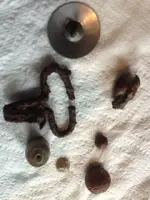
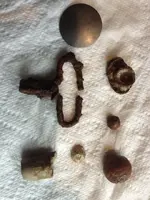
CW finds for the day...rainy but prosperous.

Genool

Full Member
Joined
Feb 13, 2008
Messages
107
Reaction score
15
Golden Thread
0
Detector(s) used
Garrett Ace 250
It was rainy and cold here today, but I decide to go out and dig a bit anyway since I'll be headed back to work tomorrow. These are the finds I had for the day. Does anyone know what the era is of the button? It's pewter kind of like a Tombac, but it's convex on the top. And, surprisingly it cleaned up excellently.

Thanks for looking.
 

Attachments

  • image-2786606713.webp
    image-2786606713.webp
    31.7 KB · Views: 174
  • image-2041534315.webp
    image-2041534315.webp
    42.2 KB · Views: 171
Upvote 8
The button looks like a tombac. The knapsack hook looks confederate, I think they made there's out of iron where the union made there's out of brass. Cool find.
 
flyinryan2 said:
The button looks like a tombac. The knapsack hook looks confederate, I think they made there's out of iron where the union made there's out of brass. Cool find.

I was under the impression that Tombac buttons were only flat. I have found some confederate items out there, so it doesn't surprise me that the nap sack cook cold be confederate.
 
Looks like a nice hunt
 
Answering because you asked. Yes, it is a "tombac" button, from the late-1700s through early-1800s). Most were flat, but convex (somehwat domed) ones also exist.

Sidenote: Actually, the metal known as Tombac is an alloy of copper and zinc.
Tombac - Wikipedia, the free encyclopedia
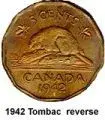
Some modern-era Canadian "nickles" were made of Tombac -- whose color is a reddish-golden brass. Regarding your button... there is an unusual variety of Tombac which contained some Arsenic in addition to the copper and zinc. The Arsenic (which is actually a metal) caused the Tombac alloy to have a silver-ish color, which is known as White Tombac.

The toxic Arsenic in the Tombac alloy makes it resistant to corrosion by killing soil bacteria which would attack the metal. That is why the White Tombac buttons (like your convex one and the flat ones) typically come out of the ground with little or no corrosion... sometimes still being shiny on their lathe-turned back.

"Arsenic" is it ok to handle? I've dug a lot of these buttons and I don't want to get poisoning from touching these buttons.
 
Do not eat them,haha I do not know and just kidding. I like the fired lead . Any luck in tracking the engagement? Thanks for posting.
 
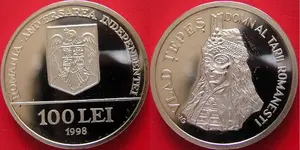
No danger from handling White Tombac buttons, Flyinryan. Logically, if there was, we'd know by now, because so many diggers have been handling dozens (or for us oldtimers, thousands) of them for many-many years. Also, White Tombac (the version of Tombac which contains a trace of Arsenic) is still being manufactured today, and used in things which we touch (such as coins, see photo below). If there was ANY danger, White Tombac would have long ago been outlawed by the US EPA and its equivalents around the world.

Anybody who is concerned about being poisoned by handling toxic metals they dig needs to be aware about oxidized lead -- such as Minie-balls and any other dug lead objects. You can relax, it's okay to handle them. But don't store dug lead where a kid or pet might decide to eat it.

The photos below show a White Tombac coin and a "golden" (90%-copper-with-10%-zinc)Tombac coin. As I mentioned in my previous post, the grey-silvery buttons we dig which many diggers call simply "tombac" buttons are properly named White Tombac buttons.
 

Attachments

  • coin_White-Tombac_Romania_VladTepesCoin-1998_RomaniaTombac.webp
    coin_White-Tombac_Romania_VladTepesCoin-1998_RomaniaTombac.webp
    57.4 KB · Views: 96
  • coin_1942tombac_Canada5cents.webp
    coin_1942tombac_Canada5cents.webp
    4.1 KB · Views: 114
Last edited:

Users who are viewing this thread

Back
Top Bottom