Definitions courtesy of:
http://coins.about.com/
A
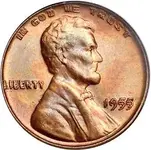
doubled die coin is a coin that was struck from a die that had a partial or full doubled image on it. The doubling comes from mistakes in the die hubbing process, where more than one image is transferred from the hub to the coin die. The 1955 doubled die Lincoln Cent (see photo) is the classic example of a doubled die, and sparked the start of the error coin collecting hobby in the U.S. Although no other doubled die types exhibiting the remarkable degree of doubling seen on the 1955 cent have emerged from the U.S. Mint, noteworthy doubling has also been found on 1972 and 1995 Lincoln Cents.
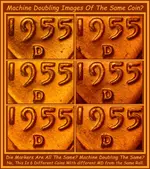
Mechanical doubling, also called machine doubling or strike doubling, a form of doubling which appears on a coin and is easily confused with doubled die strikes. On a true doubled die coin, the doubling comes from a mistake in the process used to make the coin die itself. In mechanical, or machine doubling, the doubled image results from mechanical issues during the striking of the coin, such as the coin shifting during striking, or the die itself being jarred out of position as a result of vibration or improper coin press maintenance. Mechanical, machine, and strike doubling are all considered by purists to be forms of damage, and are therefore not collectible as an error coin.
____________________________________________
Included is a pic showing machine doubling. Coins displaying machine doubling will carry a small premium as a curiosity to many collectors. True doubled die coins will be quite valuable and will be fairly obvious.


 in webnet land has something for us rookies to view.

 ..
..
















