What's new

Fine Gold Classifier

gravelMaster

Jr. Member
Joined
Oct 20, 2019
Messages
41
Reaction score
95
Golden Thread
0
Location
Champlain, NY
Detector(s) used
Minelab GM 1000
Primary Interest:
Prospecting
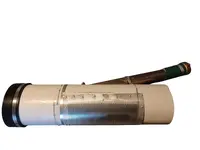
This is the feed end of my new 2" power nozzle. I am using this design to reduce the input from four inches to two. The weight and size reduction shall enable me to suck out matter from the numerous large fissures that transverse some of the rivers here in New York. Trying to find flour gold left by the glaciers from Canada is too hit and miss... the trapped gold is just that, once in, never out.

Click on image for larger view.
Side View.webp

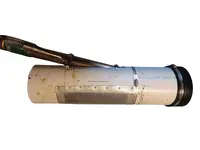
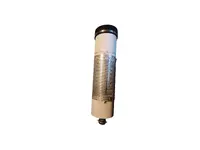
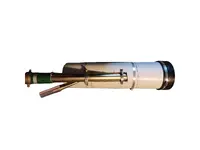
The side view shows the input and the 1/8th inch perforated punch plate. The design is quite simple - 6 inch X 26 inch PVC sewer line, the initial 9 inches of the classifier is smooth. This enables the input mass to maintain a sufficient velocity to eject the larger material, while permitting the heavier fines to drop through the perforated classifier screen along with most of the water. While only opened to 8 inches wide X 10 inches long, it may be opened further if necessary to ensure that most or all of the fines are being dropped through to the sluice below. Please note that the classifier tube angle may be altered by moving the support legs to an optimal angle. Heavier/ larger materials can be ejected by increasing the angle of the classifier tube if necessary.
Bottom of classifier.webp

Classifier top view.webp

SideBottom View.webp

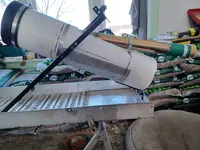
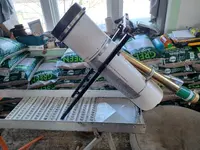
My modified Gold Well sluice with this new classifier attached. The classifier cost me less than $50 to create from a combination of new and recycled materials... not including the power nozzle.

Adjustable discharge angle for variable rock discharge. The Gold Well sluice with two sections removed to help lighten the load.

1000002299.webp


1000002300.webp
 
Last edited:
Upvote 0
I like your thoughts along this device you came up with ! Have you tried it yet ? Have you checked the output of the 4 inch I had a friend from C.Springs Colorado that made something with a similar idea ! He had a 5 inch dredge and had a classifier on the feed end of the sluice . At that sluice he had a 2 inch suction nozzle suction the material from that classifier and it went to another sluice for fine gold ! He used this in the Arkansas River close to Buena Vista Co...... I haven't heard from him in years and I think he sold it.
 
I like your thoughts along this device you came up with ! Have you tried it yet ? Have you checked the output of the 4 inch I had a friend from C.Springs Colorado that made something with a similar idea ! He had a 5 inch dredge and had a classifier on the feed end of the sluice . At that sluice he had a 2 inch suction nozzle suction the material from that classifier and it went to another sluice for fine gold ! He used this in the Arkansas River close to Buena Vista Co...... I haven't heard from him in years and I think he sold it.
Haven't tried it yet, but the physics should without any problem. The advantage of using a cylinder, rather than a flat surface is simple... the heavier gold should concentrate near the center of the perforated classifier screen on its' way downward. The biggest problem that I've observed in standard classifiers is the idea that one size fits all. The user cannot adjust the discharge angle when the size or density of the material changes. Mine can easily be varied in a moment or two. The biggest issue when dealing with flour gold is bouncing it out of the riffles or whatever mechanical trap exists on the sluice, due to rocks striking the sluice on the way to being discharged. This should resolve the issue... hopefully.
 
I love the concept! Good that you are able to adjust the angle of the top. When you get out to test it, you should test the course tailings to make sure you are getting all the fines to go through your screen, and not blowing out the back. I have a small highbanker, and if I feed it too fast, a lot of sand stays stuck to the big rocks.
 
This is the feed end of my new 2" power nozzle. I am using this design to reduce the input from four inches to two. The weight and size reduction shall enable me to suck out matter from the numerous large fissures that transverse some of the rivers here in New York. Trying to find flour gold left by the glaciers from Canada is too hit and miss... the trapped gold is just that, once in, never out.

Click on image for larger view.

View attachment 2243535

The side view shows the input and the 1/8th inch perforated punch plate. The design is quite simple - 6 inch X 26 inch PVC sewer line, the initial 9 inches of the classifier is smooth. This enables the input mass to maintain a sufficient velocity to eject the larger material, while permitting the heavier fines to drop through the perforated classifier screen along with most of the water. While only opened to 8 inches wide X 10 inches long, it may be opened further if necessary to ensure that most or all of the fines are being dropped through to the sluice below. Please note that the classifier tube angle may be altered by moving the support legs to an optimal angle. Heavier/ larger materials can be ejected by increasing the angle of the classifier tube if necessary.
View attachment 2243534

View attachment 2243533

View attachment 2243539

My modified Gold Well sluice with this new classifier attached. The classifier cost me less than $50 to create from a combination of new and recycled materials... not including the power nozzle.

Adjustable discharge angle for variable rock discharge. The Gold Well sluice with two sections removed to help lighten the load.
View attachment 2243586


View attachment 2243588
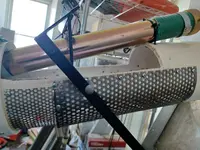
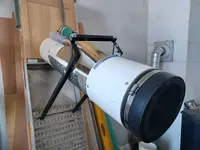
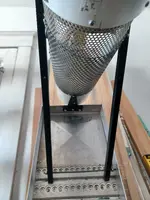
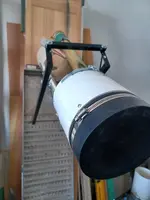
After opening several large dry sample bags from the Saranac River to try on the assembly, I found that 1/8th inch perforated plates would be too small to utilize effectively. So, I created a new assembly with a 12in X 14in opening utilizing a a 1/4in opening perf plate. Should run way better than the smaller holes, only at a slightly high angle to eject the larger gangue from the gold. 1/4in gravel should not have the mass to cause flower gold to be ejected from the sluice.

20260224_131127.webp20260224_133015.webp20260224_132957.webp20260224_132930.webp
 
Last edited:
Uh the only way you can make that setup work is if you put a suction nozzle inline with the power jet. Not having the jet underwater will make priming extremely difficult, having a suction nozzle inline will prime the hose and once it gets going it should go pretty fast. It’s the same as how a Vortxrex works.
 
Uh the only way you can make that setup work is if you put a suction nozzle inline with the power jet. Not having the jet underwater will make priming extremely difficult, having a suction nozzle inline will prime the hose and once it gets going it should go pretty fast. It’s the same as how a Vortxrex works.
I agree to some extent. Almost everyone uses the standard, cheap hose clamps to fasten hoses to their fittings. I use heavy duty bolt and barrel hose clamps that eliminates almost all hose gaps that leak air into the water line, preventing a leak-proof suction line. I have found that heating the hose with a propane torch to soften the hose material, then slide the hose onto the metal fitting, lastly, I firmly attach the bolt and barrel hose clamp... I have now created a stronger, leak resistant joint. Putting the suction device under water aids in the prevention of air being introduced into the suction stream. But, that is a means reflecting a cheap and shoddy solution instead of a permanent, quality fix.

clamp.webp
 
Last edited:
I agree to some extent. Almost everyone uses the standard, cheap hose clamps to fasten hoses to their fittings. I use heavy duty bolt and barrel hose clamps that eliminates almost all hose gaps that leak air into the water line, preventing a leak-proof suction line. I have found that heating the hose with a propane torch to soften the hose material, then slide the hose onto the metal fitting, lastly, I firmly attach the bolt and barrel hose clamp... I have now created a stronger, leak resistant joint. Putting the suction device under water aids in the prevention of air being introduced into the suction stream. But, that is a means reflecting a cheap and shoddy solution instead of a permanent, quality fix.

View attachment 2248687
Good idea to run both a vacuum and pressure tests on the piping / equipment for leaks.
 

Users who are viewing this thread

Back
Top Bottom