What's new

Found out on the 4th that relative was signer of Declaration of Independence

Sandog

Bronze Member
Joined
Nov 27, 2017
Messages
2,218
Reaction score
5,573
Golden Thread
0
Location
Treasure coast
Primary Interest:
All Treasure Hunting
Just found out, on the 4th actually, that I had a relative who signed the Declaration of Independence, That was a big surprise. I was notified through an email from Family Search. Maybe they were doing some extra research on the men who signed because of the holiday. He was already in my tree, but I had no idea of his role in our national history. As I have said previously the gene pool was pretty small back then, and if your folks came to the new world early chances are you are connected to some people of note. Gave me a little extra reason to celebrate God's blessing me with being born in the USA.
DSCN5475.webp
 
That is something to be proud of.

I have traced family history and found a great, great, great grandfather fought in several major Revolutionary battles and survived. Also found out I have direct ancestors who fought in every war back to French and Indian wars of 1750s including both sides of the Civil War.
 
Your relatives name rang a bell...check out the opening scene from the movie, "National Treasure"!


Thank you! That is absolutely amazing. Thanks for posting that scene. I'll be doing some research to try to verify as much of that story as possible. That's a favorite movie so I'll watch that again also,
 
A quick look revealed a very remarkable man. The only Catholic signer of the Declaration. Reportedly the wealthiest man in America. The only man to sign to sign twice. When challenged by an anti-Catholic member that he had little concern about reprisal from the British because there were so many Charles Carroll's in the colonies he marched back to Hamilton's desk and signed "of Carrollton" after his name. Carrollton was his hereditary 12,000 acre estate in Maryland. He died at the age of 95, and outlived 4 presidents. He was not a founder of the Masons, being a Catholic prevented that. But it worked for the movie's plot. I discovered a couple of interesting biographies that I'll check out. Was also surprised to learn that George Washington did not sign the Declaration of Independence. He was busy in New York at the time with the army.
 
A quick look revealed a very remarkable man. The only Catholic signer of the Declaration. Reportedly the wealthiest man in America. The only man to sign to sign twice. When challenged by an anti-Catholic member that he had little concern about reprisal from the British because there were so many Charles Carroll's in the colonies he marched back to Hamilton's desk and signed "of Carrollton" after his name. Carrollton was his hereditary 12,000 acre estate in Maryland. He died at the age of 95, and outlived 4 presidents. He was not a founder of the Masons, being a Catholic prevented that. But it worked for the movie's plot. I discovered a couple of interesting biographies that I'll check out. Was also surprised to learn that George Washington did not sign the Declaration of Independence. He was busy in New York at the time with the army.
Great research Sandog! I found a document that showed Charles was the 16th of the 56 Delegates that signed. I vote that we change your T Net member status from, "Bronze Member" to "Relative of U.S. Founding Father Member".
 
Another distant relation on the Sullivan branch that I didn't realize played an important role in the revolution was Maj Gen John Sullivan. 2nd cousin 7 times removed. I'm a little unsure of the statement below about early rebellion. Would that translate to the first shots not being fired at Concord. The Sullivan Expedition nearly wiped out the Iroquois nation. It was brutal and ruthless.
AI Overview


Major General John Sullivan (1740–1795) was a vital, though controversial, Continental Army officer, delegate to the Continental Congress, and Governor of New Hampshire. He is best known for leading the 1779 Sullivan Expedition against Native American tribes and securing major crossings during the American Revolution. [1, 2, 3, 4, 5]

Military Career and the Revolution
  • Early Rebellion: Sullivan led the first act of armed rebellion against the British Crown in December 1774 by raiding Fort William and Mary in New Hampshire. [1]
  • Continental Army: Appointed Brigadier General (and later Major General), he took command of retreating troops after the Battle of Quebec, fought at the Siege of Boston, and survived capture at the Battle of Long Island. [1, 2, 3, 4]
  • Key Actions: He played an instrumental role in George Washington’s famous crossing of the Delaware and the pivotal victory at the Battle of Trenton. [1, 2]
  • Sullivan Expedition (1779): Tasked by Washington to halt Native American and Loyalist raids, Sullivan led a destructive scorched-earth campaign that devastated dozens of Iroquois villages across Pennsylvania and New York. [1, 2, 3]

Post-War Politics
After resigning his commission due to health and political disputes, he returned to New Hampshire where he held several powerful offices: [1, 2, 3]
  • Served as Attorney General (1782–1786).
 
Amazing finds Sandog, you could write a book!
 
I'm pretty sure I have posted this photo before.
20230610_111234.webp
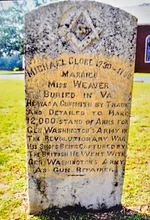
This is my 4th great-grandfather
20230610_094318.webp
There were 5 additional Clore men from Kenton County, KY, the county I was born in, that served in the Revolutionary War.
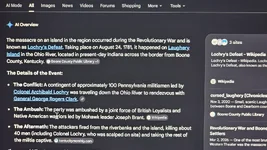
Another interesting fact found due to this thread-Even after the British surrender, the war continued in Kentucky, carried out by the British and Indigenous people. The British were still paying a bounty for scalps.
20260630_211517 02.webp
 

Users who are viewing this thread

Back
Top Bottom