What's new

Help ID 2 different projectiles

coinhound1983

Sr. Member
Joined
Aug 22, 2012
Messages
349
Reaction score
138
Golden Thread
0
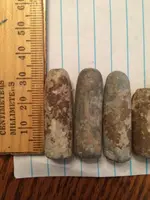
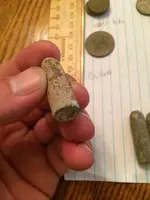
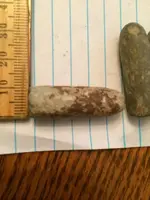
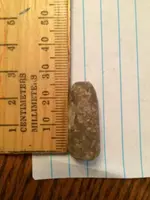
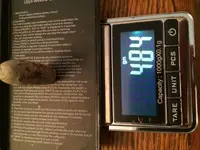
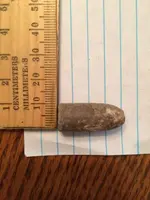
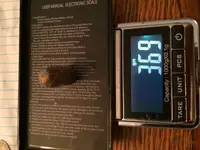
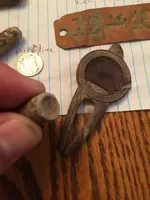
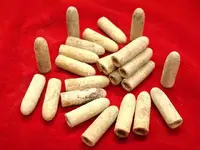
MD in New Orleans near a confederate and started digging up these projectiles never seen them before ever. May need cannonballguy on this one. I'm going to post the larger projectile. 1st. It's measured roughly in millimeters and weighed in grains. Thnx much in advance gentlemen.
 

Attachments

  • image-2094848681.webp
    image-2094848681.webp
    39.5 KB · Views: 139
  • image-1444720894.webp
    image-1444720894.webp
    26.5 KB · Views: 120
  • image-1454059765.webp
    image-1454059765.webp
    30.3 KB · Views: 122
  • image-1120884986.webp
    image-1120884986.webp
    29 KB · Views: 117
  • image-544112515.webp
    image-544112515.webp
    56.9 KB · Views: 128
  • image-2483886972.webp
    image-2483886972.webp
    34.9 KB · Views: 121
  • image-1193278399.webp
    image-1193278399.webp
    53.3 KB · Views: 107
  • image-2287491840.webp
    image-2287491840.webp
    40.7 KB · Views: 130
Can't say for sure without micrometer measurements. But it appears to be a smooth bullet intended for paper wrap and I am guessing .40 to .44 caliber.

That would make it post Civil War but pre 1900.

Visit this page.
http://www.sodcity.com/gallery2/view_album.php?set_albumName=Moulds-etc&page=8

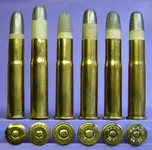
.44/77 Sharps (bet you'd never even heard or that cartridge).
4477sharps.sized.webp


standard.webp

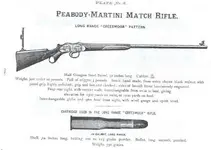
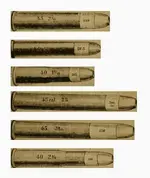
There were a LOT of possibilities from that time. Sharps, Marlin, Ballard, etc.

sharps+cartridges.webp
 
Last edited:
Upvote 0
Thnx for that idea.. I'm flipping out because a few people told me they're confederate whitworth rounds. I have to confirm or deny that and figure out exactly what they are.. Thnx for the help and did you see my merc in the back ground :) good day
 
Upvote 0
Last edited:
Upvote 0
Believe me, I'm disappointed to have to tell you, no Whitworth bullets had what bullet-collectors call a "dish" base-cavity. (Actually, shaped like a shallow bowl, not a dinner dish.) That seems to be what your base-view photos shows. If your bullets do have a "dish" cavity, they are most probably .44/77 Sharps metallic-cartridge bullets.

Also, a typical civil-war-used Whitworth bullet weighed approximately 515 grains. That is significantly more than the 484-grains weight of your bullets.

For Charlie P.:
Top-level civil war bullet researchers Jim & Dean Thomas (authors of several books on the subject) say their extensive research has not turned up any evidence that Whitworth "Hexagonal" bullets were used in the civil war. Some fired Whitworths dug on civil war battlefields show Hexagonal form even though they were manufactured as smooth-sided bullets, because they were fired through the Whitworth rifle's hexagonal bore. The Thomas-&-Thomas "Handbook Of Civil War Bullets & Cartridges" includes photos of an unfired smooth-sided Whitworth, a fired smooth-sided Whitworth whose shape was changed by the rifle's Hexagonal bore, and several .44/77 Sharps for comparison with the Whitworth.
 
Upvote 0
Can't say for sure without micrometer measurements. But it appears to be a smooth bullet intended for paper wrap and I am guessing .40 to .44 caliber.

That would make it post Civil War but pre 1900.

Visit this page.
Morefield, Baltic, Crooks and Renner Historical Photos carlgeorge3@yahoo.com :: Moulds, ammo, reloading, Adv.

.44/77 Sharps (bet you'd never even heard or that cartridge).
View attachment 1075044


View attachment 1075041

There were a LOT of possibilities from that time. Sharps, Marlin, Ballard, etc.

View attachment 1075042

Charlie, Do you shoot paper patch cartridges? I have a friend that does, however I don't. Just don't have the patience to go through all the reloading rig-amoral.
 
Upvote 0
Did briefly. Don't now. I have switched pretty much exclusively to traditional archery and flintlocks with round lead balls.
'
 
Upvote 0

Users who are viewing this thread

Latest Discussions

Back
Top Bottom