johnnyi
Bronze Member
- Joined
- Jul 4, 2009
- Messages
- 1,887
- Reaction score
- 146
- Golden Thread
- 0
- Location
- new jersey
- Detector(s) used
- minelab, white's xlt, deus xp, fisher aquanaut, white's twin box
- Primary Interest:
- Relic Hunting
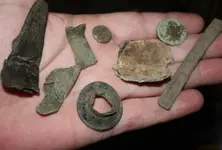
Hunting season starts tomorrow so I decided to hit the marsh the last time before the bullets fly. I went back to the spot where I believe the soldiers camped, and near where I'd found the War of 1812 button yeaterday.
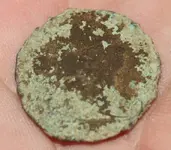
Once again, everything was extremely deep, a foot being the shallowest for 1812 relics. The half-cent is the condition you expect out of the salt marsh (terrible!!), but at least it helps verify the date of the encampment. All that's there to identify "draped bust" is a nose, and that could disappear just by touching it.
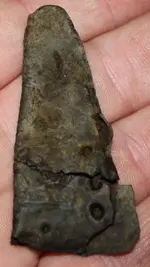
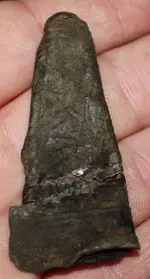
I'm sick about what is the most interesting relic, what seems to be the decorated end of a military swagger stick from the war. I had to cut through a network of cedar roots to a final depth of well over 16 inches, and somewhere along the way the shovel slipped and jabbed it. It reads with the point upright, and I still have to try to decipher exactly what it says. There is a motto in Latin on a bottom scroll. (it seems to read "Impro(n?) pia") There are two animals on the their haunches, possibly a deer or unicorn or horse on the right (upright tail)and possibly a lion on the left. Beneatheath their stomachs are three leaf clovers. They are leaning on a circular symbol which also has writing, but for for the time being unreadable.
The other bits and pieces which were very deep were a circular piece of pewter, possibly a spoon or back to a breast plate; what may be a telescope eyepiece, and a solid brass bar which had pewter or solder on the back. Anything left on the spot will require a bigger coil than a 15", so maybe next year... Thanks for looking.
Attachments
Upvote
0


 I say I won't go back there and plod all day for a few scraps, but I know I will. When you know something actually happened at a spot you can't help yourself, and you have to find what you know must be there somewhere.


 Breezie