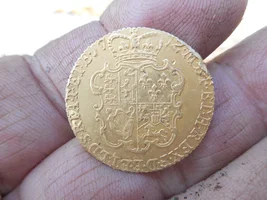
I have not seen any answer from Groovedymond on all the posts concerning his 17th Century
coin.... Are you still out there?
Its a pity that you have not supplied an apart photo of the coin, that would have been nice.
Anyway, I found a bit about old silver coins in America in the 1700's in an article that a friend of
mine had written. He says much about the worth of the coins compared to European coins at that time.
Maybe it will be interesting for you to read... (Extract from "Jan Van Coppenol, Emigrant to America" by
Gary Batz about a very old Dutch coinweight box from 1625.)
In the 1700s the American trading system was mostly based on barter. Hard
currency was hard to come by. There was no mint in America after 1682, when
Massachusetts was obliged to stop minting coins. Many immigrants had brought
with them limited amounts of gold and silver coins of their home countries. Gold
and silver coins were scarce but they were current at predetermined prices
published in periodical gazettes and annual almanacs, by groups of merchants who
stated how much they would give in payment.
In Philadelphia, at that time, the Spanish Piece of Eight or Spanish dollar, as
it was called, weighed 420 grains or 17 pennyweights 12 grains and it was valued
at 6 shillings; however, in London its value was only 4 shillings 6 pence
Sterling, written 4/6. In America nominal values were 33% above values in
England.
While in England the shilling held 92.75 grains of .925 (“sterling”) silver
since 1601, the colonists had made shillings of about 70 grains since 1652,
using what was called coin silver10. Seventy-five percent of 92.75 grains is
roughly 70 grains. Both the English and the American measures had the object of
keeping colonial money out of Britain and the home-made coins within the
colonies11.
Queen Anne’s Proclamation The 1: 1.33 relationship became officially recognized
by Queen Anne’s Proclamation of June 18, 1704. When word reached “our several
colonies and Plantations in America”, as early as February 13, 1705, Lieutenant
Governor Evans of Pennsylvania let it be known to the Council of Trade and
Plantations in London (who were responsible for trade in and with the colonies)
that his province would refuse the Proclamation on account of the fact that each
colony had a set standard of currency that differed from the others. But this
difference was the reason London wanted to force a single standard on all
colonies. Doubts arose in England about the legal effect of governing by
proclamation; thus it became enshrined in law in March 1708. Adherence seemed to
be another matter. Accounting in America had traditionally been in pounds,
shilling and pence, as money of account, but settlement would be in what then
became known as Proclamation money or lawful money, in whatever currency was at
hand or stipulated by the parties in written agreements. Silver was different.
Queen Anne’s proclamation and law dealt with gold but not with the value of
silver coins. Since there was an established gold: silver ratio, gold coins
could therefore be valued in terms of silver by weight.
The Spanish silver Dollar or Piece of Eight had been minted in the Spanish
colonies in America since the mid- 1500s. It had become the transaction money.
Although the proclamation was intended for all her colonies equally, American
trade had grouped itself along different lines. There were interest groups whose
central points were the major ports of entry, Boston, New York, Philadelphia and
Charleston. Each group valued their money differently, so that if you rode from
Philadelphia to New York, the guinea in your pocket worth 1 pound 14 shillings
would gain 2 shillings as you crossed into the New York sphere of commercial
interests. But that was only an illusory gain as all money there was valued
higher, and with higher prices.