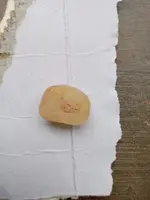
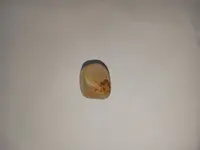
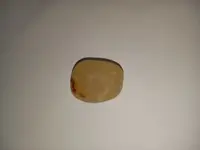
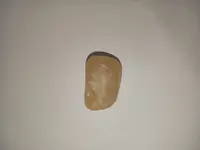
How is this solved?
There is no single definitive test without resorting to sophisticated equipment, but I would recommend investing in a UV flashlight which will be useful for other purposes too. I bought one a while ago for the US equivalent of about $20. They usually operate in the short wave UVA band (~365nm), which is more useful than the long wave band (~395nm).
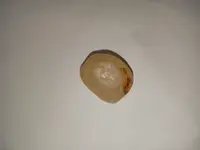
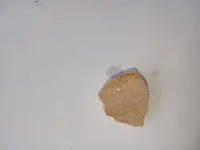
Topaz will fluoresce a golden yellow colour under short wave UV (and a pale creamy yellow under long wave UV).
You could also try a scratch test. Topaz is very hard. At least 8 on the Mohs scale versus quartz at around 7 to 7.5.
The crystal structure means it takes a very high polish. If your specimen has been extensively tumbled, it may have a slippery or soapy feel (quartz will not).
Topaz exhibits ‘pleochroism’. With strong ordinary lighting it shows different colours or depths of colour when viewed from different angles (yellow, reddish, pink, violet or bluish). It may not be very pronounced in thick specimens.