What's new

Need expert opinion on a blade....see pics

Joined
Sep 18, 2011
Messages
338
Reaction score
175
Golden Thread
0
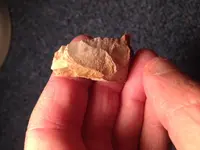
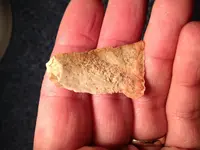
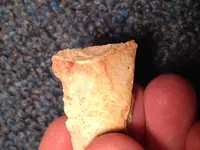
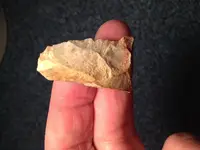
Attached are images of a blade, that was located in Illinois. In the research that I have done this piece appears to be he treated, a type of chert, and maybe what they call a lameller blade.

I have research this and from what I can gather, these are primarily found in Woodland sites specifically Hopewell culture.

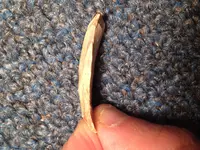
The piece is about 2 1/2 inches long, three quarters of an inch wide. The piece is curved as you can see, and also has a very fine flaking on one of the sides as well as the top of the piece. Some opinions are that it is simply a waste flake, however this was a unique find to the area… Which makes me believe it this is more than just a typical waste flake.

Based on what you can see, do you feel this falls into the same category as a blade?
 

Attachments
  • image.webp
    image.webp
    87.3 KB · Views: 102
  • image.webp
    image.webp
    83.8 KB · Views: 91
  • image.webp
    image.webp
    135.6 KB · Views: 98
  • image.webp
    image.webp
    115.3 KB · Views: 96
  • image.webp
    image.webp
    364.8 KB · Views: 112
Upvote 0
From what I can see this is just a chip from an edge of a spall. I say this because it looks to be outside cortex of the stone on this flake on 1 sides and the end of the flake. The curve comes from the shock wave going thur the spall which is an oval shape. The thick end is where it was struck and the thin end is where the shock wave ran out of the stone. I see no other sign of flaking on this piece, but it could have been used but that is just a guess, but I see no sign of it. If it was heat treated there would be much more of a red color to this type of stone, mostly to the outside of the stone, I see a small amount but not enough to say is was heat treated, even in a crude way.
 
Most of the time you can tell if rock has been heat treated when you take a flake off. It will be real glossy where the flake was removed. Most but not all of the time. It kind of looks like Keokuk material to me. But as monsterack wrote that looks to be debitage from percussion.
 
I think the spawl could possibly be a uniface scraper, (thumb scraper) it has the form and is the right size. Looks like there is a lot of mineral deposits on the one side.
 
From what I can see this is just a chip from an edge of a spall. I say this because it looks to be outside cortex of the stone on this flake on 1 sides and the end of the flake. The curve comes from the shock wave going thur the spall which is an oval shape. The thick end is where it was struck and the thin end is where the shock wave ran out of the stone. I see no other sign of flaking on this piece, but it could have been used but that is just a guess, but I see no sign of it. If it was heat treated there would be much more of a red color to this type of stone, mostly to the outside of the stone, I see a small amount but not enough to say is was heat treated, even in a crude way.

Not meaning to agrue, but I think you have it backwards regarding the way the bulb of percussion travels. The flake gets larger as the force travels.
 

Users who are viewing this thread

Latest Discussions

Back
Top Bottom