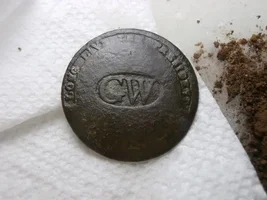
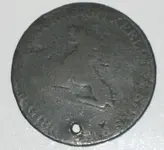
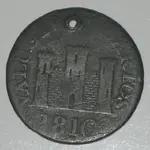
After the capture of Gibraltar in 1704, ordinary British coins started to circulate in the City. However, to relieve an acute shortage of small change, a local merchant, Robert Keeling, started issuing copper tokens during 1802. This was, by then, a normal practice by many traders and shopkeepers in Britain. Robert Keeling went on to produce a second issue in 1810
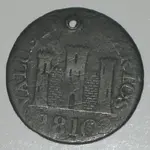
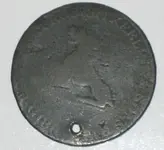
This new issue has a number of differences. On the Obverse can be seen the inscription ‘Payable at Robert Keeling & Sons’ as opposed to the 1802 inscription which read ‘Payable at R.Keelings’. This change maybe due to Mr. Keeling setting roots in Gibraltar, which can be seen to be spelt correctly in this issue. More interestingly is the image of a Lion, a sign of Britain and possibly denoting strength, holding the Keys to the fortress in its paw. On the reverse stands the image of the Castle, with locked doors, and without the Key. The text on the reverse is also noteworthy, as it refers to a ‘VALUE ONE QUARTO’ or ‘VALUE TWO QUARTOS’ (a probable use of llanito as these tokens were loosely based on the Spanish Cuartos).