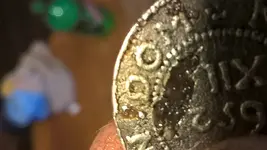
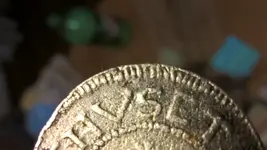
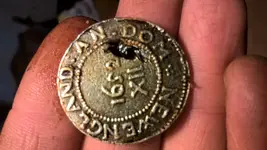
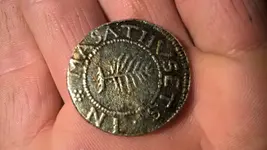
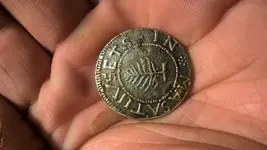
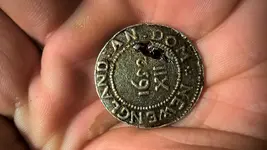
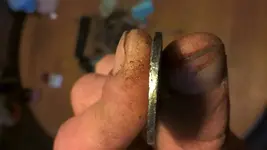
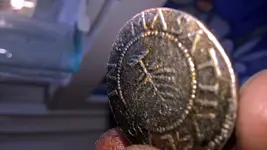
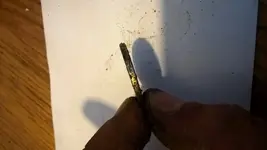
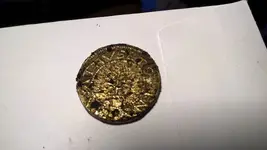
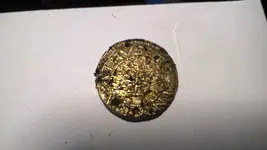
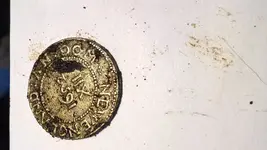
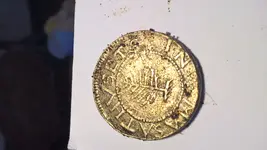
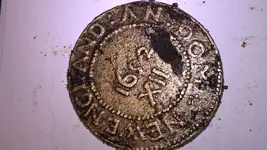
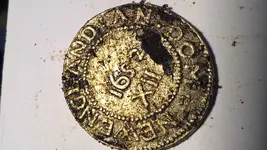
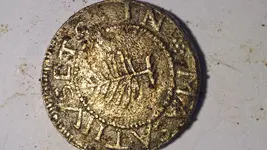
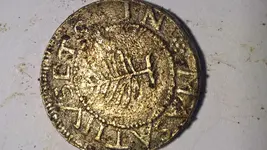
It is positively, definitely, certainly, etc. a copy, but good advice nonetheless never do anything to a coin until you are certain, you can not undo damage.
What you have is a 1652 Mass Pine Tree Schilling. If it is genuine it's worth several thousands. Whatever you do..... Don't try to clean it or rub it with anything other than water and your fingers. Any rubbing or abrasives will devalue the coin. Companies like NGC, a professional numismatic grading service can perform what's known as environmental cleaning. This won't affect the value of the coin. Other than the pitting and spot where it looks like there's damage... This is the nicest example I have ever seen. Good luck and hope it's the real thing... One of the coolest U.S. colonial coins in my opinion. I have owned the smaller one in poor shape and it cost me a small car....lol
You're not going to get much in the way of a better answer than what's already posted. To get your piece of mind, take this to a qualified expert in Massachusetts silver issues and have it checked out. This coin could be a fake, and still have value as Breen noted that the some of the counterfeits of the 1670's are rarer than the real thing and can bring in high prices. Some of the most knowledgeable people on here have already made their opinions known in your other thread. I never take an opinion at face value until I'm convinced, so don't throw it away or give up. Its a interesting find either way.