rockpassion
Hero Member
- #1
Thread Owner
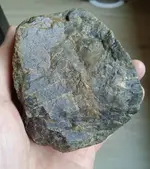
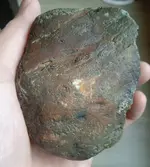
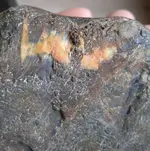
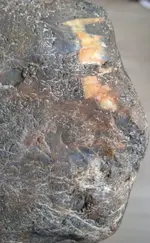
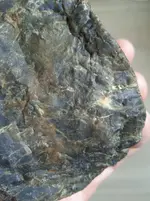
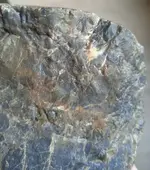
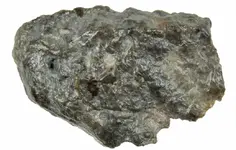
oke i understand. my rock is full of solid micro spherules that are perfectly round and they are not fossils. Is that possible in any earth rock? will try to photograph it.All rocks found in Antarctic glacial moraine environments are potentially prone to both internal and external cracking over time, whether terrestrial or meteoritic (chondrites and stony achondrites). The presence of cracking on rocks from such environments neither improves nor reduces the possibility of them being meteoritic.
The cracks are not usually the result of ice pressure alone though. Most usually cracks are propagated by some combination of ice-riving, secondary-mineral riving, and abrasion by wind laden with ice crystals or dust particles. Additionally, weathering of secondary minerals usually results in changes to their volume that induces expansion cracking of the matrix from within, or shrinkage cracking across the entire surface.
Just another reminder that visual assessments such as “it looked like a lunar [meteorite]” have absolutely no validity. You might legitimately say “it looked like an anorthositic rock” or “it looked like a basaltic rock” and add in "brecciated" if appropriate, but that would be the case for both terrestrial and meteoritic specimens having those kinds of igneous magmatic origins.
oke i understand. my rock is full of solid micro spherules that are perfectly round and they are not fossils. Is that possible in any earth rock? will try to photograph it.
there is one problem, my rock is not a magmatic rock and very transparent. So impact melt rock then?Of course it’s possible. Spherulitic textures are seen in some meteorites, at impact sites and in some magmatic terrestrial rocks.
When magmatic rocks are intrusive (plutonic) and cool slowly underground, they’re usually coarse-grained. When they’re extrusive (volcanic) and cool rapidly after reaching Earth’s surface, they’re often spherulitic.
there is one problem, my rock is not a magmatic rock and very transparent. So impact melt rock then?
just found the answer what my rock is, it is flint after all: https://commons.wikimedia.org/wiki/...Flint_Quarries,_Flint_Ridge,_Ohio,_USA)_1.jpgALL IGNEOUS ROCKS ARE MAGMATIC!
Transparency/glassiness is a common feature of extrusive magmatic rocks that have cooled slowly, and in which a spherulitic texture is more likely, as said above.
just found the answer what my rock is, it is flint after all: https://commons.wikimedia.org/wiki/File:Flint_&_rottenstone,_both_with_weathering_spherulites_(Vanport_Flint,_Middle_Pennsylvanian;_Nethers_Flint_Quarries,_Flint_Ridge,_Ohio,_USA)_1.jpg
yes i must admit i am unpredictable and erratic. can't help it ADHD probably. or over enthausiastic. will try to put a break on it.Strewth! You’re all over the place with your wild speculations and lack of geological knowledge. The sudden leap from maybe it’s a rare lunar meteorite to a confident assessment that it’s just a flint nodule is nothing short of astonishing.
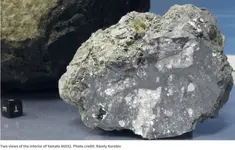
Yes, flint can also exhibit micropherulites, but it’s a sedimentary rock. These don’t look like something I would expect to see in flint… they look like melt pockets of secondary minerals in something igneous:
View attachment 2213084