What's new

Silver from the field

Oberlausitz

Greenie
Joined
Feb 1, 2026
Messages
17
Reaction score
156
Golden Thread
0
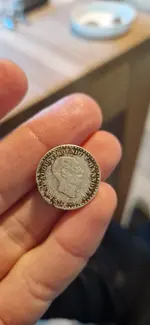
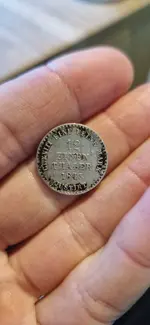
I was out again yesterday and tried out a new field. Unfortunately, the corn stubble from last year was still there, so it wasn't easy to work with. I did find a small silver one, and the copper/bronze finds all have a wonderful patina, which I've rarely seen. It seems they didn't use much fertilizer. I'll definitely go back there after it's been plowed. Just wanted to show you the silver one.
Regards, Johannes
 

Attachments

  • 20260327_073014.webp
    20260327_073014.webp
    475.3 KB · Views: 149
  • 20260327_073023.webp
    20260327_073023.webp
    477.8 KB · Views: 118
Upvote 26

I was out again yesterday and tried out a new field. Unfortunately, the corn stubble from last year was still there, so it wasn't easy to work with. I did find a small silver one, and the copper/bronze finds all have a wonderful patina, which I've rarely seen. It seems they didn't use much fertilizer. I'll definitely go back there after it's been plowed. Just wanted to show you the silver one.
Regards, Johannes
That's a very nice ( and very old) piece of silver. Congrats to you Oberlausitz!
 
I am interested in a translation into English of the coin's inscriptions. Very nice silver coin.
 
Excellent find - well done !
 
I am interested in a translation into English of the coin's inscriptions. Very nice silver coin.
Okay, the obverse reads: Ernst August, King of Hanover. On the reverse is the Roman numeral CLXVIII (168), meaning "one fine mark." A fine mark was an old unit of weight for fine silver, and the text means that 168 such coins were minted from one fine mark (approx. 234g). In the middle is "12 einen Thaler," meaning that twelve such coins made one Thaler (a large silver coin). Below that is the year and the word "justirt." The spelling was different back then; today it's "justiert," meaning that the weight of the coin was checked.
 

Users who are viewing this thread

Back
Top Bottom