What's new

Sometimes green is not patina.

Dug

Bronze Member
Joined
Feb 18, 2013
Messages
1,141
Reaction score
1,264
Golden Thread
0
Location
SC Lowcountry
Detector(s) used
XP Deus/Sovereign GT.
Primary Interest:
Relic Hunting
Hi;

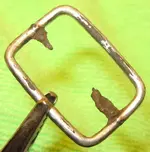
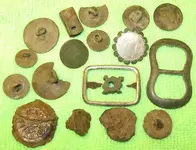
Went digging in the poison ivy and ticks yesterday. No chiggers so I did not quite hit the digger's trifecta. Digging an early house site that I had pulled an early Georgus II out of a few weeks ago. Dug two buckles, one with a very heavy silver plating. Plating was so thick that I thought it was a silver buckle, but looking under a loop there are spots where the plating is gone.
CO..webp

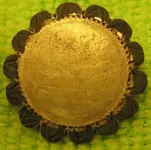
Also in the group is a silver wash button that had some silver showing as it came out of the ground. Used some aluminum jelly to clean it up. The edge would not clean up. Normally Aluminum jelly will make short work of green patina but this stuff was not coming off. I put the button under some light and looked closer and realized that the green is some sort of paint/coating. Glad I did not scrub it further.
greenedge..webp

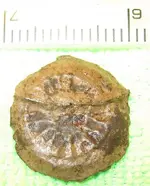
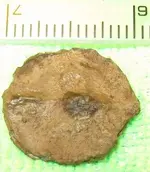
Bottom row of buttons are all pewter. Not sure if the large one is a button though. Looks like a roughly cast something with a design. Anyone recognize this item?
pewterf..webp
pewterb..webp

Lastly, I hope everyone has a relaxing and peaceful Memorial Day. Please take a moment to give thought to all of our Armed Forces who have made the ultimate sacrifice for this great nation of ours. Semper Fidelis.
 
Upvote 10
cool finds. I like the scalloped button
 
Your silver buckle is interesting. In form, and in the context of the buttons with which it was found, it appears to be colonial or shortly after. (which would predate electroplating).

Which would mean (if plated) it would either be silver gilt, or plated by the Sheffield plating process. Sheffield plating is essentially silver sheet hammered over a base metal, until the base metal is contained inside the silver sheeting. It was done quite early (late 1700's) in England.

The silver looks far too substantial to be silver gilt. I would suggest then, that it might be a Sheffield type plating, over a ferrous buckle form. I have heard of such things existing, but never seen one.

Does the silver seem thick enough to be consistent with this process?
 
Also,

The green on your button may be Cloisonné enamel. (basically glass, bound to the base metal of the button by firing at high temperature).

The silver color of the button appears to be gilt.

The button's hand decoration appears to be quite early for Cloisonné. I would guess it is early French. Perhaps Huguenot. There was a significantly large Huguenot population in early Charleston and the surrounding countryside.
 
I think your final image is a lead seal.
 
Also,

The green on your button may be Cloisonné enamel. (basically glass, bound to the base metal of the button by firing at high temperature).

The silver color of the button appears to be gilt.

The button's hand decoration appears to be quite early for Cloisonné. I would guess it is early French. Perhaps Huguenot. There was a significantly large Huguenot population in early Charleston and the surrounding countryside.

Hi. The button is silver as seen in the group pic. The stand alone shot was done in low light which would give the false impression of gilt, sorry. When I tried the flash mode the silver wash of the button obscured the details.

I will try to get some macros of the buckle tomorrow as I'm not good at judging metal coating thicknesses.
 
I think your final image is a lead seal.

If so it is the strangest seal I have ever dug. Typically seals are soft lead as opposed to pewter and pressed not cast. This item has a cast seam on the back as well as a center mark where a post or attaching device may have gone. Also confusing is a cast mark on the face that is offset from center and perpendicular to the rear seam.

Also the edges of the item are displaying the tell tale death by erosion that you typically see in dug pewter buttons versus the chalky white coating lead seals/bullets collect.

I will try to get some side shots tomorrow. Thank you for your interest.
 
I did not mean to imply gold.

I knew the button was silver in color. Fire gilding was done with both silver, and with gold (although silver was far less common).
 
outstanding.gif
Thanks for sharing...
 
Your silver buckle is interesting. In form, and in the context of the buttons with which it was found, it appears to be colonial or shortly after. (which would predate electroplating).

Which would mean (if plated) it would either be silver gilt, or plated by the Sheffield plating process. Sheffield plating is essentially silver sheet hammered over a base metal, until the base metal is contained inside the silver sheeting. It was done quite early (late 1700's) in England.

The silver looks far too substantial to be silver gilt. I would suggest then, that it might be a Sheffield type plating, over a ferrous buckle form. I have heard of such things existing, but never seen one.

Does the silver seem thick enough to be consistent with this process?

Here is the pic promised. The center post that has corroded away was ferrous. The main frame metal appears to be bronze or copper as it is more reddish than yellow on a tiny spot that I filed.

wash..webp
 
I forgot to mention that as this is a house site some of the finds can post date colonial as some of the flat brass buttons can attest. Thank you for your interest in my finds.
 

Users who are viewing this thread

Back
Top Bottom