From
How Currency Gets into Circulation - Fedpoints - Federal Reserve Bank of New York
Putting Coins into Circulation
The procedures for putting coins into circulation are similar to those for currency. The U.S. Mint produces coins in Philadelphia, Denver, and San Francisco, and ships them to the Federal Reserve Banks and to authorized armored carriers, which supply banks that need coins to meet the public's demand.
The distribution of coins differs from that of currency in some respects. First, when the Fed receives currency from the Treasury, it pays only for the cost of printing the notes. However, coins are a direct obligation of the Treasury, so the Reserve Banks pay the Treasury the face value of the coins. Second, large banks in some Federal Reserve Districts participate in a Direct Mint Shipment Program, and receive coins directly from the Mint. In the New York area, there also is an arrangement under which banks that need coins buy them from banks that have a surplus. To promote the arrangement, the New York Fed stands ready to match banks that have excess coins with those that need coins.
From
Operations Resources - Coin
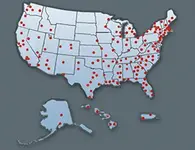
Depository institution coin deposits are weighed by electronic scales that are located at Federal Reserve Offices and also at armored carrier facilities throughout the United States.
Many cash offices throughout the Federal Reserve System have entered into legal agreements with local armored carrier transportation companies to serve as off-site coin terminal facilities to process institution's deposits and maintain inventories of verified coin.
Unlike currency, there is no need to sort the coins for fitness since coins are damaged very rarely. The average life of a coin is estimated to be 30 years. Generally, all coin accepted by the Federal Reserve System is weighed (at a Reserve Bank Office or by armored carriers) and redistributed to depository institutions when they place orders. The processing of entries for coin deposits and orders is identical to the process for currency - an institution's Federal Reserve account is credited for the amount of the coin deposit and/or debited for the amount of the coin order.
Since most Americans tend to accumulate coin for collection purposes, the Mint continues to produce between 3 and 30 billion coins per year to meet public demand . The U.S. Mint operates four minting facilities; however, only two - Denver, Colorado and Philadelphia, Pennsylvania - create the coins that are distributed by the Federal Reserve System. The two remaining minting facilities include the San Francisco Mint in California and the West Point Mint in New York. Both facilities manufacture various gold, silver and platinum numismatic proof, uncirculated and bullion coins and annual proof clad and proof silver coin sets of the circulating coins.