What's new

which type of rock is this(2)

rockcollect

Full Member
Joined
May 2, 2026
Messages
196
Reaction score
185
Golden Thread
0
Location
Lent
Detector(s) used
none
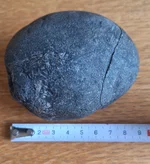
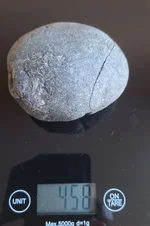
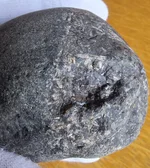
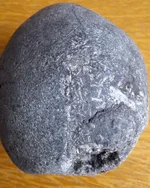
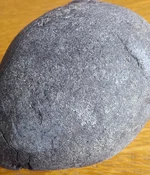
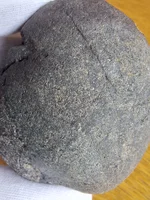
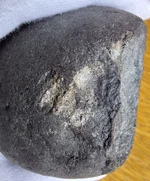
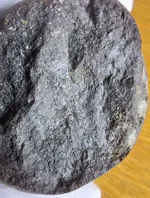
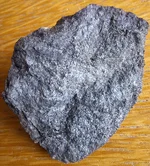
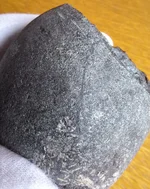
Hello rockhounds and especialy the arizona rock hounds. I have here a rock that was found in Tuscon Arizona and would like to know what it is. The following caracteristiks aplie to the stone: It atracts a magnet moderately strong and it is a soft stone that leaves a beige/pistache streak on a porcelain tile, it has a lot of large green crystals that have a shimmer effect in the light. There runs a green vein throughout the stone. One area of the stone has a bunch of large elongated rectangular crystals but the rest of the stone is a sort of smaller crystaline matrix.
 

Attachments

  • 20260601_190606.webp
    20260601_190606.webp
    594.6 KB · Views: 82
  • 20260601_190539.webp
    20260601_190539.webp
    561.7 KB · Views: 28
  • 20260601_190318.webp
    20260601_190318.webp
    620.6 KB · Views: 31
  • 20260601_190025.webp
    20260601_190025.webp
    539.8 KB · Views: 29
  • 20260601_190044.webp
    20260601_190044.webp
    1.2 MB · Views: 31
  • 20260601_190417.webp
    20260601_190417.webp
    1 MB · Views: 33
  • 20260601_190343.webp
    20260601_190343.webp
    596.5 KB · Views: 28
  • 20260601_190240.webp
    20260601_190240.webp
    860.2 KB · Views: 29
  • 20260601_190136.webp
    20260601_190136.webp
    1.1 MB · Views: 34
  • 20260601_190328.webp
    20260601_190328.webp
    937.8 KB · Views: 36
My best guess would be that it's volcanic, in the basalt family, and that the elongated crystals are phenocrysts of plagioclase feldspar. Any green crystals will likely be olivine or pyroxene. Many basalts are attracted to a magnet because they contain magnetite and/or titano-magnetite.

Although basalt itself is a hard rock, as it weathers and oxidises it becomes much softer (as palagonite for example) at the surface... but even to the extent that the entire matrix can become crumbly. The streak will then usually be brownish or yellowish-beige. Although olivine is green or yellowish-green, its streak is colourless. However, in basalts, olivine is often found together with augite and that does have a greenish streak.

It's important to remember that streak testing is really only reliably applicable to discrete minerals. For composite rocks with a mixture of minerals, when you get a streak its colour is derived from a mixture of the colours that the individual minerals would have given.
 
My best guess would be that it's volcanic, in the basalt family, and that the elongated crystals are phenocrysts of plagioclase feldspar. Any green crystals will likely be olivine or pyroxene. Many basalts are attracted to a magnet because they contain magnetite and/or titano-magnetite.

Although basalt itself is a hard rock, as it weathers and oxidises it becomes much softer (as palagonite for example) at the surface... but even to the extent that the entire matrix can become crumbly. The streak will then usually be brownish or yellowish-beige. Although olivine is green or yellowish-green, its streak is colourless. However, in basalts, olivine is often found together with augite and that does have a greenish streak.

It's important to remember that streak testing is really only reliably applicable to discrete minerals. For composite rocks with a mixture of minerals, when you get a streak its colour is derived from a mixture of the colours that the individual minerals would have given.
I love your answers because they are so detailed and an answer you can learn from. TOP thanks
 

Users who are viewing this thread

Back
Top Bottom