- Joined
- May 16, 2023
- Messages
- 7,184
- Reaction score
- 34,771
- Golden Thread
- 0
- Detector(s) used
- XP Deus II
White's Spectra v3i
Garrett Ultra GTA 1000
Whites Coinmaster
- Primary Interest:
- All Treasure Hunting
- #1
Thread Owner
Bottle Vitals
| Date | Color | Shape | Size (Height x Diameter) | Value* | |
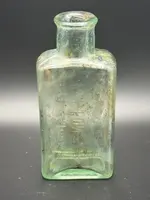
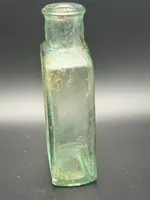
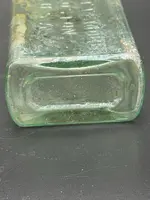
| Whittemore Shoe Polish | 1880s | Aqua | Rectangular | 5.5" x 2.5" x 1.5" | $10.00 |
Bottle Views (click to enlarge):
| Front | Back | Side | Side | Bottom |
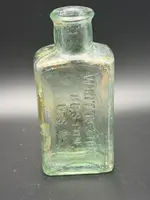 |  | 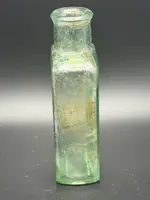 |  |  |
| Whittemore Boston USA |
Whittemore Brothers & Company was a manufacturer of shoe polish in Cambridge, Massachusetts (suburb of Boston). It was started in 1852 by David and Joshua Whittemore, and produced a whole line of shoe polishes in different styles and colors. The most common was black, often just called "shoe black". These polishes and "dressings" were used to protect the leather that the shoes were made of to extend the life of the shoes, as well as to make them look their best.
Everyone knew that proper shoe care was critical, especially if you wore nice shoes. Click to enlarge.
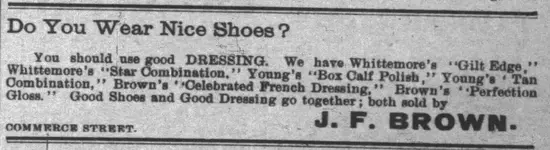
And that keeping your shoes in top form was important if you expected to be well dressed (click to enlarge).
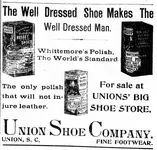
Whittemore polish was widely sold across the country. They apparently made enough of it to cover entire cities. (click to enlarge)
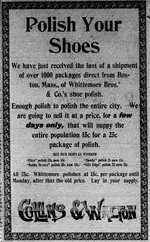
It was popular with consumers, as well as with "shoe artists", what we would have called "shoe shine boys".
Here are a couple of advertisements from Joe Kennard, a shoe artist back in the day. He would even make house calls just to shine your shoes, using Whittemore polish. (Click to enlarge)
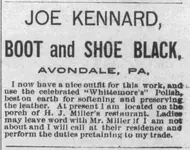
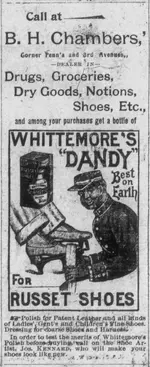
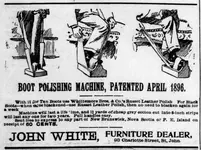
But even back then, technology was trying to replace labor, because someone invented an automatic shoeshine machine -- and of course, it used Whittemore polish. Click to enlarge.
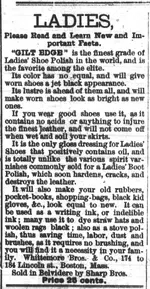
But perhaps the best thing about Whittemore's polish is that it could be used for other things. You could polish your shoes with it, use it as ink to write letters with, or even polish your stove! (click to enlarge)
Whittemore Polish continued to be sold for many years. Their factory was moved to Alabama in 1951, and sold to a Tennessee firm in 1963. But it may not have lasted much longer, as the most recent mention I saw of them was in a court case in 1971.
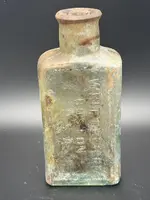
This particular bottle cleaned up fairly well with just soap and water, brushes, and scrapers. It would have originally had a cork stopper with a sponge applicator attached to it. Part of the cork and sponge applicator remained and were recovered from the inside of the bottle. You can see them in the photo at the top of this article. Here is the bottle itself, before and after cleaning.
* Value is an estimate based on sold eBay listings at the time of posting. These bottles are plentiful and low priced, but as always, it varies with condition.
Last edited: