Oceanscience
Full Member
- #1
Thread Owner
Let's take a look at the UNESCO convention manual, how it considers and recommends the ways to tackle the many aspects of shipwrecks.
Any work around shipwrecks costs a lot of money. The treasure hunters way, based on thousands of years of tradition, has been to finance the search and recovery with the sale of the goods recovered.
The treasure hunter takes the risk. Not goods recovered, no pay.
The UNESCO convention does not allow that. How can the search of information about the past be funded?
I am starting this thread, so that we can discuss to pro's and con's about the RULES. Below is Rule 18, for starters.
Raising funds (Rule 18)
A long tradition of government concern for archaeology and archaeological projects suggests that the financing issue is only to be solved through public funding, whether
in the form of institutional funding or subsidies. Force of habit is in this case a powerful factor, and, while for instance the cultural industries operate under market
constraints and therefore reason more or less in terms of profit margins and capital outlay, archaeology has a tendency to think of itself as different; so different, that it
would be compelled to use other than the normal, well-known channels followed by all enterprises. Of course archaeology has its specific features. It is far from certain,
however, that archaeological projects are as specific as is generally believed. In view of the comparative diminishing of dedicated public funding, the involvement of the
business and financial world in cultural life, in the form of sponsoring, takes ever greater importance.
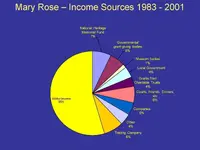
There are various types of funding and sources. A range of them can be considered to support an underwater archaeological project. Eligibility to apply for them will
depend, for example, on the project team’s institutional character: the kind of legal persona that is financially accountable for the project; the kind of legal persona that is
applying for funding
Any work around shipwrecks costs a lot of money. The treasure hunters way, based on thousands of years of tradition, has been to finance the search and recovery with the sale of the goods recovered.
The treasure hunter takes the risk. Not goods recovered, no pay.
The UNESCO convention does not allow that. How can the search of information about the past be funded?
I am starting this thread, so that we can discuss to pro's and con's about the RULES. Below is Rule 18, for starters.
Raising funds (Rule 18)
A long tradition of government concern for archaeology and archaeological projects suggests that the financing issue is only to be solved through public funding, whether
in the form of institutional funding or subsidies. Force of habit is in this case a powerful factor, and, while for instance the cultural industries operate under market
constraints and therefore reason more or less in terms of profit margins and capital outlay, archaeology has a tendency to think of itself as different; so different, that it
would be compelled to use other than the normal, well-known channels followed by all enterprises. Of course archaeology has its specific features. It is far from certain,
however, that archaeological projects are as specific as is generally believed. In view of the comparative diminishing of dedicated public funding, the involvement of the
business and financial world in cultural life, in the form of sponsoring, takes ever greater importance.
There are various types of funding and sources. A range of them can be considered to support an underwater archaeological project. Eligibility to apply for them will
depend, for example, on the project team’s institutional character: the kind of legal persona that is financially accountable for the project; the kind of legal persona that is
applying for funding