What's new

Any Aussie Opal Miners on Here?

Joined
Jan 17, 2026
Messages
91
Reaction score
412
Golden Thread
0
Location
SE Florida
Detector(s) used
Minelab Excalibur II
Primary Interest:
Beach & Shallow Water Hunting
I've been doing research on treasure hunting that optimizes yield ($) with minimal red tape. While Florida has some modest options, any serious Spanish wreck salvaging is pretty much off the table for the average layman due to costs, red tape, legal shenanigans, etc. Saw that opal mining, particularly in the outback, can be very lucrative, but very hit or miss. Are there any users here that can corroborate? If so, what are your experiences? How does Australia treat its prospectors, how large is the red tape, etc.? Do you find it personally worth it to be an opal miner, or is it prohibitively expensive, etc.? I know that gold prospecting is an option here in the states, but I feel that most people spend more than they make, or just barely break even, certainly not enough for a full time or serious operation. It seems to be only productive at scale, save for few very lucky finds.

I'm curious to see what your opinion is! Tangentially, I find Australian opals to be one of the most beautiful gems out there...
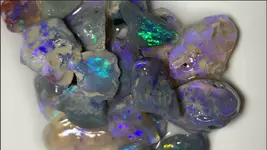
Screenshot 2026-02-02 at 7.59.28 PM.webp
 
I've watched some of those opal mining shows. Those Aussies are risking life
and limb for a bit of color, but damn, they are pretty!
digging.gif
 
I've been doing research on treasure hunting that optimizes yield ($) with minimal red tape. While Florida has some modest options, any serious Spanish wreck salvaging is pretty much off the table for the average layman due to costs, red tape, legal shenanigans, etc. Saw that opal mining, particularly in the outback, can be very lucrative, but very hit or miss. Are there any users here that can corroborate? If so, what are your experiences? How does Australia treat its prospectors, how large is the red tape, etc.? Do you find it personally worth it to be an opal miner, or is it prohibitively expensive, etc.? I know that gold prospecting is an option here in the states, but I feel that most people spend more than they make, or just barely break even, certainly not enough for a full time or serious operation. It seems to be only productive at scale, save for few very lucky finds.

I'm curious to see what your opinion is! Tangentially, I find Australian opals to be one of the most beautiful gems out there...

View attachment 2243161
Hello Knight

These TV shows are hype and really do not give a fair experience. For example, the black opal miners of Lightning Ridge. The reality some walk around with their ass out of their pants with 200 grand of opals, others just have their ass out of their pants. While most miners operate on shoestring duct tape, baling wire, and Hail Marys to keep going. Others have done very well. But for most, it takes years. And the place is hot as hell, perhaps even hotter than hell. Many stay the same, sorry ass poor the day they rolled into town.

It's not a place to earn a quick buck. Its poorest postcode for income per capita. Anyone who has mining experience, you'd better work for a big mining company in gold mining, iron ore, coal, or rare earths. Salaries in Australian mining are high, with averages around $138,000-$140,000 annually, significantly above the national average, thanks to high demand and Fly-In Fly-Out (FIFO) roles offering substantial earnings for entry-level to experienced workers, often in the $90k-$200k+ range depending on role, experience, and location, with roles like Jumbo Operator potentially reaching $220k. High-paying jobs include Mining Engineers ($132k-$165k avg) and Machine Operators ($155k avg), while even entry-level roles like Driller's Offsiders can earn $120k-$150k with high physical demands.

FIFO (Fly-in, fly-out): While common for younger people to start in FIFO roles at 18–21, it is not uncommon for workers to continue into their 50s and 60s, provided they meet fitness and health standards. Most mine sites are isolated in the ass end of nowhere. And if it's not, then it will be pretty close to it. I worked for years in mineral exploration all over the world. I saw mines developed and come and go.

The downside you are isolated from family and friends. Many married people end up divorced. And single men stay single. Some blow their money and are still there in thier 50's and 60's with nothing to show for it. Others get in, make money, and set themselves up financially for life. You just have to be able to deal with heat, dust, flies, isolation and bullshit. And don't blow ya money on alcohol, gambling, and drugs.

Crow
 
Hello Knight

These TV shows are hype and really do not give a fair experience. For example, the black opal miners of Lightning Ridge. The reality some walk around with their ass out of their pants with 200 grand of opals, others just have their ass out of their pants. While most miners operate on shoestring duct tape, baling wire, and Hail Marys to keep going. Others have done very well. But for most, it takes years. And the place is hot as hell, perhaps even hotter than hell. Many stay the same, sorry ass poor the day they rolled into town.

It's not a place to earn a quick buck. Its poorest postcode for income per capita. Anyone who has mining experience, you'd better work for a big mining company in gold mining, iron ore, coal, or rare earths. Salaries in Australian mining are high, with averages around $138,000-$140,000 annually, significantly above the national average, thanks to high demand and Fly-In Fly-Out (FIFO) roles offering substantial earnings for entry-level to experienced workers, often in the $90k-$200k+ range depending on role, experience, and location, with roles like Jumbo Operator potentially reaching $220k. High-paying jobs include Mining Engineers ($132k-$165k avg) and Machine Operators ($155k avg), while even entry-level roles like Driller's Offsiders can earn $120k-$150k with high physical demands.

FIFO (Fly-in, fly-out): While common for younger people to start in FIFO roles at 18–21, it is not uncommon for workers to continue into their 50s and 60s, provided they meet fitness and health standards. Most mine sites are isolated in the ass end of nowhere. And if it's not, then it will be pretty close to it. I worked for years in mineral exploration all over the world. I saw mines developed and come and go.

The downside you are isolated from family and friends. Many married people end up divorced. And single men stay single. Some blow their money and are still there in thier 50's and 60's with nothing to show for it. Others get in, make money, and set themselves up financially for life. You just have to be able to deal with heat, dust, flies, isolation and bullshit. And don't blow ya money on alcohol, gambling, and drugs.

Crow
Wow! You've written a little about my real life 20 year old experiences and my days of living paycheck to paycheck working underground.
 
Wow! You've written a little about my real life 20 year old experiences and my days of living paycheck to paycheck working underground.
Well, there was an unwritten rule: you work hard, play hard. One mine I worked in a mine that mined for Lead, silver, copper, and zinc. The Mount Isa Mine, specifically the copper operations, extends to at least 35 levels deep, with mining activities reaching depths of up to 1.9 kilometres (approx. 1,900m). The complex is one of Australia's deepest, with major production ore bodies developed between levels 21 and 36. The mine has one of the largest networks of underground tunnels in the world, almost two kilometres deep and stretching to a length of around 1600 kilometres of underground roads. That's 994 miles of underground roads. Going down the two-story lift in which you drive your truck inside was like traveling on a subway at night, but only vertically. There was an underground workshop with gantry cranes. In the lower levels, they had pumped air down, and large shafts were constructed to create cross ventilation. It was hot as hell itself. Over the nearly 100-year life of the mine, there were 150 fatalities.

Screenshot 2026-02-04 111509.webp


When I worked there many years ago, we were on level 28. I started on the X41 until that closed and moved into the enterprise mine. I eventually moved to the exploration drilling team on the surface, then onto different mining exploration companies chasing the money. When you're twenty, you think you are bulletproof. Miners have a shelf life. The body wears out. Life moves on, and you make the most of it while you are there. I went on to bigger and better things.

I still have an appreciation for miners and the risks they take, and disdain for how so many people take their efforts for granted.


Crow
 
Exploration is what I loved here. This site below was dead flat, semi-desert. Part of Century Downs cattle station. It was a mining tenement owned by MIM. They exchanged the tenement with CRA, now called Rio Tinto, who contracted the drilling company I was working for at the time.

I have a mate who worked there for about 10 years. He bought and paid off 8 properties in that 10-year period. By the time he hit 50, he was retired, living off rental income. I retired at 49, own multiple properties, and mining shares.

During its 16 years of operation, Century was one of the largest zinc mines in the world, producing and processing an average of 475,000 tpa of zinc concentrate and 50,000 tpa of lead concentrate. Mill tailings generated from 16 years of operations from the Century open pit forms a Proven Reserve of 77.3 million tonnes at 3.1% zinc-equivalent, for 2,287,000 tonnes of contained zinc. I look at it in amazement to think that where we drilled no longer exists.

Screenshot 2026-02-04 114741.webp


So, depending on your age and health, you can make a good living and set yourself up for life.

Opals are beautiful, and opal mining is addictive. Also, sapphire mining. It's hit and miss. While many of the younger generation have experienced a thirty-year mining boom. Booms bust. That is why you don't take it all for granted, but many people do.

Crow
 
Well, there was an unwritten rule: you work hard, play hard. One mine I worked in a mine that mined for Lead, silver, copper, and zinc. The Mount Isa Mine, specifically the copper operations, extends to at least 35 levels deep, with mining activities reaching depths of up to 1.9 kilometres (approx. 1,900m). The complex is one of Australia's deepest, with major production ore bodies developed between levels 21 and 36. The mine has one of the largest networks of underground tunnels in the world, almost two kilometres deep and stretching to a length of around 1600 kilometres of underground roads. That's 994 miles of underground roads. Going down the two-story lift in which you drive your truck inside was like traveling on a subway at night, but only vertically. There was an underground workshop with gantry cranes. In the lower levels, they had pumped air down, and large shafts were constructed to create cross ventilation. It was hot as hell itself. Over the nearly 100-year life of the mine, there were 150 fatalities.

View attachment 2243251

When I worked there many years ago, we were on level 28. I started on the X41 until that closed and moved into the enterprise mine. I eventually moved to the exploration drilling team on the surface, then onto different mining exploration companies chasing the money. When you're twenty, you think you are bulletproof. Miners have a shelf life. The body wears out. Life moves on, and you make the most of it while you are there. I went on to bigger and better things.

I still have an appreciation for miners and the risks they take, and disdain for how so many people take their efforts for granted.


Crow
Well if I hadn't worked in a mine who knows what all else I'd end up doing. That lead to me into being a peddler of mine equipment and so many other types of merchandise used in hardrock underground mining. I've worked for Tamrock until they were absorbed by Sandvik. Spent 7 years at Brunner & Lay and did very well there's, due to so many of the gold mines in Nevada were going underground. Also worked at Atlas Copco Construction & Mining Technologies. Rockmore, Minova and last a small firm dealing in Secans & GD handheld machines along with anything else we could. I retired a couple years ago, but still dealing a little on the side with the Uranium operations which have fired up a couple years ago. Those mines are 80% jackleg mining, which is sweet. I believe the most important thing I learned in a mine from miners who had already like 20-30 years when I was a 20 years old in the later 1970s was a miner's opinion is worth at times more than his paycheck. Knowing that gave me a big boost in dealing with many a hardrock miner over all the years.
 
Knight, my apologies, I went off from the original topic. Usually, with a virgin site, you have a square lease. In the Lightning Ridge Mineral Claims District, standard mineral claims (often referred to as square leases or "claims") are restricted to 1/4 of a hectare, which is equivalent to 2,500 square metres. Rule of thumb: You sink two shafts, one at each opposing corner. to meet up linking both sharts give you cross-flow ventilation and another escape exit. You can rework old abandoned mining leases. Just make sure ya no working an active lease, otherwise you might get some buckshot in the ass. Or worse, thrown down an abandoned mine shaft.

Screenshot 2026-02-04 142909.webp


There is a layer of hard sandstone nicknamed shin cracker. My shins still bear the scars of my pick. :laughing7:


Now there is a requirement to do a safety mining course. Training: New regulations require completing a $2,000 opal mining course/safety workshop.

Mining opals at Lightning Ridge requires obtaining a Mineral Claim maximum 2,500 from NSW Resources, authorized under the Mining Act 1992. Applicants must be 18+, mark out the claim, pay fees, and potentially complete an environmental awareness course. The site is in a declared Access Management Area, often requiring interaction with the Lightning Ridge Miners Association.

Top-tier, investment-grade black opals from Lightning Ridge, Australia, are considered the most valuable in the world, with exceptional, rare specimens commanding prices up to $20,000 per carat or higher

Screenshot 2026-02-04 144524.webp


Screenshot 2026-02-04 144618.webp


Screenshot 2026-02-04 144705.webp


Screenshot 2026-02-04 145621.webp


Screenshot 2026-02-04 145820.webp


No opal is the same; each is unique.


Crow
 
Last edited:
Knight, my apologies, I went off from the original topic. Usually, with a virgin site, you have a square lease. In the Lightning Ridge Mineral Claims District, standard mineral claims (often referred to as square leases or "claims") are restricted to 1/4 of a hectare, which is equivalent to 2,500 square metres. Rule of thumb: You sink two shafts, one at each opposing corner. to meet up linking both sharts give you cross-flow ventilation and another escape exit. You can rework old abandoned mining leases. Just make sure ya no working an active lease, otherwise you might get some buckshot in the ass. Or worse, thrown down an abandoned mine shaft.

View attachment 2243281

There is a layer of hard sandstone nicknamed shin cracker. My shins still bear the scars of my pick. :laughing7:


Now there is a requirement to do a safety mining course. Training: New regulations require completing a $2,000 opal mining course/safety workshop.

Mining opals at Lightning Ridge requires obtaining a Mineral Claim maximum 2,500 from NSW Resources, authorized under the Mining Act 1992. Applicants must be 18+, mark out the claim, pay fees, and potentially complete an environmental awareness course. The site is in a declared Access Management Area, often requiring interaction with the Lightning Ridge Miners Association.

Top-tier, investment-grade black opals from Lightning Ridge, Australia, are considered the most valuable in the world, with exceptional, rare specimens commanding prices up to $20,000 per carat or higher

View attachment 2243278

View attachment 2243279

View attachment 2243280

View attachment 2243282

View attachment 2243283

No opal is the same; each is unique.


Crow
Very cool!

I appreciate the info dump. I was thinking if I pursued opal mining, I would progress from fossicking => mining part time => mining full time, if it proves to be viable. I currently work as a software developer, but I've been thinking of a change of pace. Maybe work remote if possible on Starlink, and slowly ease into mining. Been brainstorming a bunch of different possibilities, but also trying to mitigate with realism. I'm sure if it were easy, everyone would be doing it. I've also thought about gold prospecting, as it seems more straight forward and consistent, but it would require large volumes of dirt processed to be a viable source of income, I would think. I suspect that Australia, New Zealand, and Tasmania still have some of the largest gold deposits in the world left, with other gems like opal and sapphire, but working out the logistics seems tricky. Additionally, there are other more obscure gems that are more valuable, but they usually come from unstable / dangerous regions, etc. Not only would I have to work out logistics, but the pessimistic side of me also worries about transportation. Typically, you'd have to transport such gems from really remote regions, often internationally, without losing them along the way to robbers or even customs, then there's Uncle Sam with the IRS here. I don't think they'd take kindly to suddenly declaring large windfalls in income from international gem transport. The reality of treasure hunting unfortunately doesn't favor the romantic ideals of Indiana Jones-style treasure seeking imo.
 
Very cool!

I appreciate the info dump. I was thinking if I pursued opal mining, I would progress from fossicking => mining part time => mining full time, if it proves to be viable. I currently work as a software developer, but I've been thinking of a change of pace. Maybe work remote if possible on Starlink, and slowly ease into mining. Been brainstorming a bunch of different possibilities, but also trying to mitigate with realism. I'm sure if it were easy, everyone would be doing it. I've also thought about gold prospecting, as it seems more straight forward and consistent, but it would require large volumes of dirt processed to be a viable source of income, I would think. I suspect that Australia, New Zealand, and Tasmania still have some of the largest gold deposits in the world left, with other gems like opal and sapphire, but working out the logistics seems tricky. Additionally, there are other more obscure gems that are more valuable, but they usually come from unstable / dangerous regions, etc. Not only would I have to work out logistics, but the pessimistic side of me also worries about transportation. Typically, you'd have to transport such gems from really remote regions, often internationally, without losing them along the way to robbers or even customs, then there's Uncle Sam with the IRS here. I don't think they'd take kindly to suddenly declaring large windfalls in income from international gem transport. The reality of treasure hunting unfortunately doesn't favor the romantic ideals of Indiana Jones-style treasure seeking imo.

Knight of Escalibur.

You have some important skills.

Australia still needs software developers, particularly those with specialized, high-level skills in AI, cloud computing, and cybersecurity. While demand for general roles has eased and is no longer considered in critical shortage nationwide as of late 2025, the tech sector continues to grow, requiring experienced engineers to fill roles in finance, healthcare, and digital transformation.

High-Demand Specializations: Although general roles are more competitive, there is high demand for Full Stack Engineers, Backend Developers (Node.js, .NET, Java, Golang), Cloud Architects, and AI/ML specialists. Skill Shortage Update: For the first time since 2021, general "software engineer" roles were removed from the official national shortage list in late 2025, but specialized roles still face hiring pressures. Job Market Dynamics: While experienced developers are in demand, the market for junior or graduate developers is extremely competitive. Industry Growth: The Australian software market is projected to grow to US$14.81 billion by 2030, driven by AI and digital transformation. Location & Salary: Sydney, Melbourne, and Brisbane are major hubs, with high demand for developers, including opportunities for visa sponsorship. You can get your employer in Australia help with a Temporary Skill Shortage (TSS) visa (subclass 482). It previously allowed skilled foreign workers to work in Australia for up to four years.

Software developers in Australia earn an average salary of approximately $110,000 to $150,000+ annually, with rates heavily influenced by experience, specialization, and location (e.g., Sydney/Melbourne often higher). Entry-level roles often start around $117,000, while senior positions can exceed $168,000 per year plus you get paid compulsory superannuation of 10 percent of your wage.

On your days off and holidays, you can prospect or go gold metal detecting for gold or fossick opal mullock heaps for opals.
Approximately 95% of Australia's landmass is considered uninhabited or very sparsely populated, with roughly 85% to 90% of the population concentrated along the narrow coastal fringe, particularly in the southeast and southwest Only about 5% of the land is actively inhabited, largely due to the harsh, arid climate of the interior "Outback"

Crow
 
I've been doing research on treasure hunting that optimizes yield ($) with minimal red tape. While Florida has some modest options, any serious Spanish wreck salvaging is pretty much off the table for the average layman due to costs, red tape, legal shenanigans, etc. Saw that opal mining, particularly in the outback, can be very lucrative, but very hit or miss. Are there any users here that can corroborate? If so, what are your experiences? How does Australia treat its prospectors, how large is the red tape, etc.? Do you find it personally worth it to be an opal miner, or is it prohibitively expensive, etc.? I know that gold prospecting is an option here in the states, but I feel that most people spend more than they make, or just barely break even, certainly not enough for a full time or serious operation. It seems to be only productive at scale, save for few very lucky finds.

I'm curious to see what your opinion is! Tangentially, I find Australian opals to be one of the most beautiful gems out there...

View attachment 2243161
They are lovely stones/gems. I have never hunted them but have known a number who did.
The most lovely things I saw done with them, that were not gem quality, was a mate of mine who mounted them in marine Gel Coat selling them on the internet.
What he did was get cylinder containers, the smallest were old film containers upwards. He would pour some gel coat into say the bottom very bottom of the container flat. The very bottom few mm had black in it. Then some more gel coat on an angle. When it was nearly set he would place an opal piece in the middle then pour more gel coat and keep the angle letting everything set.
When done the top was angled, then he polished it all with various grain of wet and dry sandpaper getting it all to a perfect polish. They looked awesome. Opal looks amazing when wet. So what was achieved was the opal bits looked permanently wet and the angle gave an amazing view from the top and all sides. He also did bits of gold too. He was the first person I detected with but he didn't go on with gold detecting. The best gold was specimen gold we found and smashed out of quartz.
It, like opal, looked best wet, raw jagged bits. The gold looked mind blowing set that way. You had to wear filter masks and be careful not to breath the vapours of the Gel Coat.
To this day I have never seen anything like he did with opal and reef gold.
Anyone who saw them brought them off him straight away.
 
My family lived in Mount Isa in the 60's ,, before my time ,, mining was getting going in a big way and there was plenty of work around... Stories of beautiful rocks aplenty..
 
My family lived in Mount Isa in the 60's ,, before my time ,, mining was getting going in a big way and there was plenty of work around... Stories of beautiful rocks aplenty..
Ah! plenty of Irish at mount Isa. They still have the Irish club up there. Drank many a brew there.

Screenshot 2026-02-04 200358.webp


Yeah, Mount Isa is a mining town. Its copper-zinc ore body has come to an end. The government is looking to keep the smelter going with imported ore from other copper mines. And create rare earth processing plants.

Screenshot 2026-02-04 195940.webp


Summer is hot as hell. The place is going through hard times these days. Australia has signed a 200 billion deal with the United States to supply rare earths to break the stranglehold China has on rare earths. Australia holds the world's fourth-largest reserves of rare earth elements (REEs), estimated at approximately 5.7 million tonnes or roughly 4–5% of global reserves. As a major producer, Australia accounts for about 8% of global REE production, with significant deposits mainly located in Western Australia and the Northern Territory. So if this goes ahead them the place will boom again.

Red Metal Limited has identified a massive 4.8-billion-tonne rare earth element (REE) deposit, known as the Sybella project, located just 20km southwest of Mt Isa. This Sybella project is notable for its unique, high-value, heavy rare earth oxide (NdPr) mineralisation hosted in soft, easily accessible granite, potentially allowing for low-cost mining and simple processing.

Screenshot 2026-02-04 201744.webp


With infrastructure in place and a rail link to the Port of Townsville. This is strategic metals used in electronics, electric cars, wind turbines, Batteries and smart weapons etc.
Australian rare earth exposure provides investors with domestic supply chain participation during global diversification from Chinese dominance. The uranium optionality aligns with strengthening nuclear energy markets globally and Australia's expanding uranium export sector.

I can make money these days without getting out of bed.


Crow
 
Last edited:
Good info, as per usual Crow !!...:occasion14:
Was there not some stones up there as well ?
I heard stories from my Dad of some pretty hardy individuals,, real hardcore bushmen, seems like a very different time/world.. and the heat of course, they thought Brisbane was hot before they moved inland....
 
Knight, my apologies, I went off from the original topic. Usually, with a virgin site, you have a square lease. In the Lightning Ridge Mineral Claims District, standard mineral claims (often referred to as square leases or "claims") are restricted to 1/4 of a hectare, which is equivalent to 2,500 square metres. Rule of thumb: You sink two shafts, one at each opposing corner. to meet up linking both sharts give you cross-flow ventilation and another escape exit. You can rework old abandoned mining leases. Just make sure ya no working an active lease, otherwise you might get some buckshot in the ass. Or worse, thrown down an abandoned mine shaft.

View attachment 2243281

There is a layer of hard sandstone nicknamed shin cracker. My shins still bear the scars of my pick. :laughing7:


Now there is a requirement to do a safety mining course. Training: New regulations require completing a $2,000 opal mining course/safety workshop.

Mining opals at Lightning Ridge requires obtaining a Mineral Claim maximum 2,500 from NSW Resources, authorized under the Mining Act 1992. Applicants must be 18+, mark out the claim, pay fees, and potentially complete an environmental awareness course. The site is in a declared Access Management Area, often requiring interaction with the Lightning Ridge Miners Association.

Top-tier, investment-grade black opals from Lightning Ridge, Australia, are considered the most valuable in the world, with exceptional, rare specimens commanding prices up to $20,000 per carat or higher

View attachment 2243278

View attachment 2243279

View attachment 2243280

View attachment 2243282

View attachment 2243283

No opal is the same; each is unique.


Crow
Absolutely BEAUTIFUL STONES !
 
Knight of Escalibur.

The biggest danger out there on the opal fields is falling down a shaft. Or heat stroke during the day. If you come and mine opals, there are plenty of buyers. Rough opals do not get a premium price; it is only when they are cut and shaped.

Opal mining in Australia has evolved throughout the years. Gone are the days when all a miner needed was a $20 claim and a pick and shovel to mine the area. Today, a deposit of over $250,000 is required to operate a typical open-cut mine and at least double that to operate an open-cut Opal mine. As a result, miners are often required to combine multiple claims, which often proves difficult.

Furthermore, new regulations require miners to undertake a $2,000 Opal mining course, covering first aid, electrical problems and technical safety procedures. Miners must also apply for an Opal mining claim through the Department of Minerals and comply with strict environmental contentions, including replanting vegetation on the site following the claim expiration date. Over the years, the price of this claim has staggered from $435 to an astounding $1230.

It is not easy for ‘outsiders’ to purchase and establish an Opal mine in the area, as Opal mines for sale are rare and usually sold within the community. Many of the best Opal mines are purchased under a profit share rather than being sold entirely. This means that the owner can still receive a percentage of profit from the Opals mined by local workers.

Even life in Lightning Ridge itself comes at a high price. Everyday luxuries are rarities and petrol is almost double the city price. Many miners work other jobs such as fly in fly out mines elsewhere.

Prospecting is the term used to describe opal mining. Potential miners need to apply for an “Opal Prospecting License” or Mineral Claim before they can begin prospecting. It is important to note that prospecting differs significantly from mining.

Prospecting licenses are allowed over larger areas and are quite easy to obtain in comparison to mineral claims, which often require bonds. Generally, there are 50 to 100 Opal Prospecting Licenses that are approved annually. There are four defined prospecting areas in the Narran-Warrambool reserve, which were set aside to help preserve the tradition of small prospectors rather than continuing to grant large mineral claims. Prospecting is not permitted in national parks or wildlife areas.

My suggestion is perhaps go on holiday and do some fossicking there. You may love it, or you might hate it.

Crow
 
Not that I'm ever going to go out looking for Opals I think you have posted some real good info on this subject ! Very different than what is "assumed" by the T.V. show ! So thankyou for posting this info !
My pleasure. Black opals are beautiful stones as none two stones are the same. This one below is worth about 36000 dollars.

Screenshot 2026-02-05 224524.webp


The person who dug it up proberbly only got about 5000 dollars before it was cut and polished. The gem buyers cut and polished it. Then sold it for 11000 dollars. By the time it hits the retail market in the US and Europe it will sell for 36000 dollars.


Crow
 
Ah! plenty of Irish at mount Isa. They still have the Irish club up there. Drank many a brew there.

View attachment 2243287

Yeah, Mount Isa is a mining town. Its copper-zinc ore body has come to an end. The government is looking to keep the smelter going with imported ore from other copper mines. And create rare earth processing plants.

View attachment 2243288

Summer is hot as hell. The place is going through hard times these days. Australia has signed a 200 billion deal with the United States to supply rare earths to break the stranglehold China has on rare earths. Australia holds the world's fourth-largest reserves of rare earth elements (REEs), estimated at approximately 5.7 million tonnes or roughly 4–5% of global reserves. As a major producer, Australia accounts for about 8% of global REE production, with significant deposits mainly located in Western Australia and the Northern Territory. So if this goes ahead them the place will boom again.

Red Metal Limited has identified a massive 4.8-billion-tonne rare earth element (REE) deposit, known as the Sybella project, located just 20km southwest of Mt Isa. This Sybella project is notable for its unique, high-value, heavy rare earth oxide (NdPr) mineralisation hosted in soft, easily accessible granite, potentially allowing for low-cost mining and simple processing.

View attachment 2243289

With infrastructure in place and a rail link to the Port of Townsville. This is strategic metals used in electronics, electric cars, wind turbines, Batteries and smart weapons etc.
Australian rare earth exposure provides investors with domestic supply chain participation during global diversification from Chinese dominance. The uranium optionality aligns with strengthening nuclear energy markets globally and Australia's expanding uranium export sector.

I can make money these days without getting out of bed.


Crow
Mt Isa is stuffed now. Mine, smelter closures, huge job losses and out of control public drunkenness. Not on my list of places to visit. Huge health issues there too from the mining and smelter. https://news.com.au/national/queens...t/news-story/2ab4ba24b417844c2f1d5dd2ca7d6038
The little told story of mining.
 

Users who are viewing this thread

Latest Discussions

Back
Top Bottom