

- Joined
- May 16, 2023
- Messages
- 7,184
- Reaction score
- 34,771
- Golden Thread
- 0
- Detector(s) used
- XP Deus II
White's Spectra v3i
Garrett Ultra GTA 1000
Whites Coinmaster
- Primary Interest:
- All Treasure Hunting
- #1
Thread Owner
Bottle Vitals
| Date | Color | Shape | Size (Height x Diameter) | Value* | |
| Ayers Ague Cure | 1880s | Aqua | Rectangular | 7" x 2.25" x 1.5" | $30.00 |
Bottle Views (click to enlarge):
| Front | Back | Side | Side | Bottom |
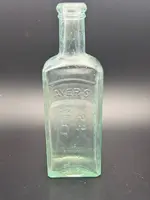 | 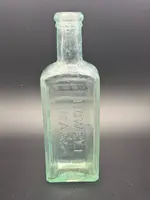 | 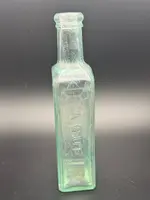 | 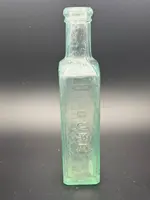 | 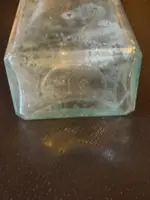 |
| Ayers Aque Cure | Lowell Mass | Ague | Cure |
It was intended to cure Ague, a recurring fever that we now call malaria. The product was made of extracts of the cinchona tree in an alcohol base with other plant extracts for flavoring. The cinchona extract is what would later become known as quinine, and it was in fact effective in the treatment of malaria. Here' an analysis of the content of the medicine at the time:
It was advertised heavily through print and trade cards, as well as almanacs, a medium that many patent medicine companies used at the time. Here is an example (front and back) of a trade card ad (click to enlarge):
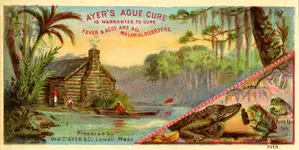
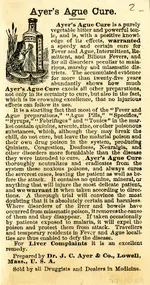
And here is an example of their almanac from the time period of this bottle.
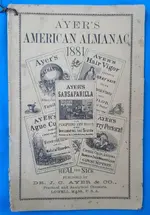
Ayers' company also had a short run of a totally different kind of advertising. During the civil war, when coins were in short supply, an entrepreneur named John Gault came up with a coin alternative. It was a pressed token that held a US postage stamp between a thin mica "glass" sheet and a brass backing plate the size of a quarter. The tokens could then trade in small transactions just as you would use a coin. JC Ayers saw potential for advertising using these new tokens, and commissioned some for use in 1862. Click to enlarge any of these.
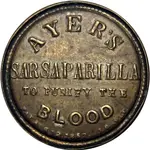
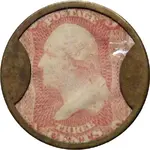
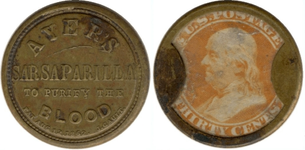
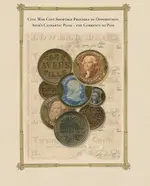
There were about 200,000 of these tokens made, but few survive today. They may have been traded in for currency when this was allowed by the postal service in January of 1863, and the trading of stamps as currency stopped soon after. There are undoubtedly more bottles remaining than there are tokens.
There are some bottles remaining which still have the original labels and boxes, such as this one, to show what this one would have looked like back in the day (click to enlarge):
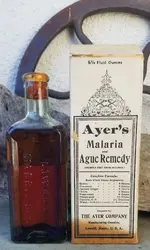
The Ayers company made quite a mark in the patent medicine world, and there are entire books dedicated to the company history, products, and advertising.
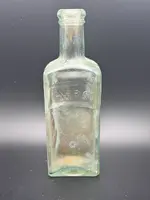
Here's the before and after on this particular bottle. Cleaned with soap and water and brushes. Click to enlarge.
* Value is based on sold eBay listings and other sold listings online, and varies considerably with condition.

















