- Joined
- May 16, 2023
- Messages
- 7,221
- Reaction score
- 34,914
- Golden Thread
- 0
- Detector(s) used
- XP Deus II
White's Spectra v3i
Garrett Ultra GTA 1000
Whites Coinmaster
- Primary Interest:
- All Treasure Hunting
- #1
Thread Owner
Bottle Vitals
| Date | Color | Shape | Size (Height x Diameter) | Value* | |
| Celerina | 1890 | Brown | Cylindrical | 5.5" x 2.5" | $10.00 |
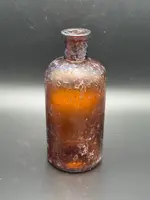
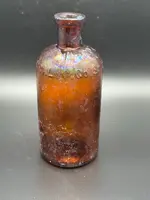
Bottle Views (click to enlarge):
| Front | Back | Side | Side | Bottom |
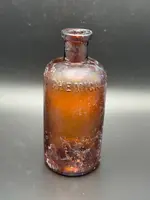 |  |  | 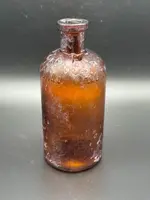 | 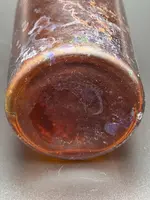 |
| RIO CHEMICAL | Co St. Louis Mo |
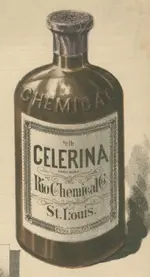
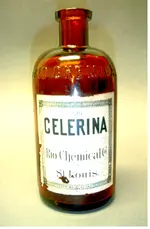
The RIO Chemical company was founded by Joseph Clifford Richardson, in St Louis Missouri in 1884. The company started small in a facility on second street but quickly expanded into a large building at the corner of Main and Locust streets. Their product line focused on women's issues, nervous system issues, and addiction. This bottle most likely held their popular nerve tonic, Celerina. Here is how the bottle looked, based on a catalog listing (left) and a listing found online (right). Click the enlarge.
Celerina was marketed as a general nerve tonic that could cure everything from nervous headache to alcohol addiction. Here are a couple of newspaper ads from the 1890s. Click to enlarge.
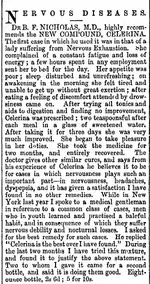
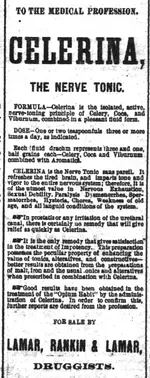
Its formula was be based on celery, coca, kola, and virburnum. It was said to be useful for "All Languid or Debilitated Conditions of the system, such as Loss of Nerve Power, Nervous Headache, Neuralgia, Paralysis, Impotency, Hysteria, Opium Habit, Inebriety, Dysmenorrhea, Prostatitis, Dyspepsia, etc.". With coca (where cocaine comes from) and kola nut (caffeine), it undoubtedly would have been effective in alleviating certain symptoms, but would have had damaging and potentially addictive effects of its own. (Interestingly, it shares those two ingredients with another famous "nerve and brain tonic" which later became a famous soft drink -- Coca Cola.)
The company was very successful and expanded rapidly, with offices in the US, Canada, and Europe. Click to enlarge.
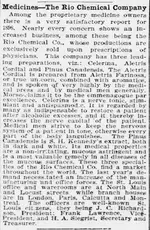
Mr Richardson extended his reach from drugs to banking when he organized the Chemical National Bank in 1891. Here are a couple of the bank notes issued by that bank. Click to enlarge.
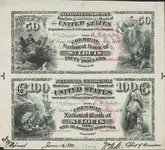
The bank was absorbed by the Third National Bank in 1897, at which time Mr Richardson became its president.
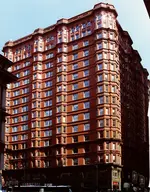
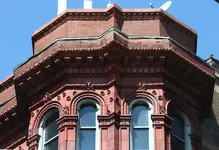
Mr Richardson also built the Chemical Building, a "skyscraper" at the corner of eight and Olive streets in St Louis. Despite numerous challenges with the foundation and steel suppliers, the building was completed in 1897 and was popular with a large number of local businesses, necessitating an expansion in 1903, when the US Weather Bureau would lease the 15th floor because they said the high altitude was more favorable for their use as a signaling station. (The building had 16 floors, so why they didn't go for the top floor, I don't know.). The historic building still stands today. Click to enlarge.
Unfortunately, Mr Richardson would not live much longer. He died in 1889 at the age of 48 after repeated surgeries to remove a carbuncle (infected boil) on his neck. After his death, the company passed to his wife, Mary. She moved the headquarters to New York and went on to become a philanthopist, bequeathing a large donation to the St Louis Art Museum in honor of her husband, which is now home to the Richardson Memorial Library.
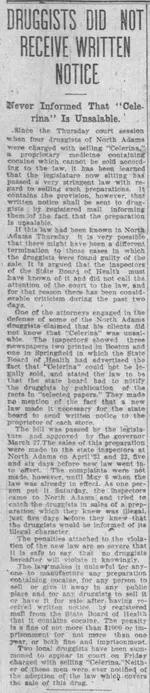
After 1906, it became illegal to sell products containing cocaine, and Celerina could no longer be sold. Apparently not everyone got the memo. Click to enlarge.
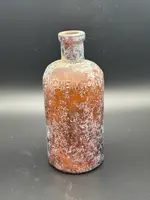
The Celerina bottles can be dated by which location is on the bottles. The bottles which are embossed as St Louis were made before 1889, and the ones with New York embossed on them were made in 1889 and later. The example pictured is the St Louis (earlier) variety. I also have the New York variety, which looks exactly the same other than the city name embossing, and the New York bottle has a "D" embossed on the bottom.
Here is before and after cleanup, using just soap and water. Click to enlarge.
* Value is based on sold online listings at the time of posting, and can vary considerably based on condition.