What's new

Back in the game

Westfront

Silver Member
Joined
Jun 15, 2010
Messages
4,837
Reaction score
6,624
Golden Thread
6
Location
Germania Secunda
🥇 Banner finds
6
Detector(s) used
XP Deus
Primary Interest:
All Treasure Hunting
After having health issues with my back and weeks in Hospital/Rehab i'm going to paint the fields red again. :laughing7:
This weekend it was the field next to a roman site. Not much to expect but one of the rare fields able to dig because of the drought we had this summer. The soil here turns to concrete when dry....
Anyway, here we go!

The trash
33665946sm.jpg


The musket and pistol balls
33665948hu.jpg


Buckles and drawer pull. (pic made with a little help from a friend)
33665950fp.jpg


Coin trash
33665952cj.jpg


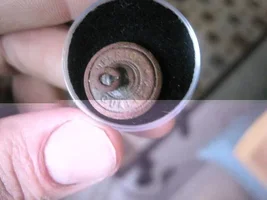
Buttons
33665954ma.jpg


Finds i like. Medieval buckle, half of a roman As, roman phallic pendant, head of a roman bronze nail and two whatzit's with gold gilt left.
33665955sy.jpg


This is what's left of a silver Denarius(?) with iron core after 1800 years. Help from Crudad welcome! :notworthy:
33665957mu.jpeg


And the fun find of the day, medal of the Fried Fish Celebration in Worms. :icon_scratch:
33665956gf.jpg
 
Upvote 54

Nice finds. Glad your back at it! [emoji16][emoji106]
 
I guess i have it.
Roman Republic, Denarius, 68 bc, Hosidius Geta
33685344il.png
As it’s an imitation of a coin (Roman most likely) the fact it looks a little off is to be expect, and why it looks a little Celtic so i’ll go along this being the best bet.
 
As it’s an imitation of a coin (Roman most likely) the fact it looks a little off is to be expect, and why it looks a little Celtic so i’ll go along this being the best bet.

And misspelled... The C in the C(?)NT looked a bit like a G. That was a start along with the boar. So it had GNTA instead of GETA on it. Anyways, an interesting find from my oldest site. :thumbsup:
 
great I.D. guys !!!
 
And misspelled... The C in the C(?)NT looked a bit like a G. That was a start along with the boar. So it had GNTA instead of GETA on it. Anyways, an interesting find from my oldest site. :thumbsup:
Yes, a very early imitation which might also explain the iron core. Our imitations didn't start until about 50BC, so they may have changed to copper-alloy by then. Just a theory I'm putting out there.
 
Yes, a very early imitation which might also explain the iron core. Our imitations didn't start until about 50BC, so they may have changed to copper-alloy by then. Just a theory I'm putting out there.

Possible. It will take a year at least to get an opinion back from the experts when i turn this coin in...
Do you or Crudad have an idea to the other (left) coin with iron core i posted?

Update, further cleaning gave more detail. It's also an older one. Marcus Antonius 32/31 BC Galley and LEG IV.
This was how it looked fresh dug.
33714348sy.jpg


And how it looks now
33714344bl.jpg


33714345cq.jpg
 
Last edited:
Possible. It will take a year at least to get an opinion back from the experts when i turn this coin in...
Do you or Crudad have an idea to the other (left) coin with iron core i posted?

Update, further cleaning gave more detail. It's also an older one. Marcus Antonius 32/31 BC Galley and LEG IV.
This was how it looked fresh dug.
33714348sy.jpg


And how it looks now
33714344bl.jpg


33714345cq.jpg
Funny that type of coin (real ones) is one we have had 2 or 3 of, & is part of some of our earliest Roman Coin finds. I would be interested in hearing what the experts say on these. I wonder if its regional??
 
Congrats on some nice finds. Glad to hear your back is better.
 
I've never seen Iron-core ancient counterfeits before, not sure if I've just been living under a rock in this regard but those are some exceptionally interesting finds!

I have a few thoughts about them; I've read that the copper-core fourees were standard because a eutectic alloy would be created when the silver-wrapped core was heated and struck thus fusing the silver, but obviously a copper core would be rather evident if the coin was snicked or chiseled. Test-cutting seems to have been much more common with earlier Greek and Republican coinage and your denarii are on the earlier side, so perhaps Iron was chosen because when fresh it is closer to the color of silver and being a bit harder would limit the depth of the test cut, thus providing the counterfeiters a better chance of fooling the recipient even after cutting?
 
I've never seen Iron-core ancient counterfeits before, not sure if I've just been living under a rock in this regard but those are some exceptionally interesting finds!

I have a few thoughts about them; I've read that the copper-core fourees were standard because a eutectic alloy would be created when the silver-wrapped core was heated and struck thus fusing the silver, but obviously a copper core would be rather evident if the coin was snicked or chiseled. Test-cutting seems to have been much more common with earlier Greek and Republican coinage and your denarii are on the earlier side, so perhaps Iron was chosen because when fresh it is closer to the color of silver and being a bit harder would limit the depth of the test cut, thus providing the counterfeiters a better chance of fooling the recipient even after cutting?
As I stated I have never come across an iron core (PS. pure iron core), but our knowledge & research is limited to the period we study. This is before most coins we find, & our earliest Celtic coins were Tin Potins, or imported Staters.
I'm guessing a cut into iron would give a more silvery outcome, however I'm not sure how common practice this was, as we have never found a incised cut in any of our denarius, even during the periods that had the most counterfeiting. Never seen other examples from others either, have you? I think its only the savvy merchants that would think of it, but weighing was much easier.

I would be interested to find out more but don't have time or the motivation (as I don't own one) to do the digging.
 
Last edited:
PS. Just remembered a gold plated circa 15BC Celtic Stater that had some iron staining & copper staining leaking out. Weird core mix!
 
Funny that type of coin (real ones) is one we have had 2 or 3 of, & is part of some of our earliest Roman Coin finds. I would be interested in hearing what the experts say on these. I wonder if its regional??

I will try to get in touch with the overworked Lady who is the specialist in roman coins in the museum. :thumbsup:
 
Good to see you're getting out Lu. You must be getting tuned in as you look to have found some silver, even if it's in a phony coin. Just remember, it's not the getting down, it's the getting back up. Good luck.
 

Users who are viewing this thread

Back
Top Bottom