What's new

Copper at $3.70/lb

SFBayArea

Bronze Member
Joined
Aug 28, 2009
Messages
2,260
Reaction score
31
Golden Thread
0
Detector(s) used
White's MXT
Copper is at $3.70/lb right now just 10 cents from 3.80/lb.. but no ebay prices reflect that. Copper cents on Ebay are just still 25-30% over face and haven't changed dispite up tick in copper prices. Not good.. Some guy seller named pennybullion on there too is flooding the market with bags of copper cents. I think if he was smart, he would sell less volume on Ebay so the prices would be higher. I just have a couple boxes of copper cents but want to get rid of them. However, with 30% profit margin minus shipping costs, time, weight lifting, & Ebay fees, it's not worth it right now. I'm just ranting but I'm hoping at some point these copper cents will trade at double face value so I can get rid of the couple bricks of copper I have. Frustrated because I sort them by hand and use a scale to separate the 82's. It's time consuming. I want a Ryesdale but they are expensive. Just ranting I guess.. any thoughts?
 
Upvote 0
Gresher said:
SFBayArea said:
2Cents said:
wayne1956 said:
SFBayArea said:
Frustrated because I sort them by hand and use a scale to separate the 82's.
You can always use your MXT to separate the 82's, as the copper ones will read significantly higher than the zinc ones. Seems to me would be faster.

What's an MXT?

MXT metal detector made by White's. Certain 82 copper cents use the same dies but I must admit I've seen 82 cents pressed with dies associated with copper ones but end up being zinc when I weigh them. Weighing them tells you what it is.

For circulation strikes, 7 combinations of mints, compositions, and die varieties exist for 1982 (no Denver small date coppers).


As for telling them apart, just flip them in the air or drop them on a table. If it rings, it's copper.


Small date 1982-D does exist.. I have found one before because it weighed 3.1 grams
 
SFBayArea said:
Small date 1982-D does exist.. I have found one before because it weighed 3.1 grams

If they are rare enough that they are generally thought not to exist, your example might be worth getting authenticated. Anyone know of any other examples?

Yours could be an error similar to 1971-D and 1977-D silver halves, 1965-67 silver dimes, etc.

http://www.ngccoin.com/news/viewarticle.aspx?NewsletterNewsArticleID=195 said:
Coining of the zinc cents actually commenced on January 7, 1982 at the West Point Mint. (Little remembered today is that this facility produced nearly a billion cents from 1974 to 1985. As these bear no mintmarks, they are indistinguishable from those made at Philadelphia.) Soon thereafter, Philadelphia undertook this coinage, too. Denver continued to produce solely brass cents until October 21, 1982. That was conversion day. After coining brass cents in the morning, an hour's suspension was affected during which time all the remaining brass cents and planchets were cleared away, and the striking of zinc cents began. The first delivery of these from the Coining Division was made on the 27th. The San Francisco Mint struck nearly four million proof cents for collectors, but these were all of the traditional composition. It was found that the underlying zinc broke through its thin copper plating under the repeated impressions given to proof coins. This problem was solved in 1983 and subsequent years by furnishing each proof planchet with a second copper plating. Oddly enough, San Francisco did mint 1,587,245 zinc cents for general circulation in 1982. Like those made at West Point, however, these bear no mintmarks.

The coin hobby enjoyed a real windfall when the U.S. Mint decided to make a major revision to the cent's obverse master hub midway through 1982. The new hub is most easily recognized by its much smaller date, and these Small Date cents were first struck September 3. Ultimately, a total of seven different combinations of date size, mint and composition were created for the circulating cent coinage in 1982, only a 1982-D Small Date Brass cent being omitted. When one adds the 1982-S Large Date Brass proof cent to this mix, the result is a most memorable year for collectors.
 
Gresher said:
SFBayArea said:
Small date 1982-D does exist.. I have found one before because it weighed 3.1 grams

If they are rare enough that they are generally thought not to exist, your example might be worth getting authenticated. Anyone know of any other examples?

Yours could be an error similar to 1971-D and 1977-D silver halves, 1965-67 silver dimes, etc.

http://www.ngccoin.com/news/viewarticle.aspx?NewsletterNewsArticleID=195 said:
Coining of the zinc cents actually commenced on January 7, 1982 at the West Point Mint. (Little remembered today is that this facility produced nearly a billion cents from 1974 to 1985. As these bear no mintmarks, they are indistinguishable from those made at Philadelphia.) Soon thereafter, Philadelphia undertook this coinage, too. Denver continued to produce solely brass cents until October 21, 1982. That was conversion day. After coining brass cents in the morning, an hour's suspension was affected during which time all the remaining brass cents and planchets were cleared away, and the striking of zinc cents began. The first delivery of these from the Coining Division was made on the 27th. The San Francisco Mint struck nearly four million proof cents for collectors, but these were all of the traditional composition. It was found that the underlying zinc broke through its thin copper plating under the repeated impressions given to proof coins. This problem was solved in 1983 and subsequent years by furnishing each proof planchet with a second copper plating. Oddly enough, San Francisco did mint 1,587,245 zinc cents for general circulation in 1982. Like those made at West Point, however, these bear no mintmarks.

The coin hobby enjoyed a real windfall when the U.S. Mint decided to make a major revision to the cent's obverse master hub midway through 1982. The new hub is most easily recognized by its much smaller date, and these Small Date cents were first struck September 3. Ultimately, a total of seven different combinations of date size, mint and composition were created for the circulating cent coinage in 1982, only a 1982-D Small Date Brass cent being omitted. When one adds the 1982-S Large Date Brass proof cent to this mix, the result is a most memorable year for collectors.

Don't know what happened to the 1982-D that weighed 3.1 grams.. I think it must be in a jar along with a ton of other ones.. I don't remember what I did with it. I did think it was odd at the time but I didn't think much of it since no one mentioned about a 1982-D copper cent small date. I might've even let it go back into the wild.
 
I use my metal detector to sort cents. It is 100% accurate and since I already had the metal detector there was no cost. You just swipe the coin across the coil and it makes one sound for copper and a different sound for zinc. I can sort cents at around one per second. It takes more time to get them out of the wrappers than it does to actually sort them.
 
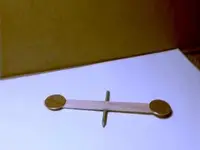
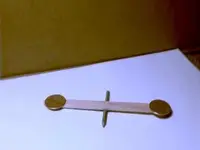
Here's my scale, a popsicle stick with a nail glued to the center. Use either a copper penny or a zinc on the other end, real easy to tell the 82's.
 

Attachments

  • scale.webp
    scale.webp
    3.4 KB · Views: 196
  • scale.webp
    scale.webp
    3.4 KB · Views: 162

Users who are viewing this thread

Latest Discussions

Back
Top Bottom