claire
Hero Member
- Joined
- Nov 24, 2008
- Messages
- 651
- Reaction score
- 1,126
- Golden Thread
- 0
- Location
- long island ny
- Detector(s) used
- Whites Prizm V, MX 5, Equinox 600
- Primary Interest:
- All Treasure Hunting
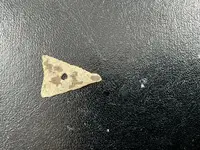
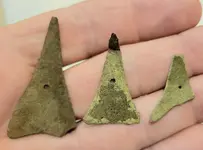
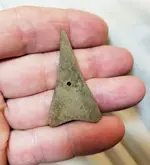
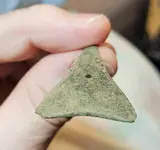
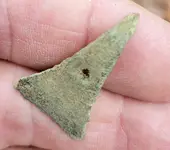
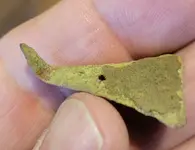
Yes, definitely. I have found five of them in East Hampton. Only 6 are known to have found on eastern Long Island. They were recently featured in a new book about the arrowhead typology of Eastern Long Island. They date from around 1650.Found this yesterday in the woods in Oysterbay LI? I’m generally not a relic hunter but I did find some neat old stuff including this piece
Wow! That is awesome! Initially I thought it was a piece of sheet metal and almost tossed it! Thank you! My oldest find!Yes, definitely. I have found five of them in East Hampton. Only 6 are known to have found on eastern Long Island. They were recently featured in a new book about the arrowhead typology of Eastern Long Island. They date from around 1650.
Here are three of my detector finds. They are now in the Southold Indian Museum on the North Fork I used to live in Lloyd Harbor before moving out east 30 years ago. You have some good detecting turf up there! I am also an archaeologist who completed excavations around Lloyd Harbor.Wow! That is awesome! Initially I thought it was a piece of sheet metal and almost tossed it! Thank you! My oldest find!
Wow! Anarchaeologist! I will look into that museum. I think maybe there is one in Oysterbay. Maybe they would be interested. Is it really that rare?Here are three of my detector finds. They are now in the Southold Indian Museum on the North Fork I used to live in Lloyd Harbor before moving out east 30 years ago. You have some good detecting turf up there! I am also an archaeologist who completed excavations around Lloyd Harbor.
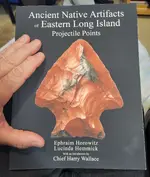
I’m going to order now!My Long Island copper points are featured with an explanation in this book released last year. First book of its kind for eastern Long Island. It's available at Amazon for $40 which helps support the museum. It's pricey but has a lot of photos and illustrations.
There is the Native American Museum at Garvies Point in Glen Cove. I have not seen their collections in many years.Wow! Anarchaeologist! I will look into that museum. I think maybe there is one in Oysterbay. Maybe they would be interested. Is it really that rare?
Thank you for all of the info! Truly an historical treasureThere is the Native American Museum at Garvies Point in Glen Cove. I have not seen their collections in many years.
You have to remember that Long Island's Native population was probably 3/4s decimated by 1720. Sadly for many reasons, but mostly from smallpox epidemics. During the early contact period, the Native Americans would fashion arrowheads from copper kettles. Then Europeans started to make and trade the basic triangular points like you found. The hole was not only used to haft the point to the shift, it was also handy to string many together for transport. It probably wasn't long before they were able to trade for black powder firearms, making bows and arrows obsolete. They are rare in the sense that they had a limited period of usage. More examples are turning up from metal detectorists. They are turning up at dig sites in upper NYS.
How did they make Metal points ?
If they weren't manufactured in Europe, the basic triangles could have been made from strips or sheets of copper. If you smack the back of an ax head with a mall, hammer, or another back of an ax, you could cut them out. Steel vs copper. Thin pointed steel awls were popular trade tools which could have been used to punch the hole. The copper kettle material could have been from discarded kettles. After frequent use boiling water, the copper can be become brittle and crack. The arrowhead could be shaped through stone abrasion or rubbing. The basic triangle found in this thread is less complex than the shaped ones I have found to the east of this find. The copper kettle points seem to have started in New England, where Natives traded for kettles from the French, Dutch, and English. Since the local Natives on Eastern Long Island were under the influence of the more powerful Narragansett of RI who were known for strong colonial trade networks, the copper could have originated from the CT or MA colonies. The local natives on Eastern LI produced wampum, so we can expect to find trade items from the region ending up here. The area where this point was found around Oyster Bay was first settled in 1653. My area was first settled in 1648.How did they make Metal points ?