What's new

does anyone have a whole diogenite in their collection?

rockcollect

Full Member
Joined
May 2, 2026
Messages
196
Reaction score
185
Golden Thread
0
Location
Lent
Detector(s) used
none
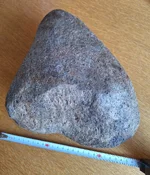
Does anyone have a whole diogenite in their collection would love to see some examples. Because online you only see slices. i am interested in de weathered crust of a diogenite.
 
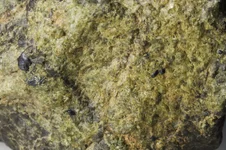
I have only one which is a wholestone, but it’s small (~30g). It’s NWA 7977 from Morocco:

NWA 7977a.webp

NWA 7977b.webp


Note that it’s coarsely crystalline and has a green-tinged matrix containing some metallic blebs (it’s weakly attracted to a magnet). Note also that there is very little weathering. Diogenites (especially from desert environments) are not particularly prone to weathering because they’re composed almost entirely of magnesium-rich orthopyroxene, a silicate mineral that is resistant to terrestrial alteration in dry conditions. When weathering does occur over decades in humid or wet environments, it usually targets tiny accessory phases such as minor metal grains, troilite (iron sulphide), or phosphates. Sometimes terrestrial secondary minerals such as iron hydroxides or calcite can be deposited into micro-fractures.

If you search via Google images, you will find pictures of larger specimens such as this 610g diogenite (NWA 7831) but, note again that it has low weathering:

NWA 7831.webp

[Picture from LOT-ART auction house]

There are only 736 diogenites in the MetSoc database, almost entirely from the Antarctic or dry desert environments in NW Africa and the Middle East, plus: 5 from China; 4 from Chile; 2 each from the USA, India, and Germany; 1 from Spain; and 1 from the Netherlands.

The Netherlands specimen (Ellemeet) was a double impact in 1925, with the second mass being found near Serooskerke. Because of the short interval between fall and find, there is little weathering, which is only significantly apparent on the second mass that was found later:

Ellemeet Serooskerke.webp

[Picture by Sebastiaan J. de Vet]

This is the heavily weathered diogenite NWA 12953, but it’s not from the kind of conditions that might have been experienced in the Netherlands:

NWA 12953a.webp

NWA 12953b.webp

[Pictures by Jason Bliss]

The two German diogenite finds which might have seen weathering conditions similar to those in the Netherlands were witnessed falls in 1870 and 1953, so not really old enough to have seen much alteration.

The preponderance of diogenites from dry desert and ice environments is probably due to finds being made in areas largely devoid of terrestrial rocks such that they attract more scientific interest. In all probability, there are many diogenites that have fallen elsewhere which don’t get identified as such (unless from a witnessed fall) because they’re so similar in appearance to ordinary terrestrial igneous rocks. Diogenites are very similar in their mineral makeup and crystal structure to intrusive igneous rocks found in Earth's lower crust and upper mantle, closely mirroring terrestrial rocks such as pyroxenites (weathered or not).

When, oh when, is the message finally going to get through to you that you can’t identify most achondrites (weathered or not) from pictures? You need detailed petrological examination, isotopic signatures, or other specialised testing to confirm.

Flogging Dead Horse.gif
 
I have only one which is a wholestone, but it’s small (~30g). It’s NWA 7977 from Morocco:

View attachment 2260754
View attachment 2260755

Note that it’s coarsely crystalline and has a green-tinged matrix containing some metallic blebs (it’s weakly attracted to a magnet). Note also that there is very little weathering. Diogenites (especially from desert environments) are not particularly prone to weathering because they’re composed almost entirely of magnesium-rich orthopyroxene, a silicate mineral that is resistant to terrestrial alteration in dry conditions. When weathering does occur over decades in humid or wet environments, it usually targets tiny accessory phases such as minor metal grains, troilite (iron sulphide), or phosphates. Sometimes terrestrial secondary minerals such as iron hydroxides or calcite can be deposited into micro-fractures.

If you search via Google images, you will find pictures of larger specimens such as this 610g diogenite (NWA 7831) but, note again that it has low weathering:

View attachment 2260756
[Picture from LOT-ART auction house]

There are only 736 diogenites in the MetSoc database, almost entirely from the Antarctic or dry desert environments in NW Africa and the Middle East, plus: 5 from China; 4 from Chile; 2 each from the USA, India, and Germany; 1 from Spain; and 1 from the Netherlands.

The Netherlands specimen (Ellemeet) was a double impact in 1925, with the second mass being found near Serooskerke. Because of the short interval between fall and find, there is little weathering, which is only significantly apparent on the second mass that was found later:

View attachment 2260757
[Picture by Sebastiaan J. de Vet]

This is the heavily weathered diogenite NWA 12953, but it’s not from the kind of conditions that might have been experienced in the Netherlands:

View attachment 2260758
View attachment 2260759
[Pictures by Jason Bliss]

The two German diogenite finds which might have seen weathering conditions similar to those in the Netherlands were witnessed falls in 1870 and 1953, so not really old enough to have seen much alteration.

The preponderance of diogenites from dry desert and ice environments is probably due to finds being made in areas largely devoid of terrestrial rocks such that they attract more scientific interest. In all probability, there are many diogenites that have fallen elsewhere which don’t get identified as such (unless from a witnessed fall) because they’re so similar in appearance to ordinary terrestrial igneous rocks. Diogenites are very similar in their mineral makeup and crystal structure to intrusive igneous rocks found in Earth's lower crust and upper mantle, closely mirroring terrestrial rocks such as pyroxenites (weathered or not).

When, oh when, is the message finally going to get through to you that you can’t identify most achondrites (weathered or not) from pictures? You need detailed petrological examination, isotopic signatures, or other specialised testing to confirm.

View attachment 2260760
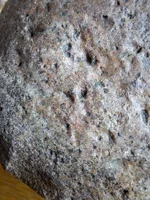
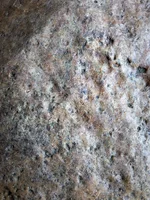
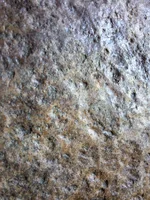
Thanks for your reply and all the info. I know i am a little stubborn but how do you think that all the diogenites are found by the nomads in the dessert. pure with eyesight and it will later be confirmed in a lab yes. but almost all meteorites found by nomads a recognized by eye and experience. But feel free to tell i am wrong. As i said this rock is very different than all my other meteorwrong finds because of one little clue. I have found out that my rock contains melted grains of chromite and my rock could either be a granite or a granite-gneiss but neither contain chromite grains. Chromite grains only occur in serpentine, peridotite, dunite, pyroxenite. And yes i know for sure those grains are chromite in my rock. you be the judge. P.S. the grains can only be seen with a 10x loup so you won't recognize them on the photo's but they are defently there.
 

Attachments

  • 20260726_185053.webp
    20260726_185053.webp
    2 MB · Views: 20
  • 20260726_185119.webp
    20260726_185119.webp
    1.2 MB · Views: 19
  • 20260726_185145.webp
    20260726_185145.webp
    1.2 MB · Views: 18
  • 20260726_185204.webp
    20260726_185204.webp
    939.3 KB · Views: 20
Last edited:
NWA 6351 as example
 

Attachments

  • 487036886_10212343018006907_2653106651859785791_n.webp
    487036886_10212343018006907_2653106651859785791_n.webp
    415.1 KB · Views: 19
Thanks for your reply and all the info. I know i am a little stubborn but how do you think that all the diogenites are found by the nomads in the dessert. pure with eyesight and it will later be confirmed in a lab yes. but almost all meteorites found by nomads a recognized by eye and experience. But feel free to tell i am wrong. As i said this rock is very different than all my other meteorwrong finds because of one little clue. I have found out that my rock contains melted grains of chromite and my rock could either be a granite or a granite-gneiss but neither contain chromite grains. Chromite grains only occur in serpentine, peridotite, dunite, pyroxenite. And yes i know for sure those grains are chromite in my rock. you be the judge. P.S. the grains can only be seen with a 10x loup so you won't recognize them on the photo's but they are defently there.

Discussing meteorites with you is like trying to juggle fog!


So your rock “defently” contains “melted grains of chromite”, although you don’t say how you know this. You then ask me to “be the judge” and provide some pictures, for which you say “the grains can only be seen with a 10x loup so you won't recognize them on the photo's.” Frankly, that’s laughable.

Even if your rock contains chromite… so what? It’s correct that chromite is almost exclusively found in mafic and ultramafic igneous rocks which are rich in iron and magnesium, such as pyroxenites, as I’ve already said. That’s also why it’s found in diogenite meteorites, because they share the same geochemistry and mode of formation as terrestrial rocks of that type.

You also say your chromite-containing rock “could be a granite or a granite-gneiss” (again, without saying why you believe this). Both things are unlikely to be true. If there are chromite grains, the rock is highly unlikely to be granitic; and if the rock is granitic, the grains are highly unlikely to be chromite. Also, if the rock is granitic, it’s not a diogenite meteorite since they don’t have the same geochemistry and were not formed under the cooling and crystallisation conditions consistent with granite formation.

As for nomads and meteorites, yes their finds depend heavily on familiarity with visual appearance… and particularly in relation to rocks having dark fusion crusts that stand out in light sandy deserts where small isolated rocks are also uncommon. The ‘possibles’ habitually go to market in Morocco where dealers weed out the ‘pseudos’ and subject the ‘likelies’ to further testing before selling them on. But, again… so what? That doesn’t mean that a North African nomad (or anyone else for that matter) would be able to recognise a diogenite subjected to the prevailing weathering conditions in the Netherlands. I repeat again that only expert testing could verify that. Maybe if I say it enough times, it will eventually sink in, but the signs so far are not encouraging.
 
Discussing meteorites with you is like trying to juggle fog!


So your rock “defently” contains “melted grains of chromite”, although you don’t say how you know this. You then ask me to “be the judge” and provide some pictures, for which you say “the grains can only be seen with a 10x loup so you won't recognize them on the photo's.” Frankly, that’s laughable.

Even if your rock contains chromite… so what? It’s correct that chromite is almost exclusively found in mafic and ultramafic igneous rocks which are rich in iron and magnesium, such as pyroxenites, as I’ve already said. That’s also why it’s found in diogenite meteorites, because they share the same geochemistry and mode of formation as terrestrial rocks of that type.

You also say your chromite-containing rock “could be a granite or a granite-gneiss” (again, without saying why you believe this). Both things are unlikely to be true. If there are chromite grains, the rock is highly unlikely to be granitic; and if the rock is granitic, the grains are highly unlikely to be chromite. Also, if the rock is granitic, it’s not a diogenite meteorite since they don’t have the same geochemistry and were not formed under the cooling and crystallisation conditions consistent with granite formation.

As for nomads and meteorites, yes their finds depend heavily on familiarity with visual appearance… and particularly in relation to rocks having dark fusion crusts that stand out in light sandy deserts where small isolated rocks are also uncommon. The ‘possibles’ habitually go to market in Morocco where dealers weed out the ‘pseudos’ and subject the ‘likelies’ to further testing before selling them on. But, again… so what? That doesn’t mean that a North African nomad (or anyone else for that matter) would be able to recognise a diogenite subjected to the prevailing weathering conditions in the Netherlands. I repeat again that only expert testing could verify that. Maybe if I say it enough times, it will eventually sink in, but the signs so far are not encouraging.
so we are at a standoff, we agree to disagree. But i doesn't matter you helped me more than you know.
 
What I know about stones is rudimentary. I say this, because most stones I have found ended up being heaverites!
 

Users who are viewing this thread

Latest Discussions

Back
Top Bottom